Mauricie · Quebec
The St. Lawrence
Trois-Rivières
From Granby to the mouth of the Saint-Maurice: a town founded in 1634, a bridge two and a half kilometres long, and three channels that gave it its name.
Founded in 1634
Granby → Trois-Rivières → Granby
The second oldest town in Quebec, after Quebec City. The sieur de Laviolette built a dwelling here on 4 July 1634, on the plateau above the confluence.
149,000 people
Mauricie · Québec
Ninth largest city in Quebec, seat of the Mauricie region, exactly halfway between Montreal and Quebec City.
The river
it all leads
to the confluence
Granby → the 20 to Drummondville
then the 55 north
and the bridge, over the river
Reading the map
- a stop along the way
- the way out, to the river
- the way home, to Granby
- the St. Lawrence

Setting off
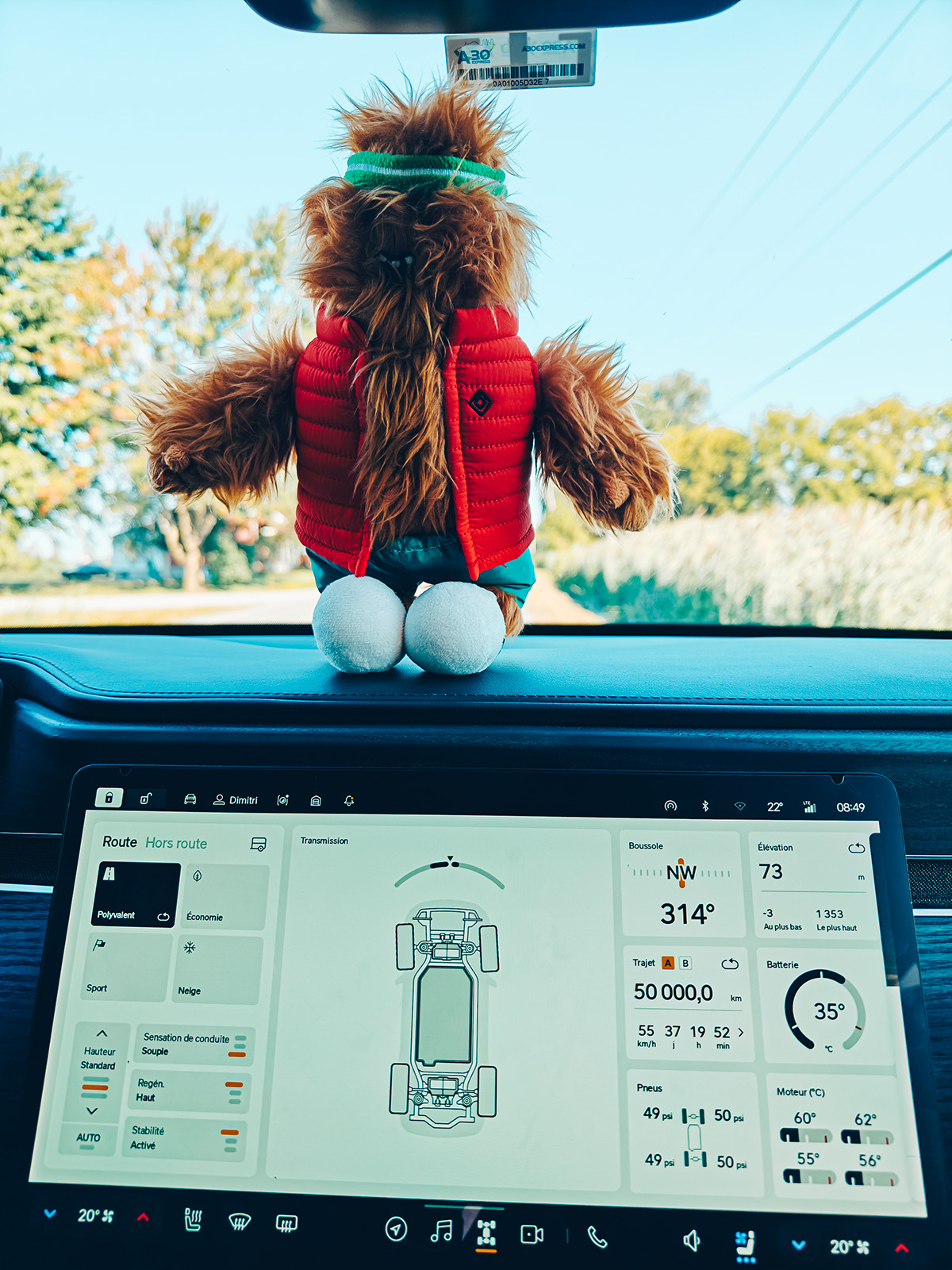
Granby, km 0The odometer rolls past 50,000 km that morning. Three hundred and fourteen kilometres of range showing on the dash: plenty for the trip out without thinking about it, and the way home with one charge.
What we take
A notebook, a camera, and shoes for the whole day: Trois-Rivières is a walking city.
Granby → Trois-Rivières
138 kmHighway 20 heading east, then the 55 north. An hour and a half without stopping.
Heading north
A-20 then A-55
The drive leaves the Eastern Townships for the Mauricie: the hills flatten out as the river draws near.
Where it is
46° NTrois-Rivières sits on the north shore of the St. Lawrence, exactly halfway between Montreal and Quebec City.
The way through
Drummondville, then Bécancour, then the bridge. The drive leaves the highway just once.
On foot once there
the old quarter
The whole historic centre fits in a few blocks: you park the car and don’t touch it again all day.
The Energy Highway
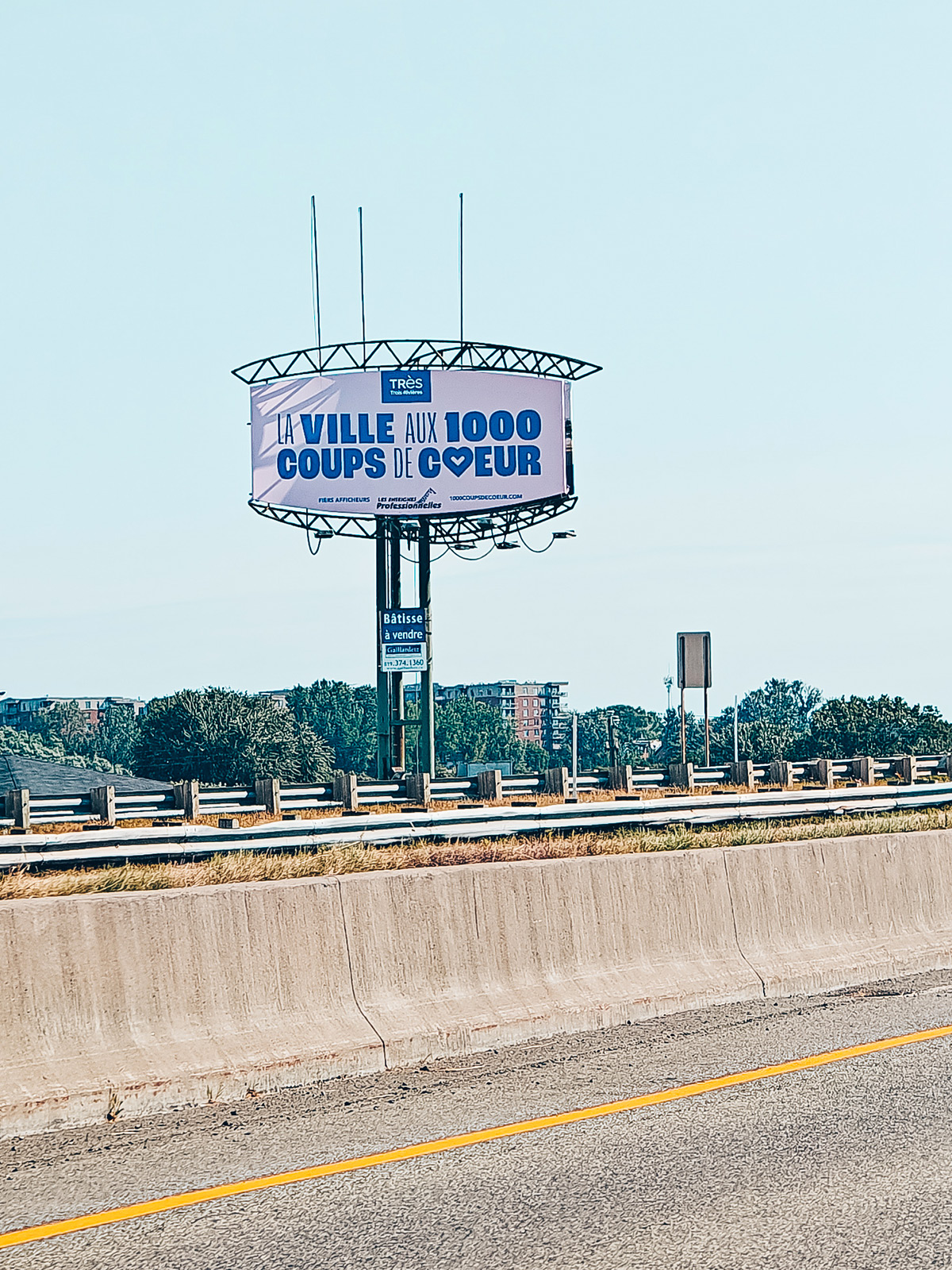
Autoroute 55, heading northAt the edge of town a billboard sets the tone. Trois-Rivières calls itself the city of a thousand favourites — a motto that says a good deal about a place with much to show and few people who know it.
World paper capital
Trois-Rivières proclaimed itself world capital of paper in 1922. The mills lined the Saint-Maurice; one of them is now Boréalis, the museum of the paper industry.
The largest in the world
1926The Canadian International Paper mill, eight machines and over 2,000 employees, turned out 700 tons of paper a day. Its newsprint went to the big American dailies, the New York Times among them.
The Energy Highway
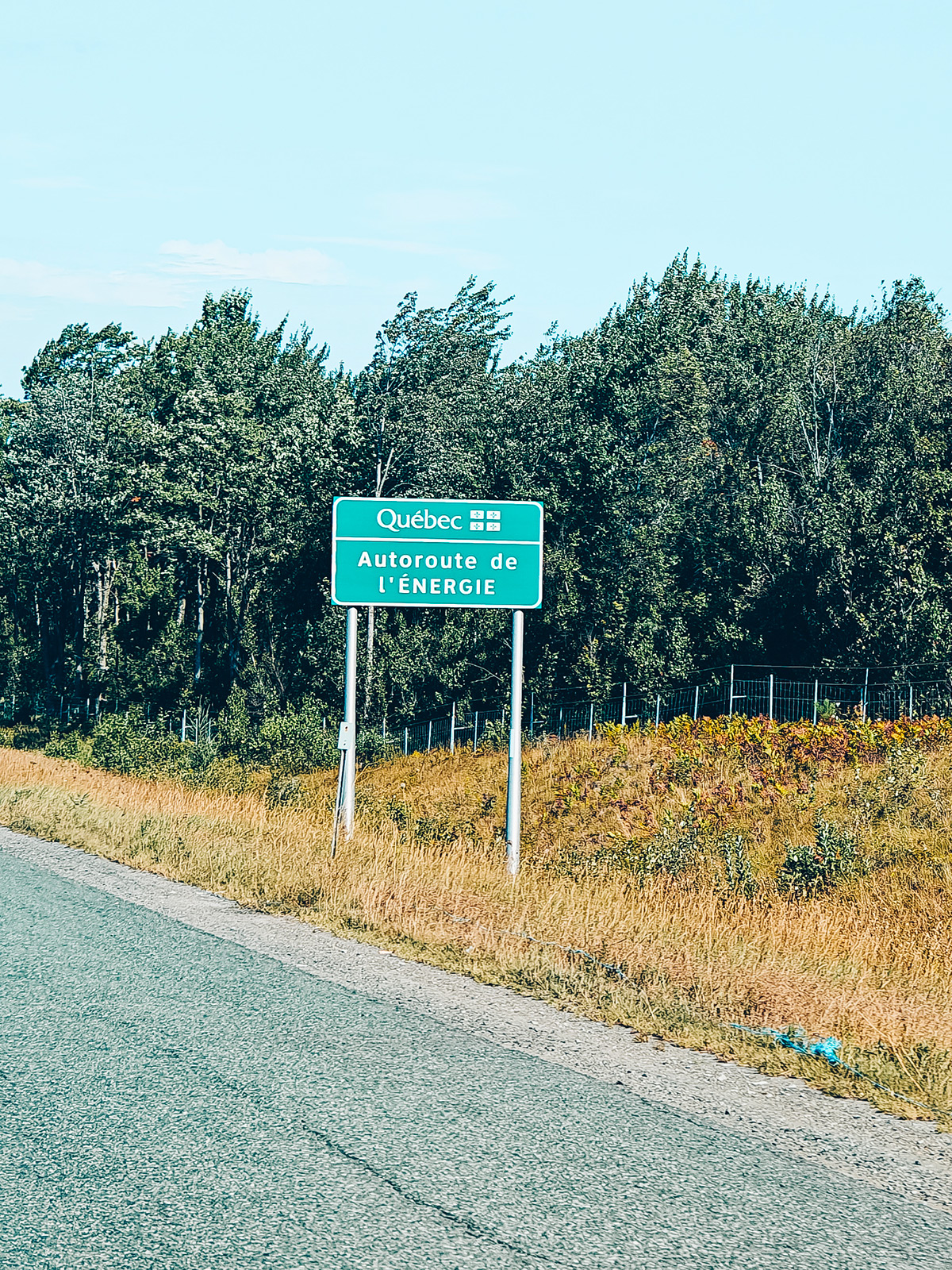
The 55 carries that name because it leads to the Mauricie dams, following the Saint-Maurice upstream.
The Mauricie
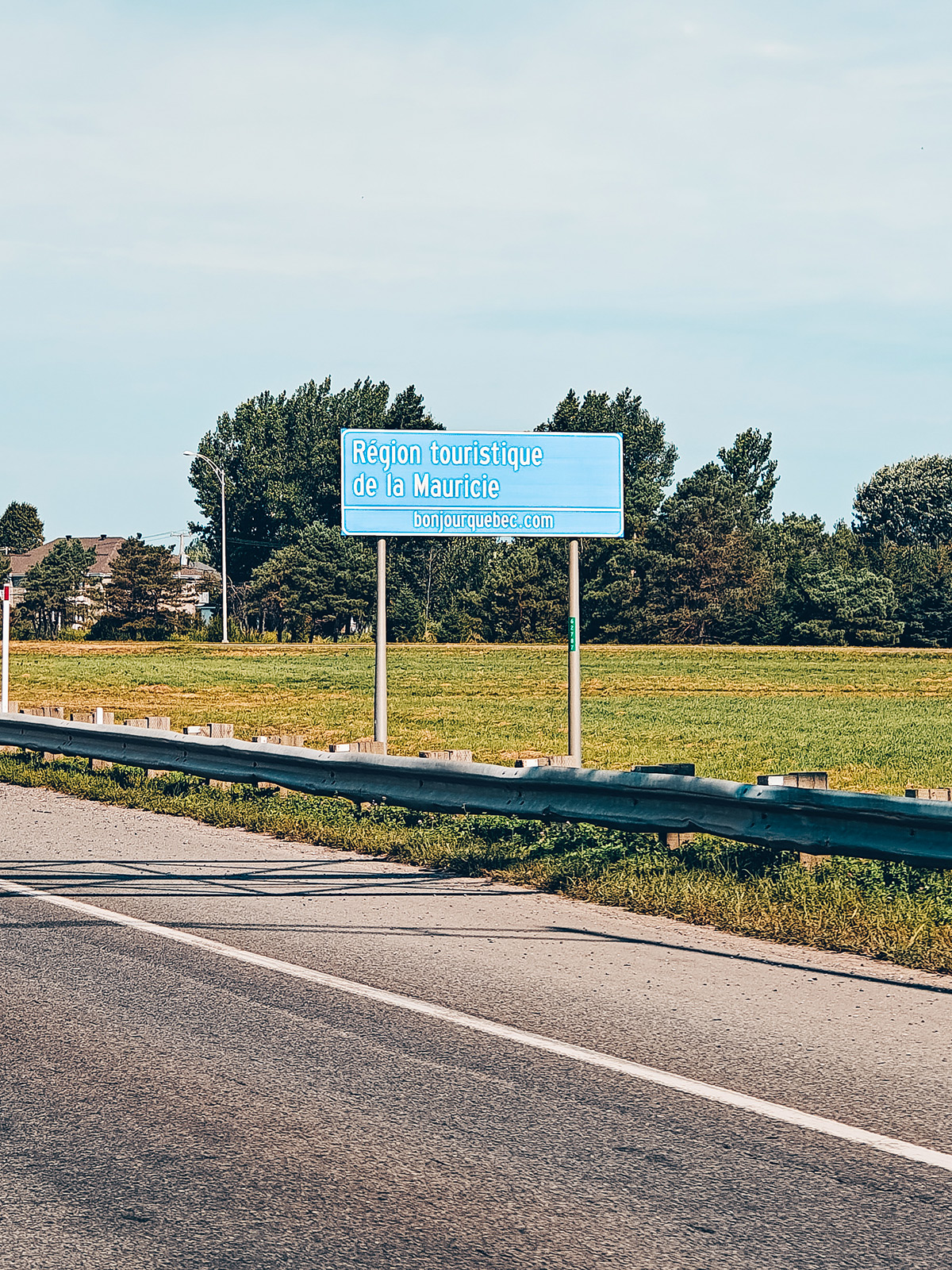
The whole region takes its name from the Saint-Maurice river, running down from the north to the great river.
The chimneys
From a distance the city announces itself with mill chimneys. Paper drew its skyline for a century.
The Saint-Maurice
563 km
The river comes down from the Gouin reservoir, two hundred kilometres west of Lac Saint-Jean, and forms a delta where it meets the St. Lawrence.
The Laviolette Bridge
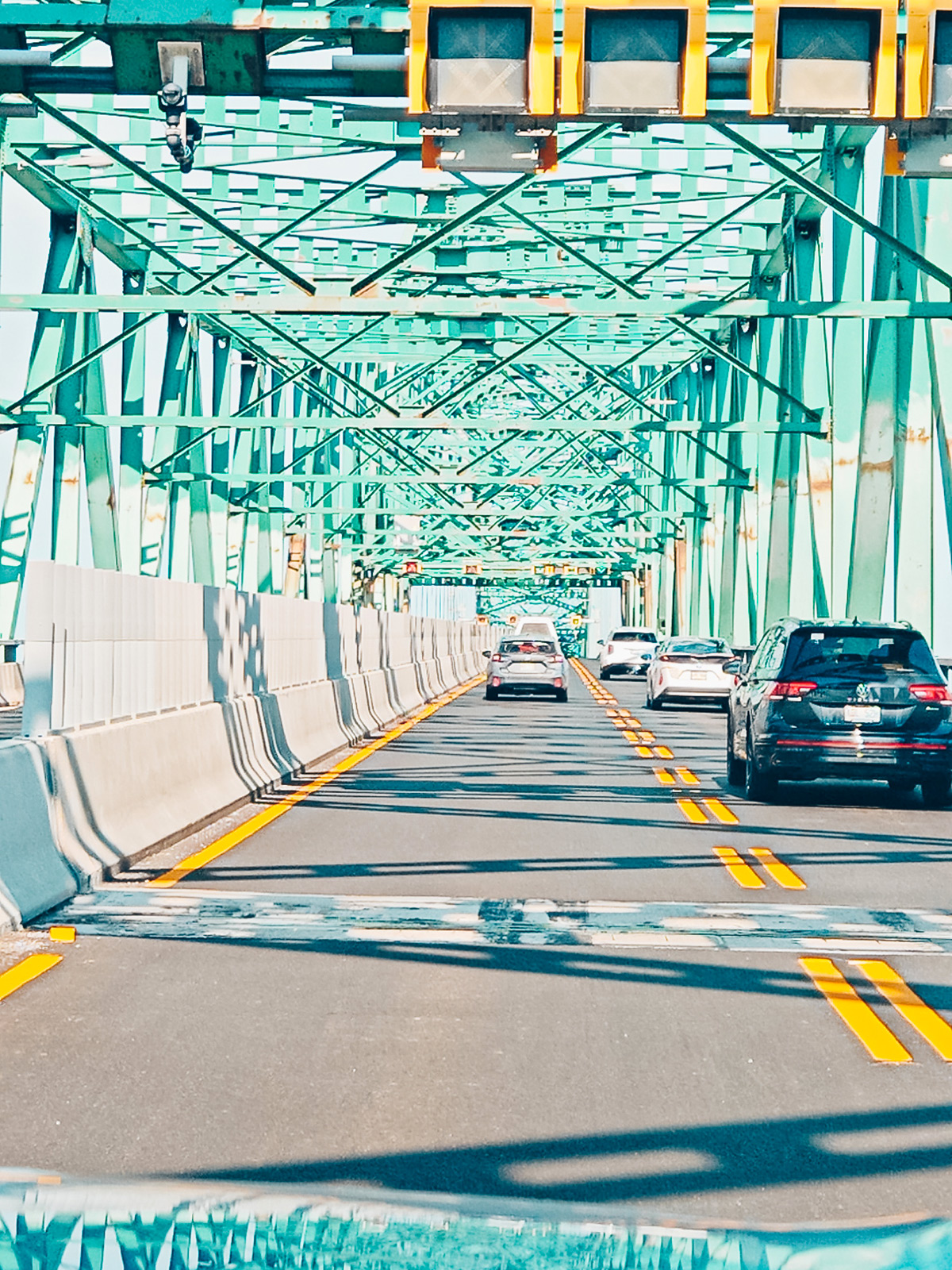
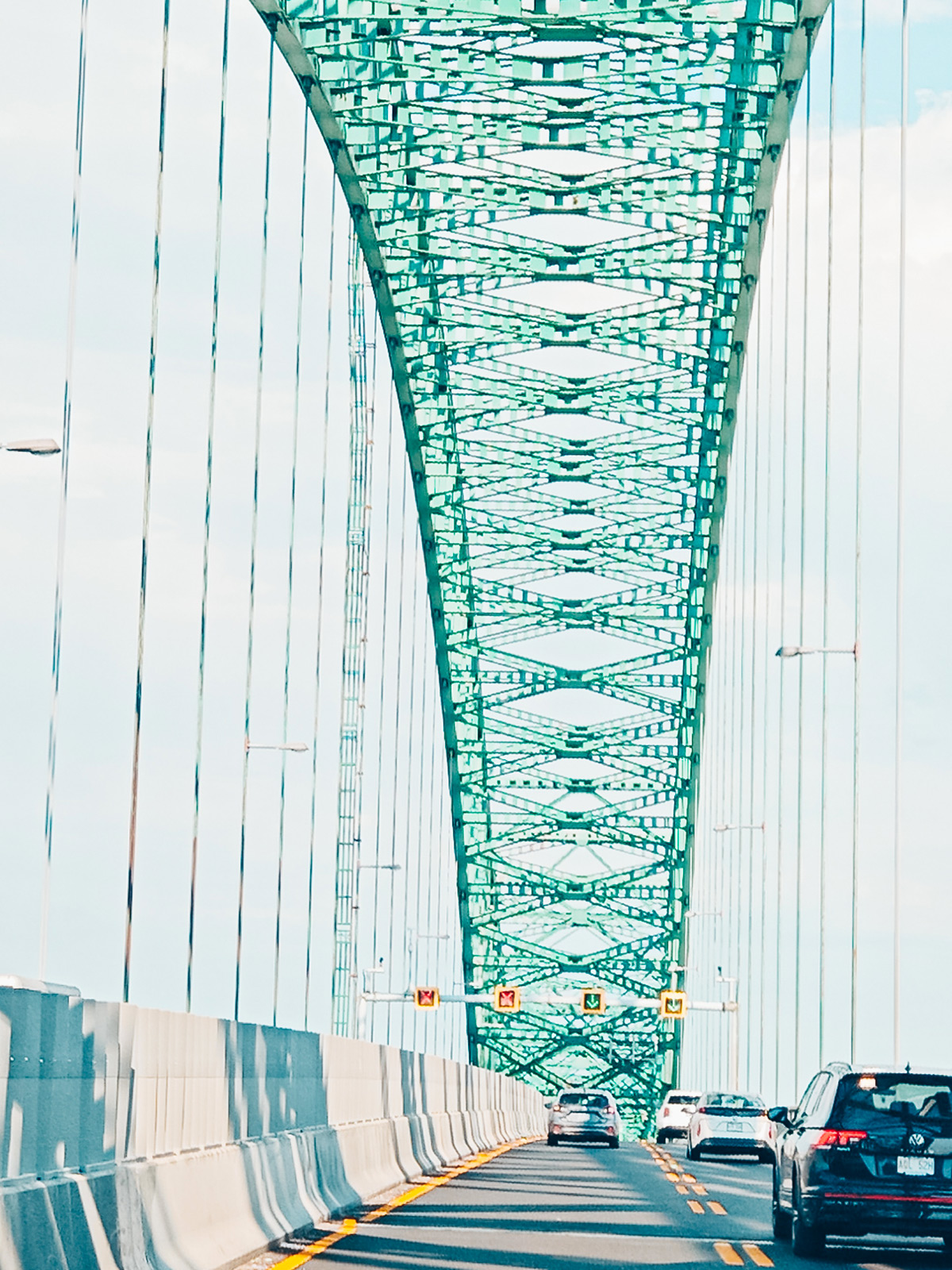
Over the St. LawrenceIts central span rises in an arch to let ships through: this is a seaway, and the freighters climbing towards the Great Lakes pass beneath. You cross it one way in the morning and the other way at night, and in between there is a city.
2,707 metres
Steel truss, opened in 1967. The central span clears the ships of the seaway.
20 December 1967
Trois-Rivières ↔ Bécancour
Built from 1964 to 1967, the bridge replaced the ferry that linked the two shores. It is the longest steel-framed bridge in Quebec.
Before the bridge
You took the ferry, and waited your turn. The bridge joined the south shore in a single stroke.
The only one
Between Montreal and Quebec City, no other bridge crosses the St. Lawrence. This one, or a long way round.
The seaway
The central span rises over the shipping channel: vessels pass beneath without slowing.
Bécancour
south shore
On the far side, the south shore and its industrial park. The bridge puts the two banks five minutes apart.
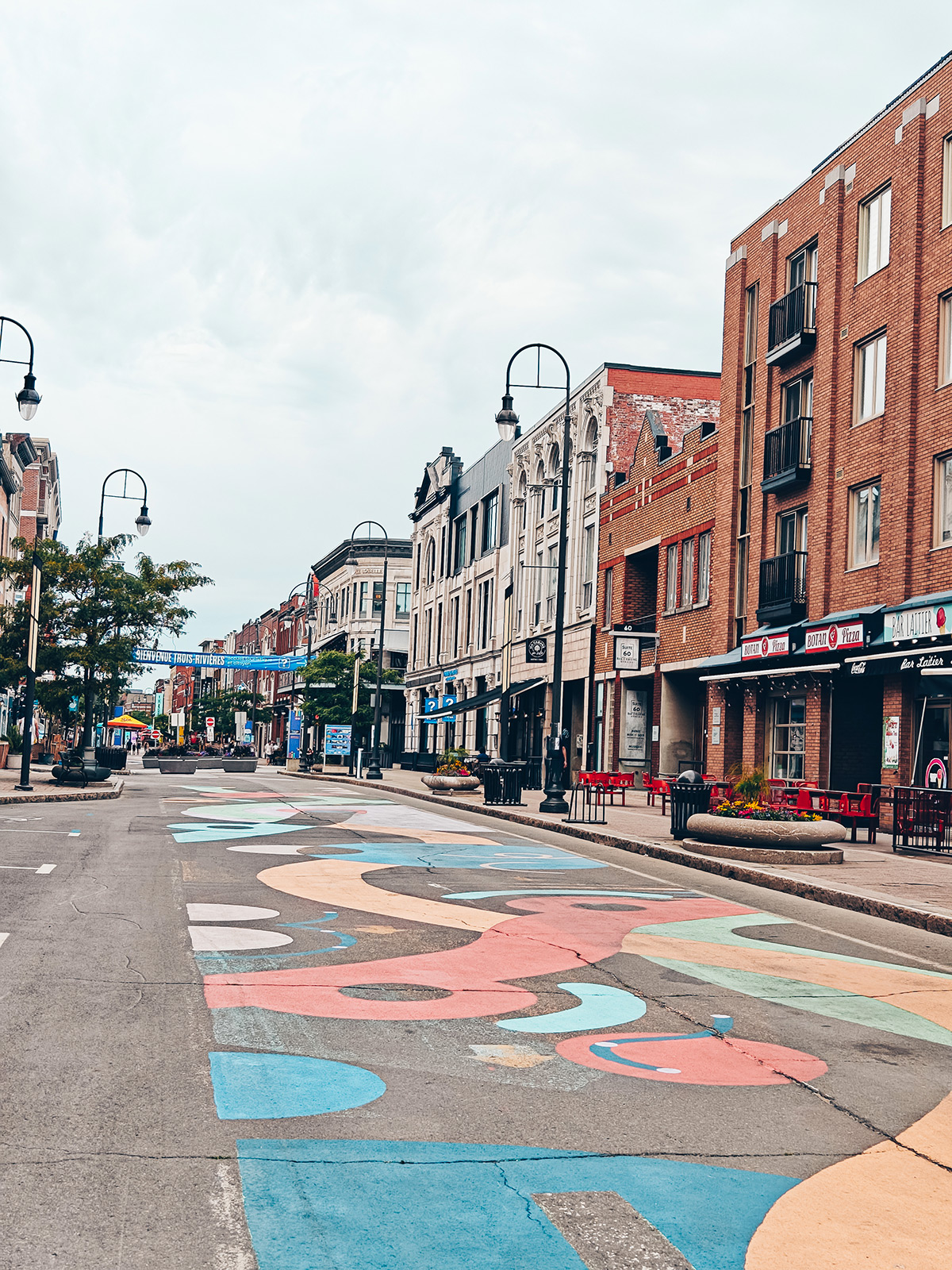
Rue des Forges
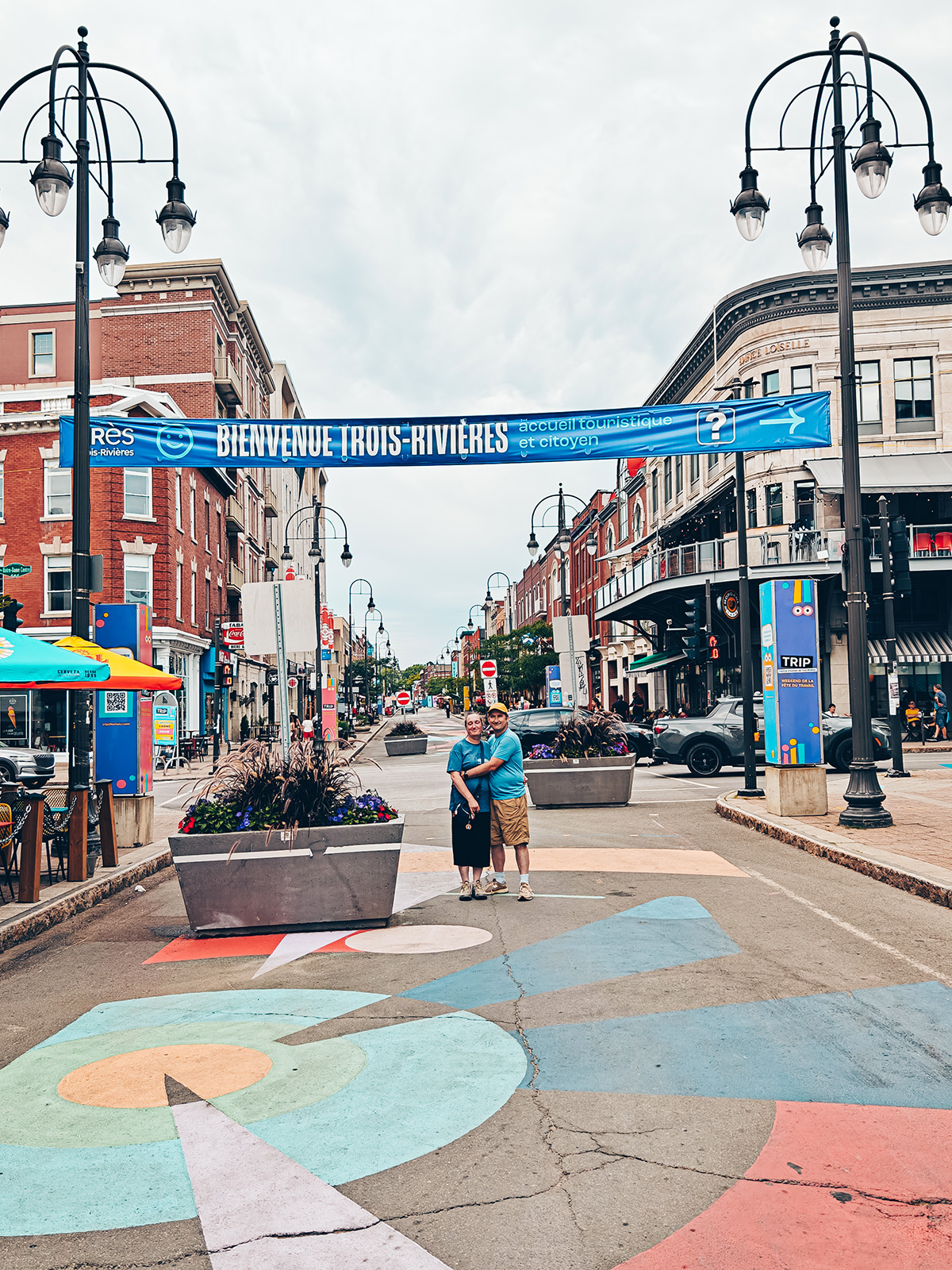
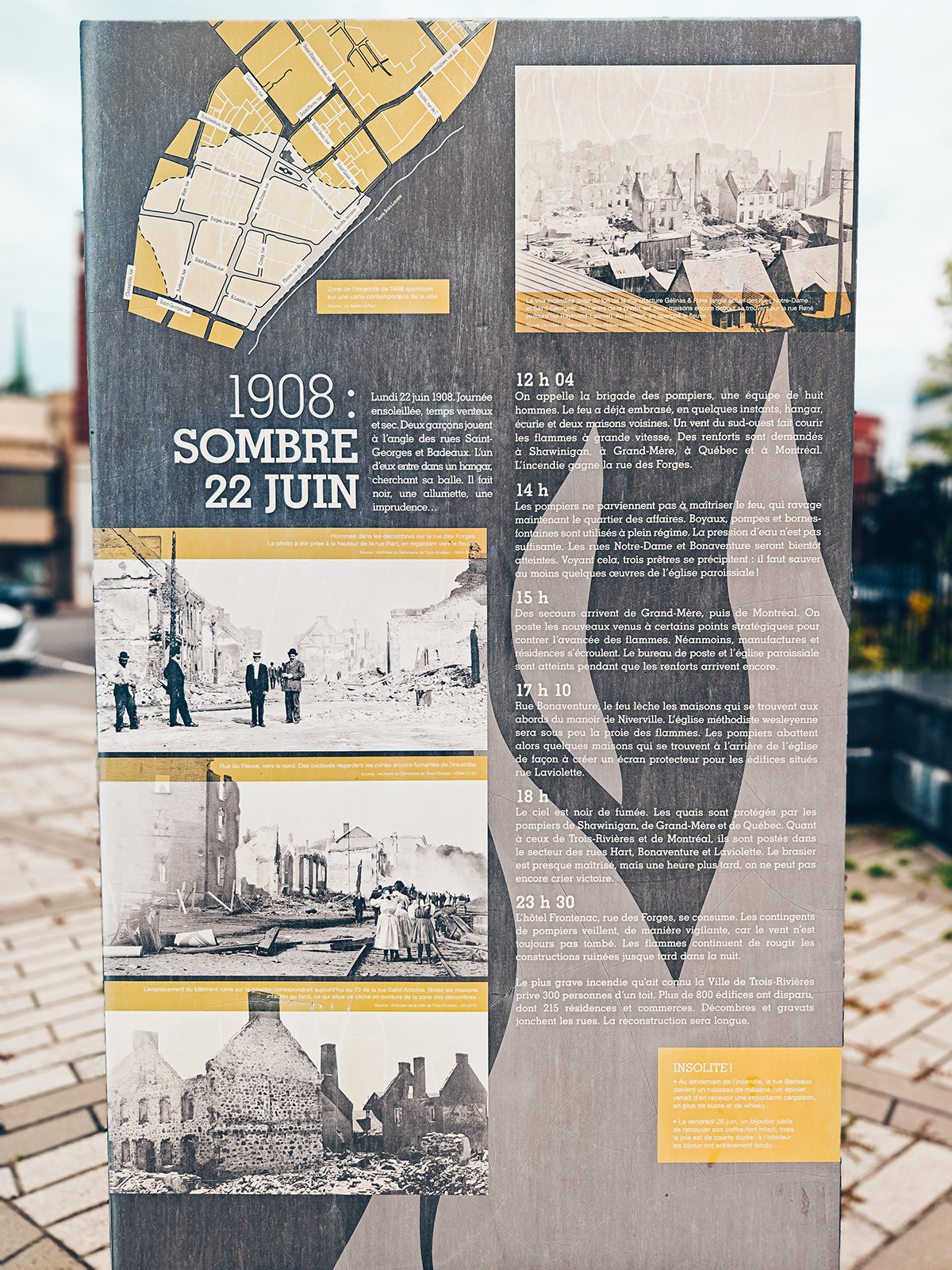
Old Trois-RivièresThis is the heart of the historic district, the one that burned on 22 June 1908 — a fire that took half the town and whose hour-by-hour story the panels downtown still tell. What you see today was therefore largely rebuilt afterwards, which explains the brick and the cornices of the early twentieth century.
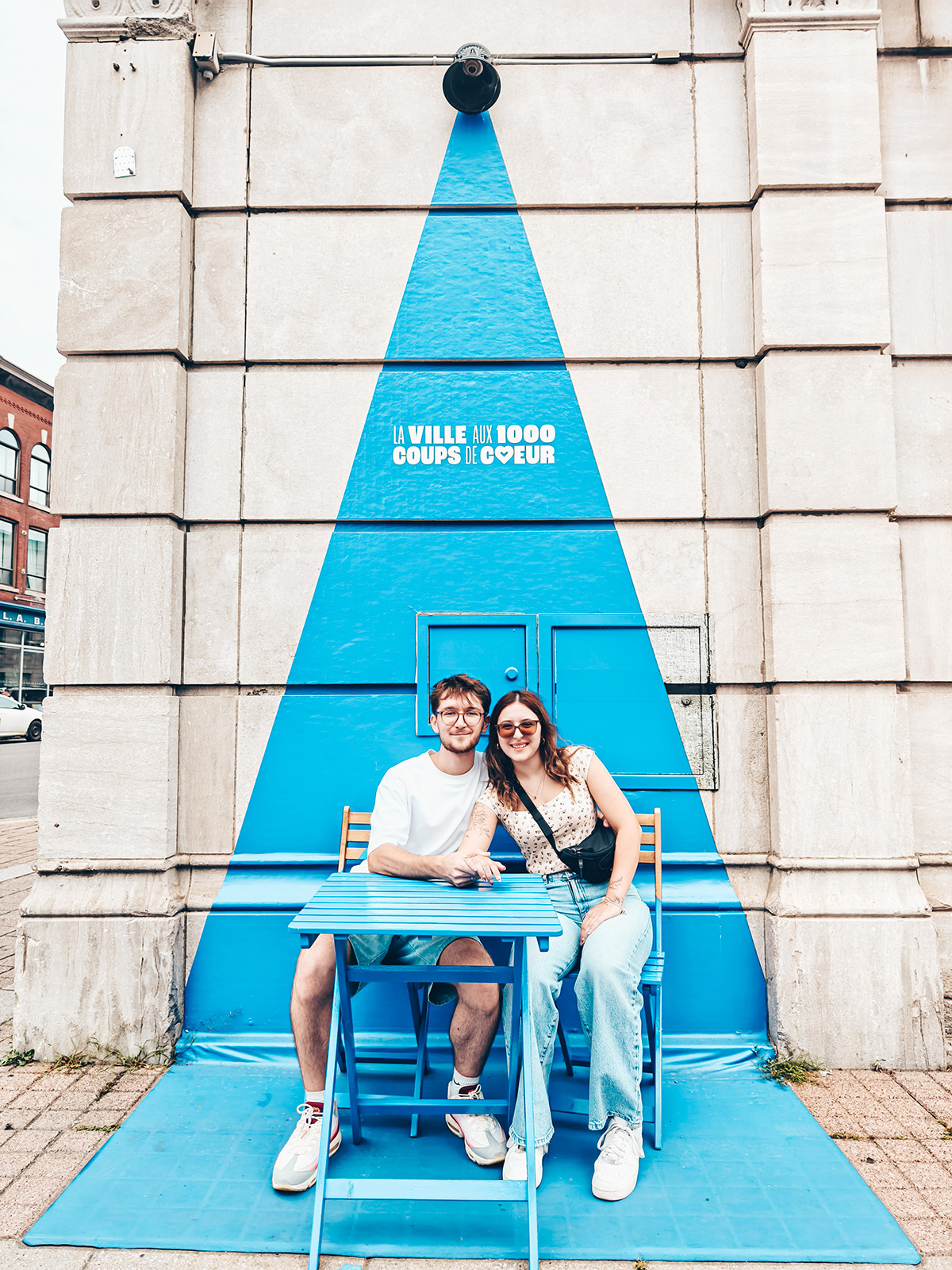
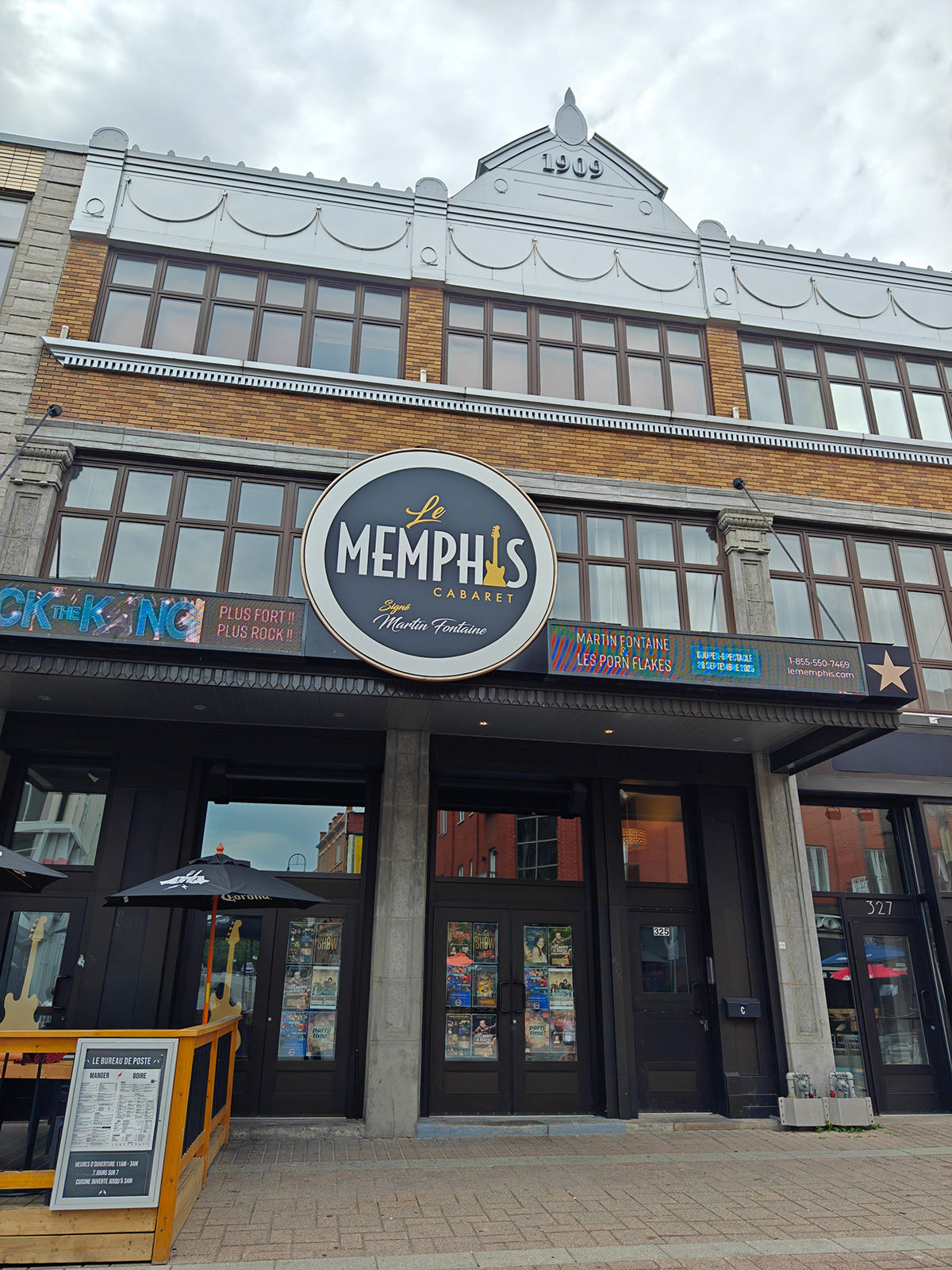
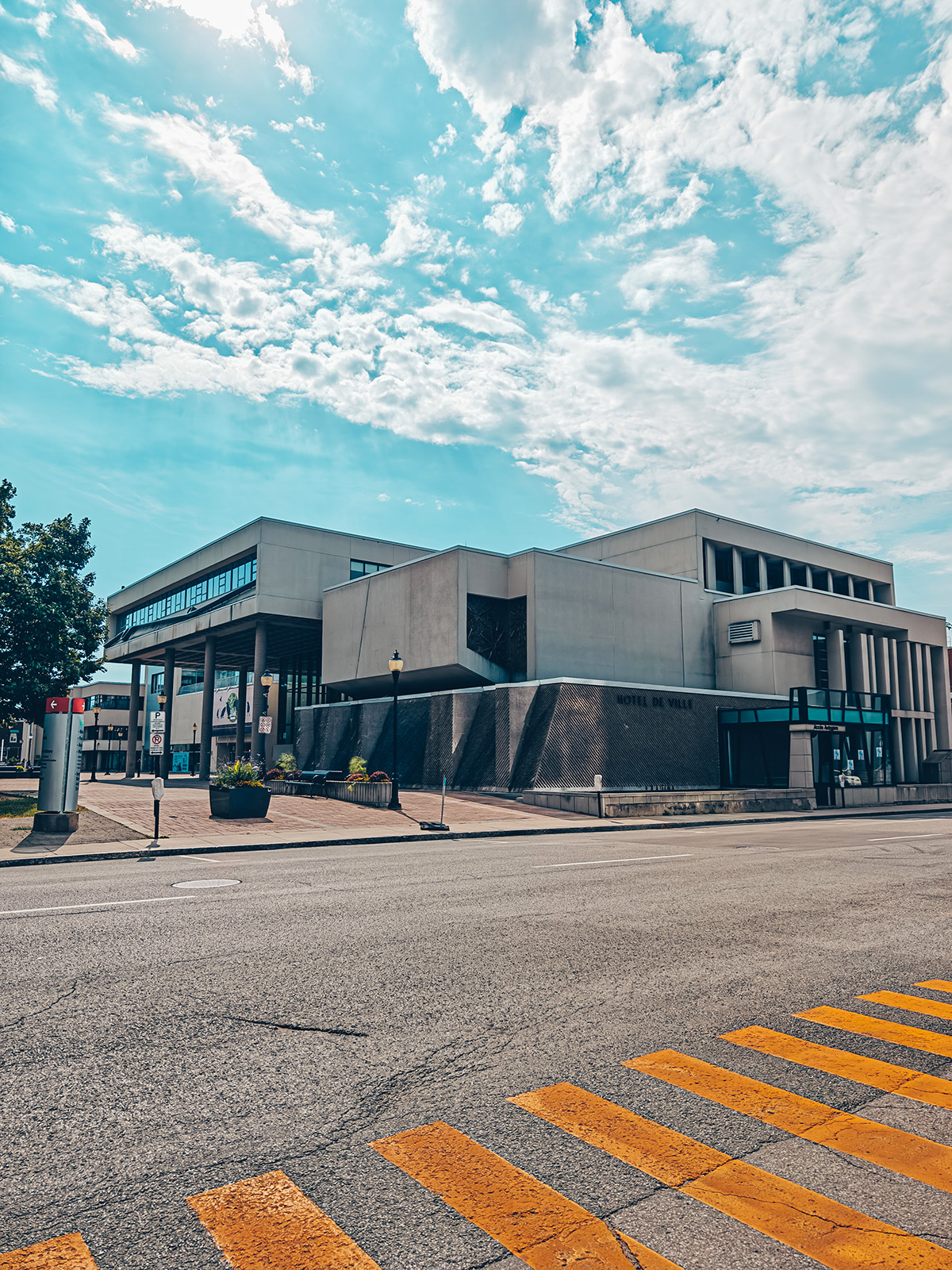
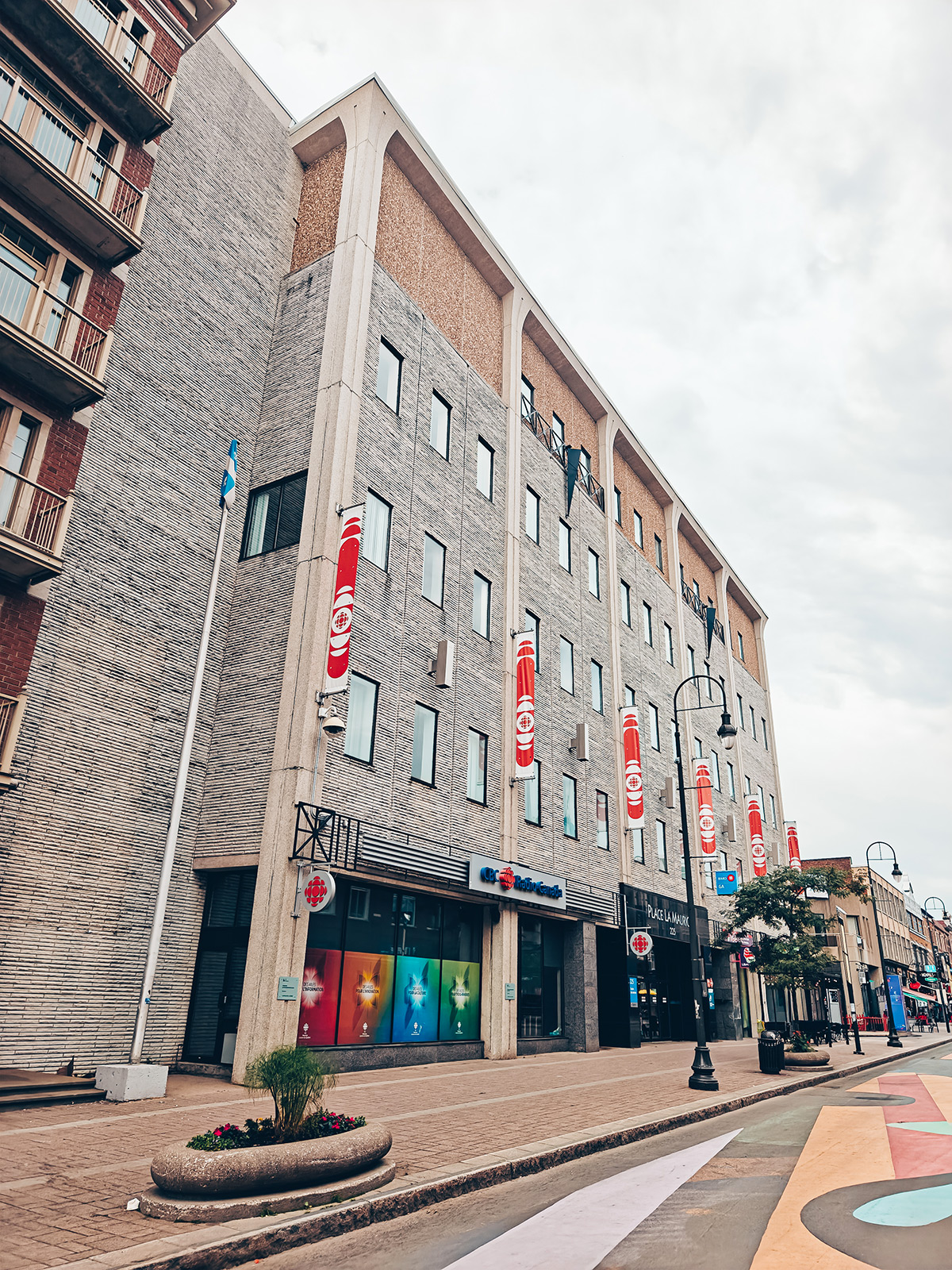
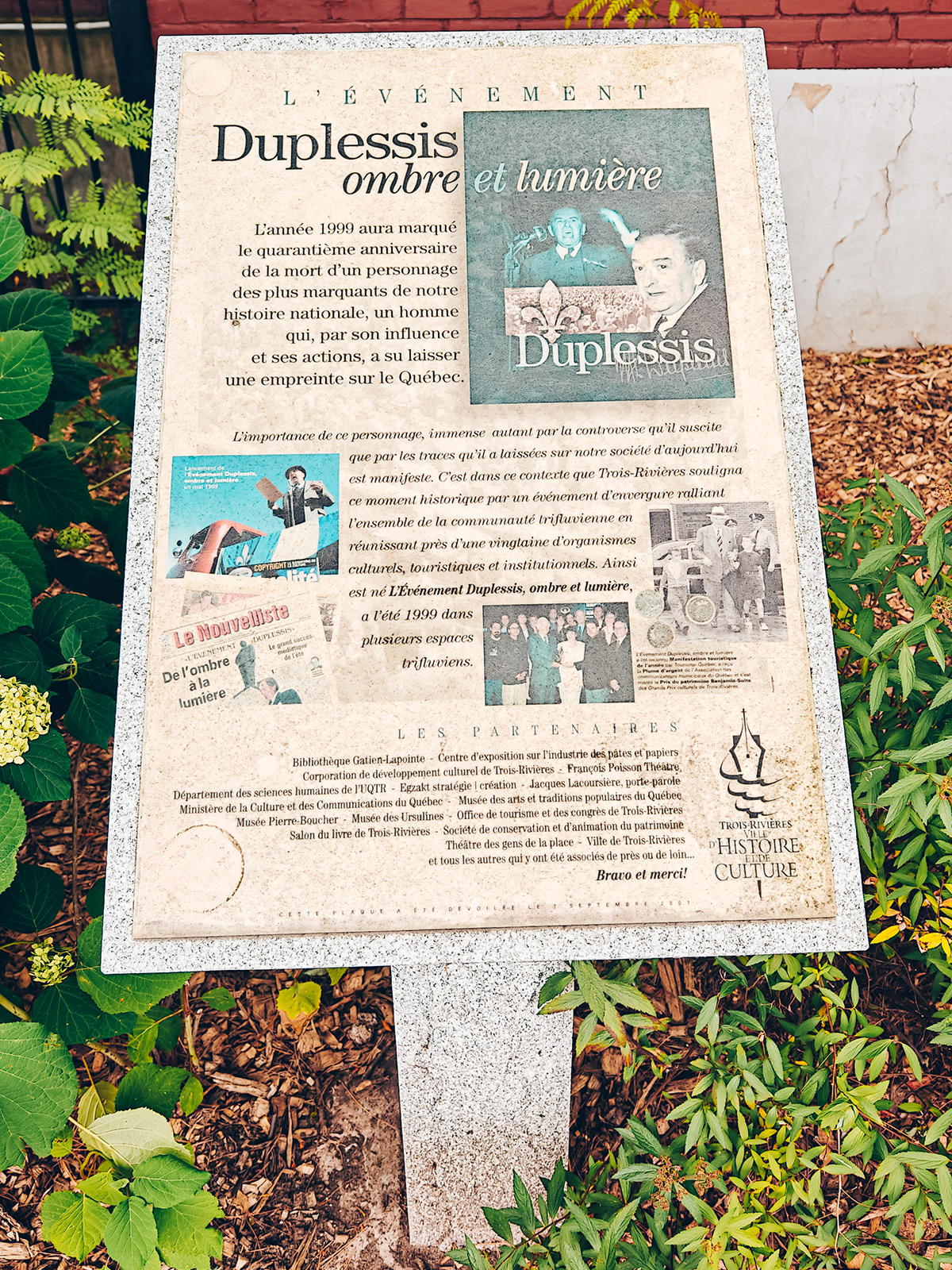
Old Trois-Rivières
The old quarter comes down to a few streets between rue Notre-Dame and the river. Fifteen minutes on foot from end to end.
Car-free in summer
Rue des Forges closes to traffic in the warm months: the terraces take over the whole roadway.
22 June 1908
The fire destroyed much of old Trois-Rivières. The panels on the square tell the day hour by hour.
The murals
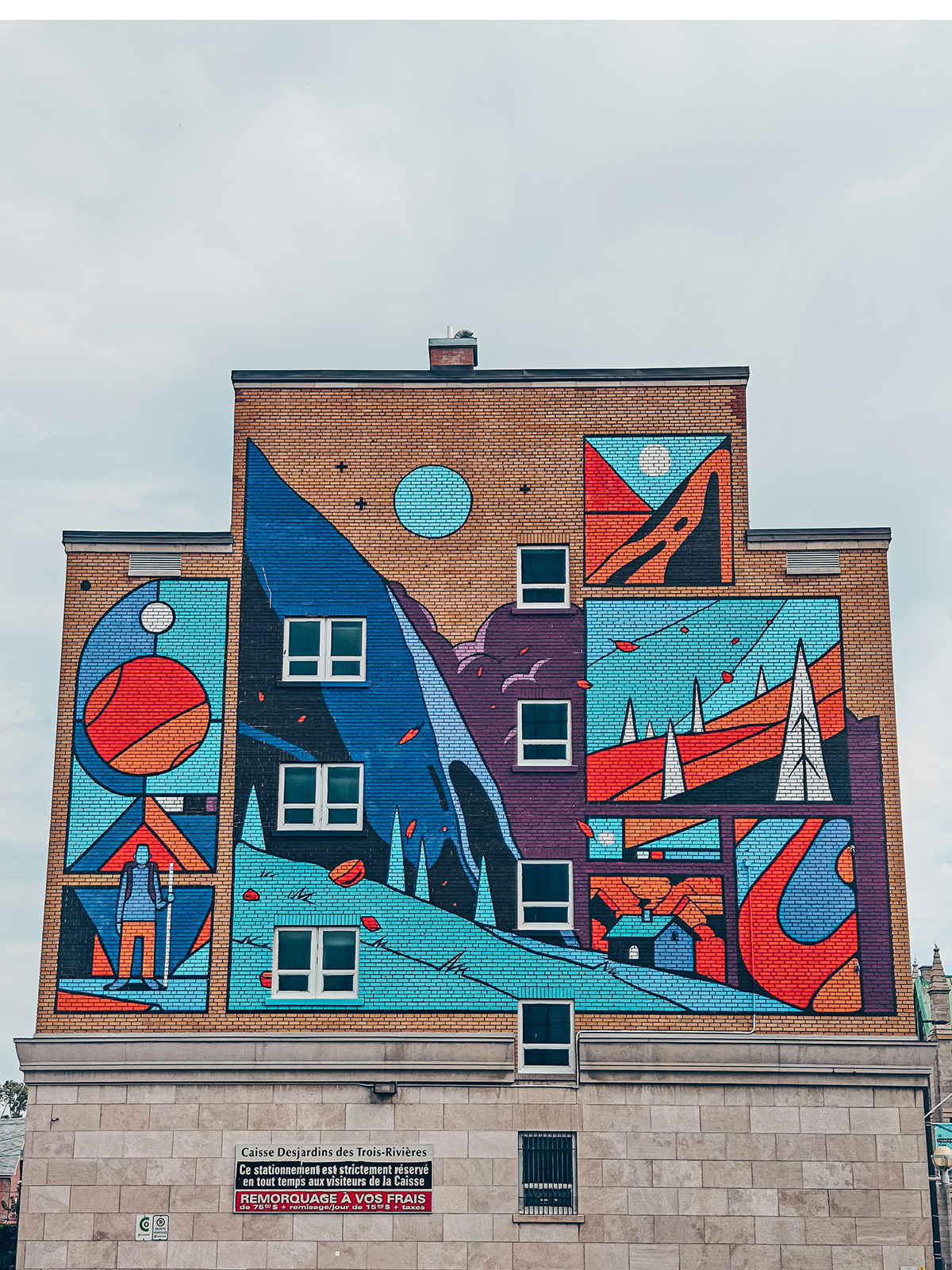
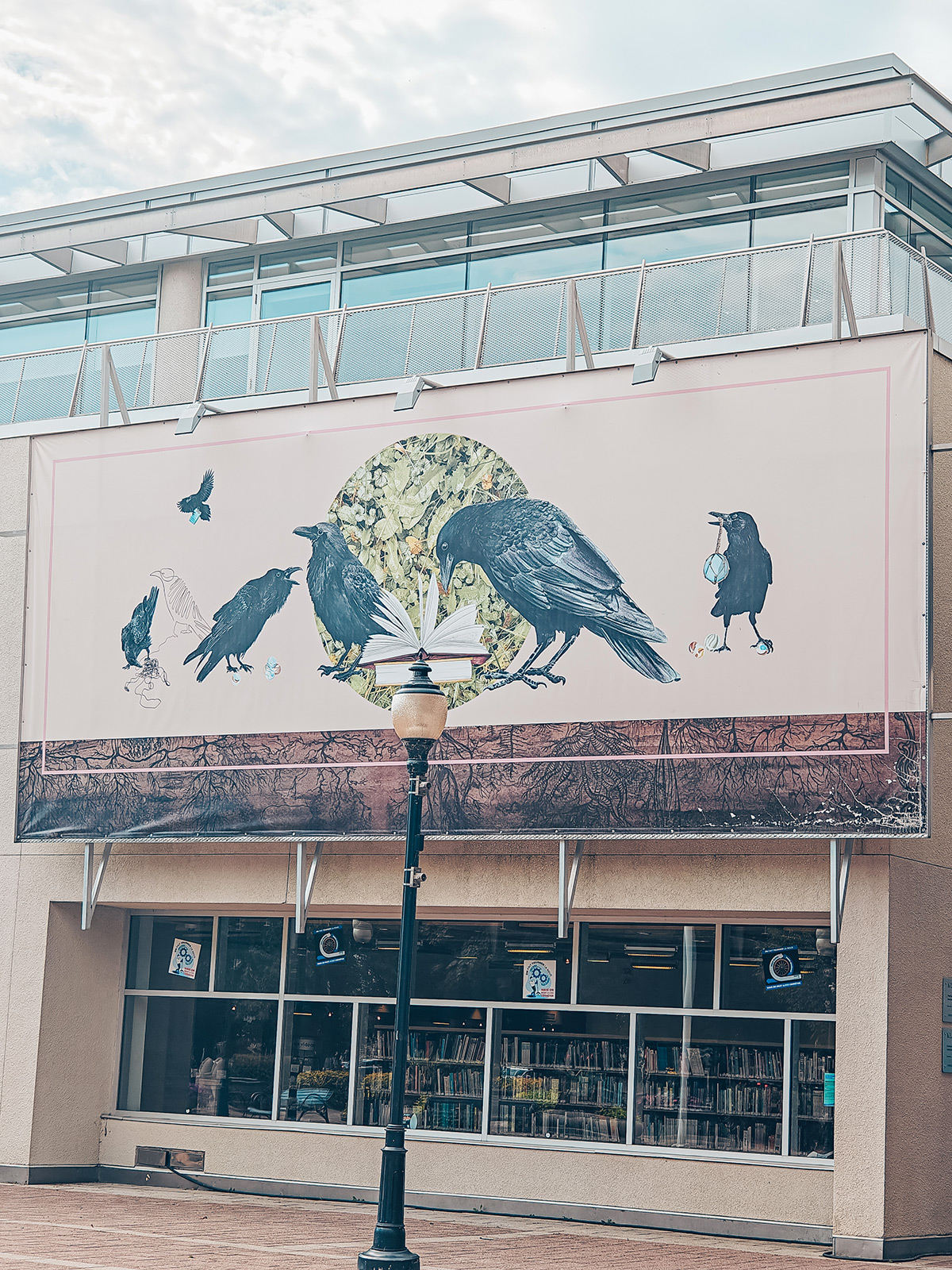
Painted frescoes tell the city’s story across the big blank walls downtown.
Iron before paper
Iron from the Forges went down the river to the naval arsenal at Rochefort, in France.
Maurice Duplessis
born here on 20 April 1890
Premier of Quebec from 1936 to 1939, then from 1944 until his death in 1959, he was a Trois-Rivières man.
Les Forges du Saint-Maurice
1730 – 1883
The street is named for the first ironworks in Canada, founded by royal patent in 1730. It cast stoves, cauldrons and ploughshares. The site has been a national historic site since 1973.
Le Nouvelliste
1920The city’s daily paper was founded on 30 October 1920. It is still going.
The shopfronts
Under the recent signs the early-century façades are still there: you read both periods in one glance.
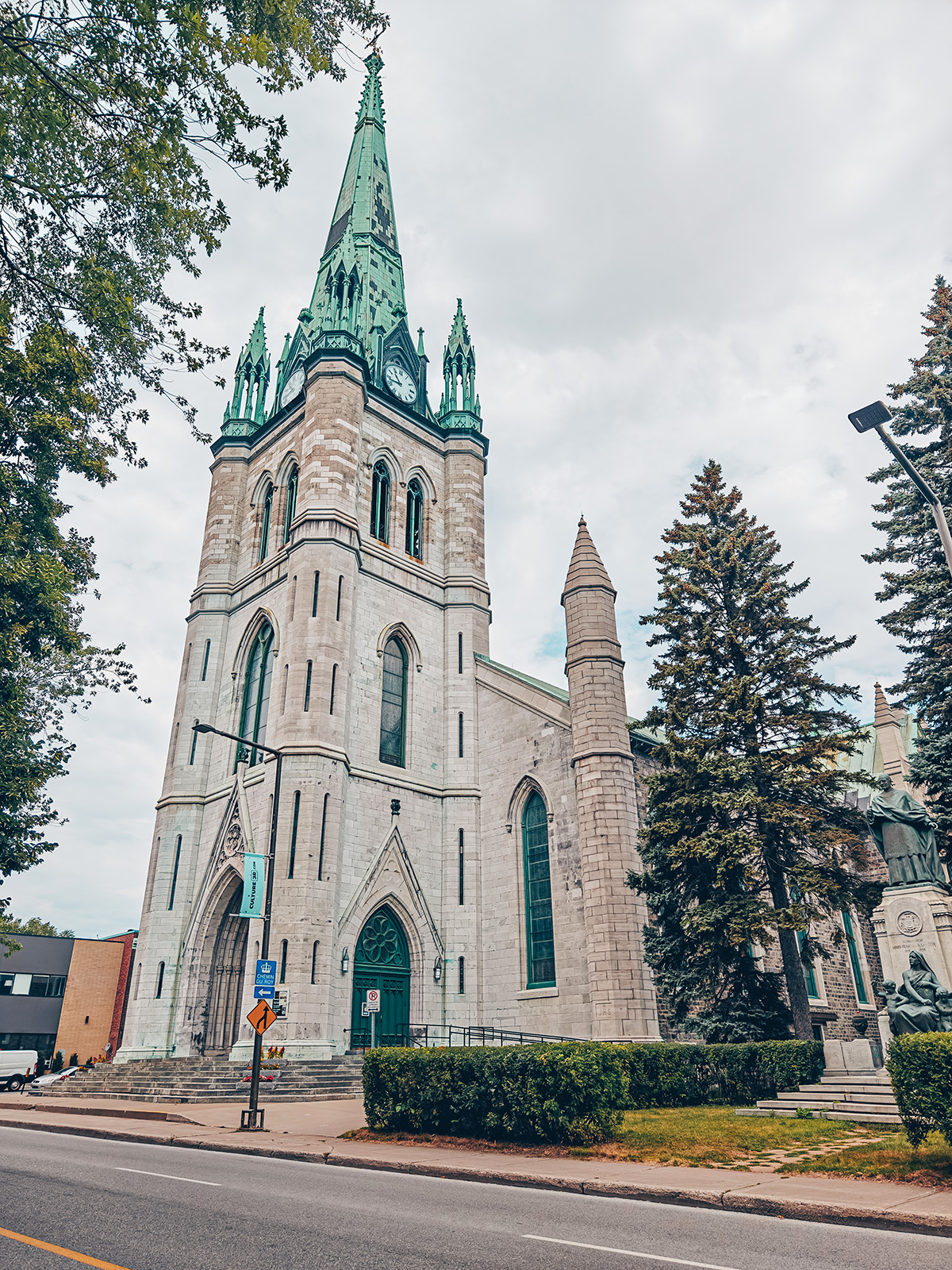
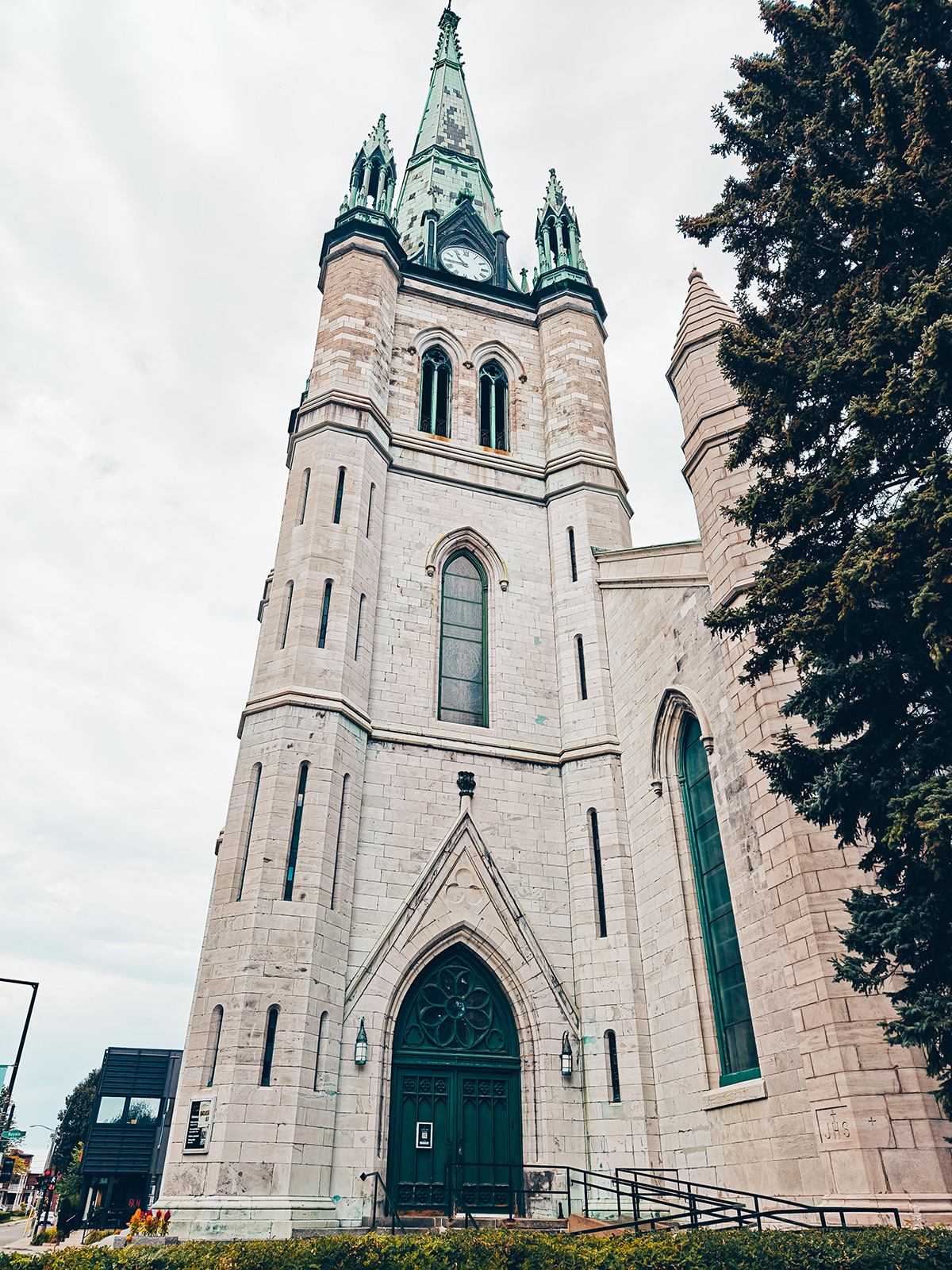
The Cathedral of the Assumption
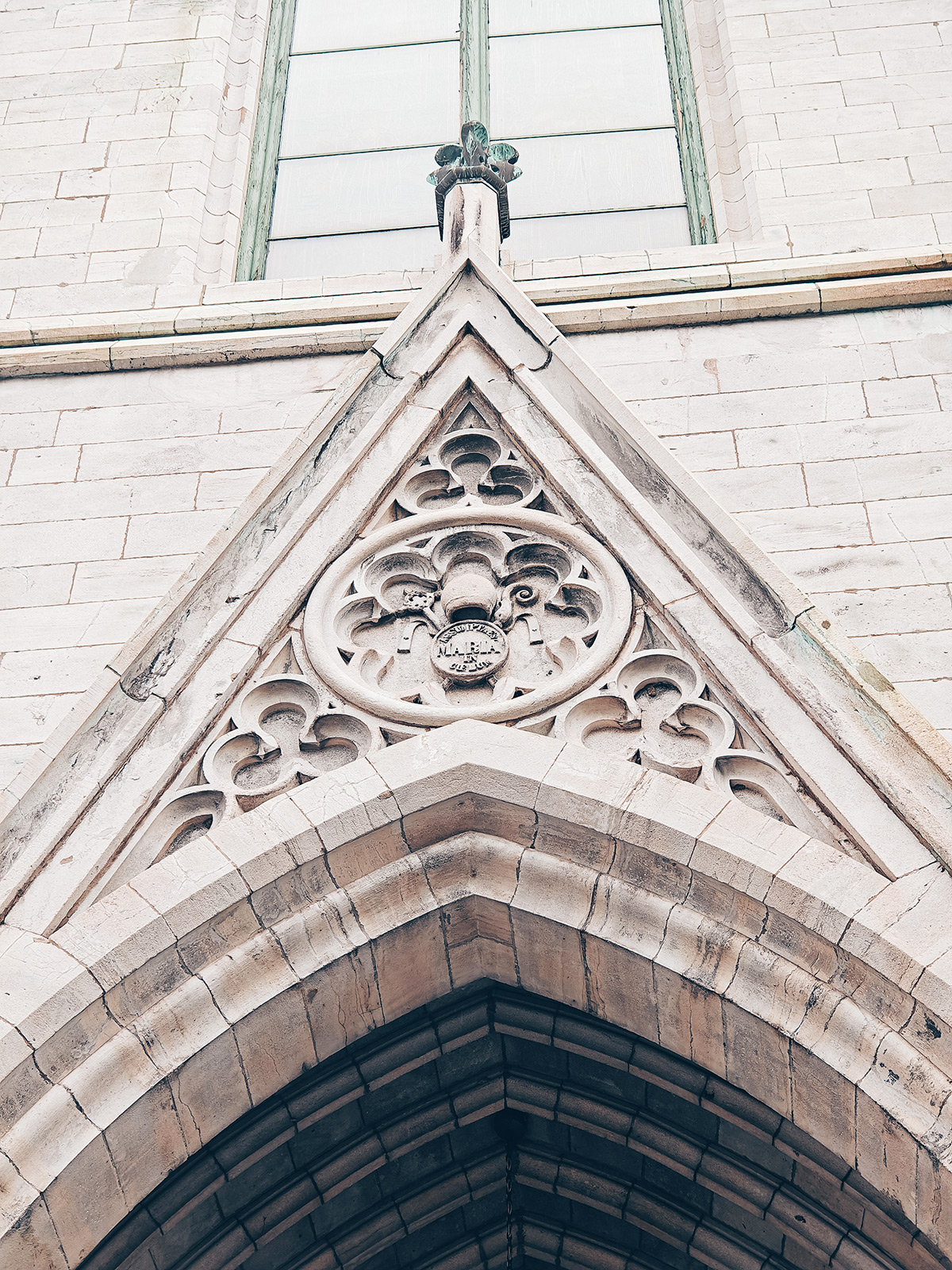
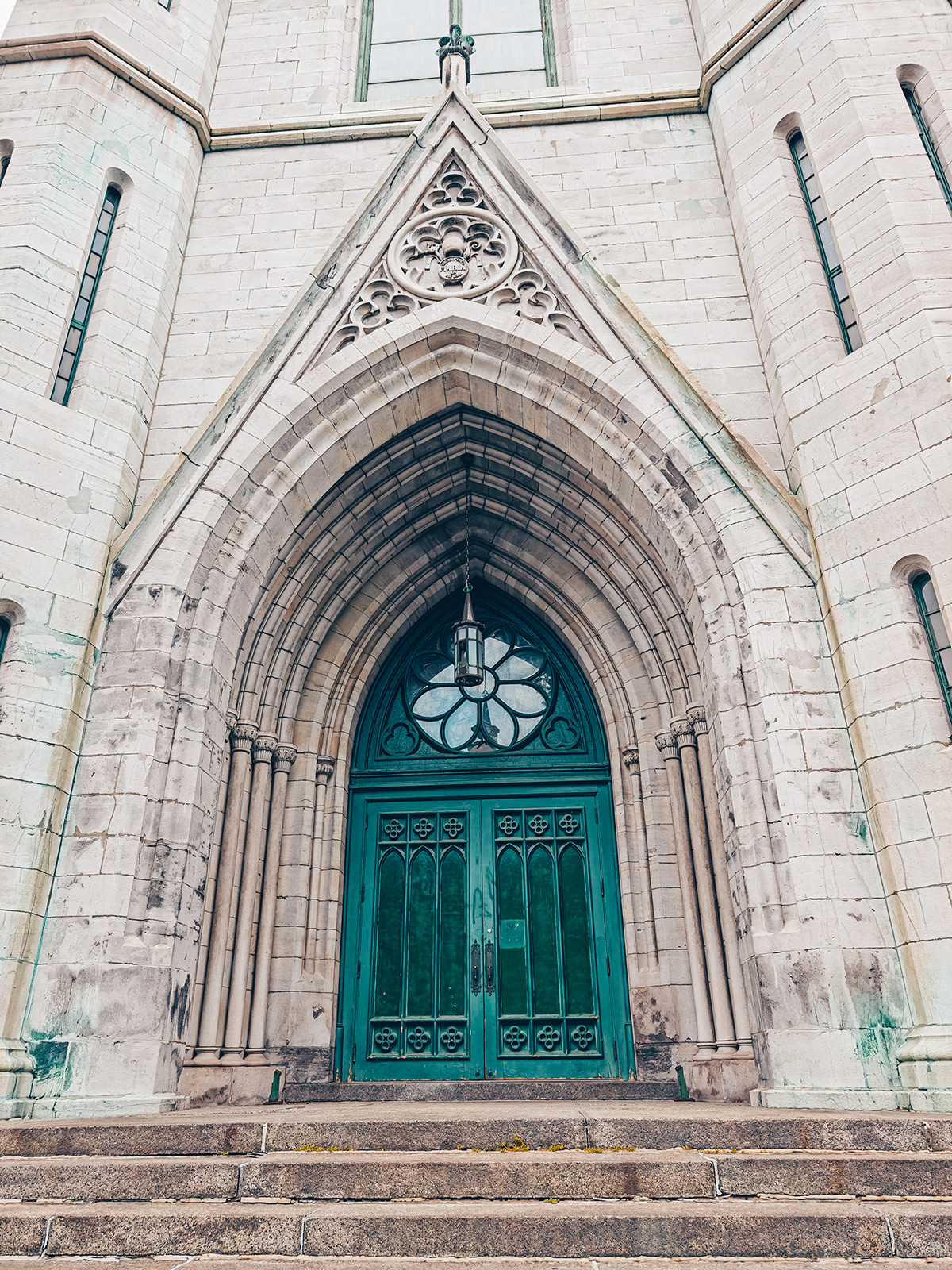
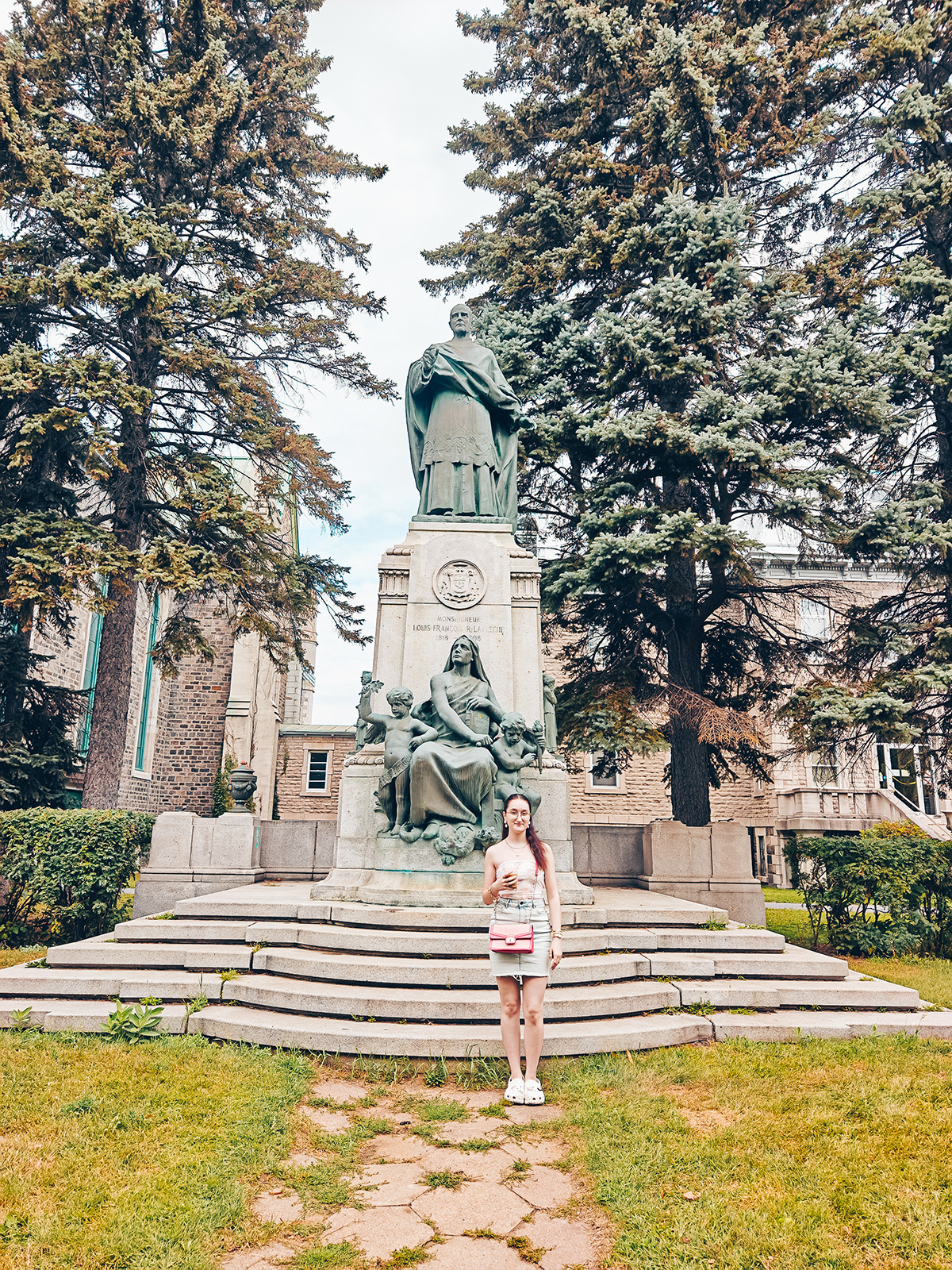
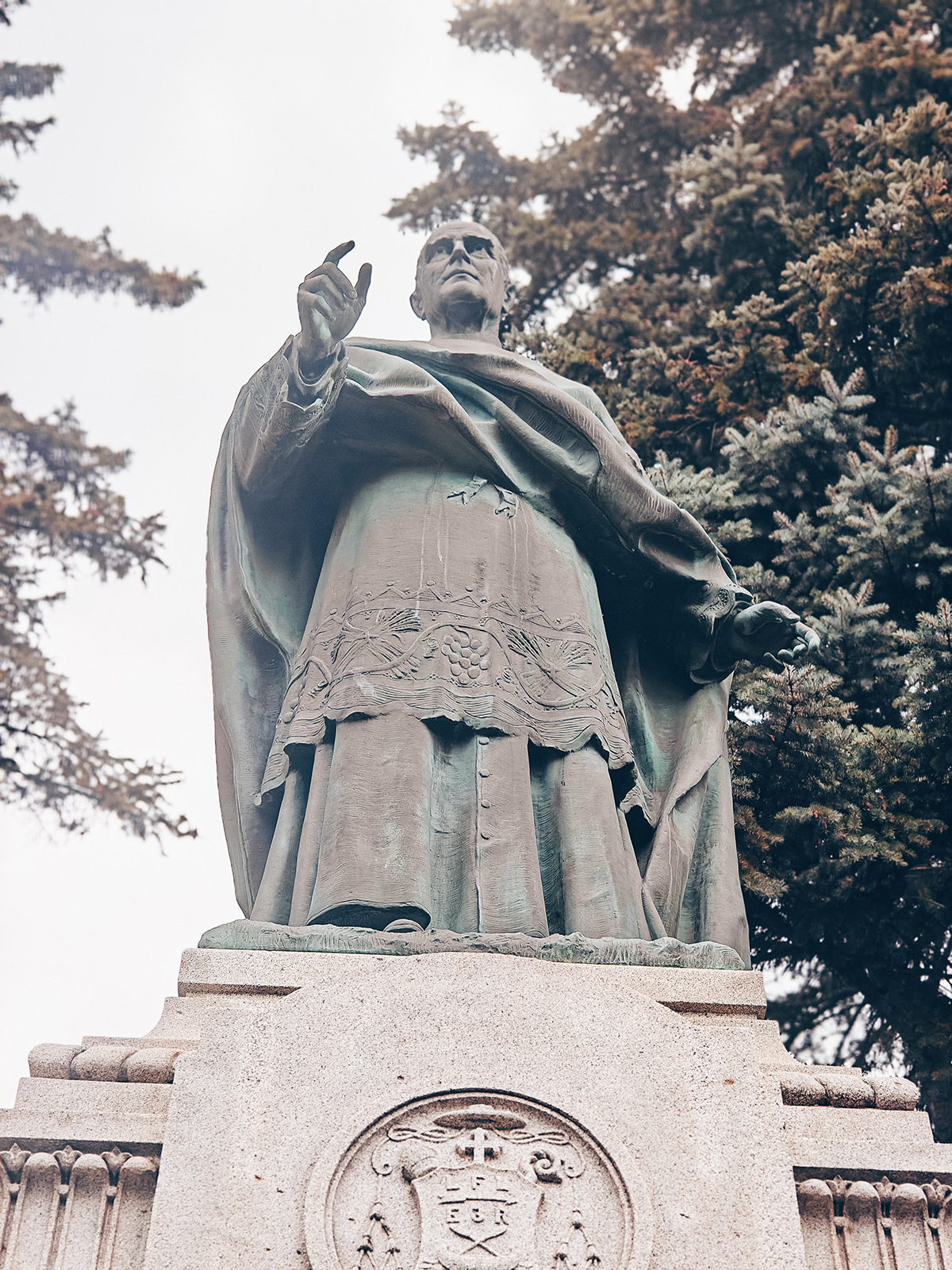
Rue BonaventureIt holds 125 stained-glass windows by Guido Nincheri, counted among the finest in Canada. They cannot be seen from the street: what these photographs show is the grey stone, the green copper of the spires, and the portal.
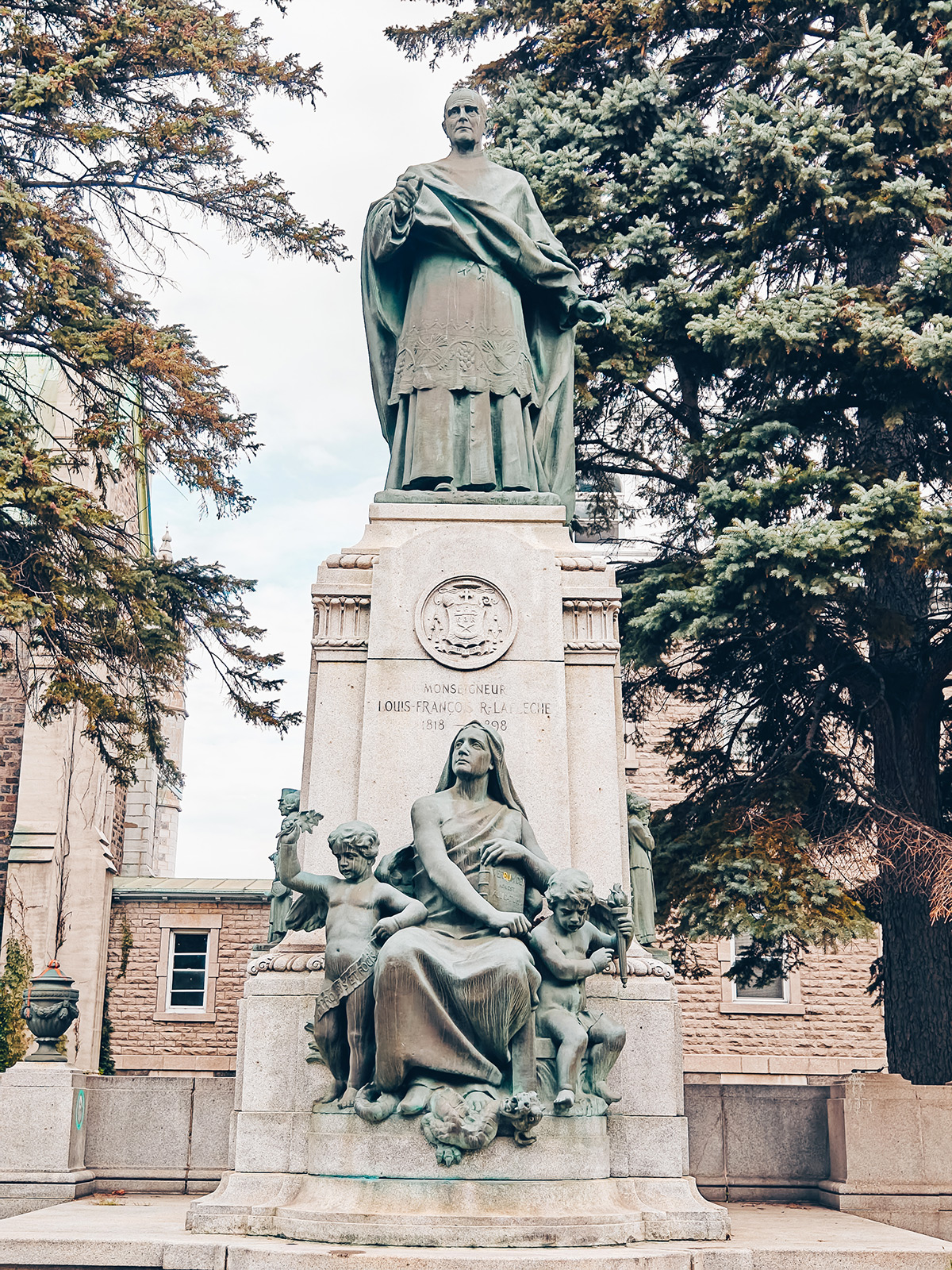
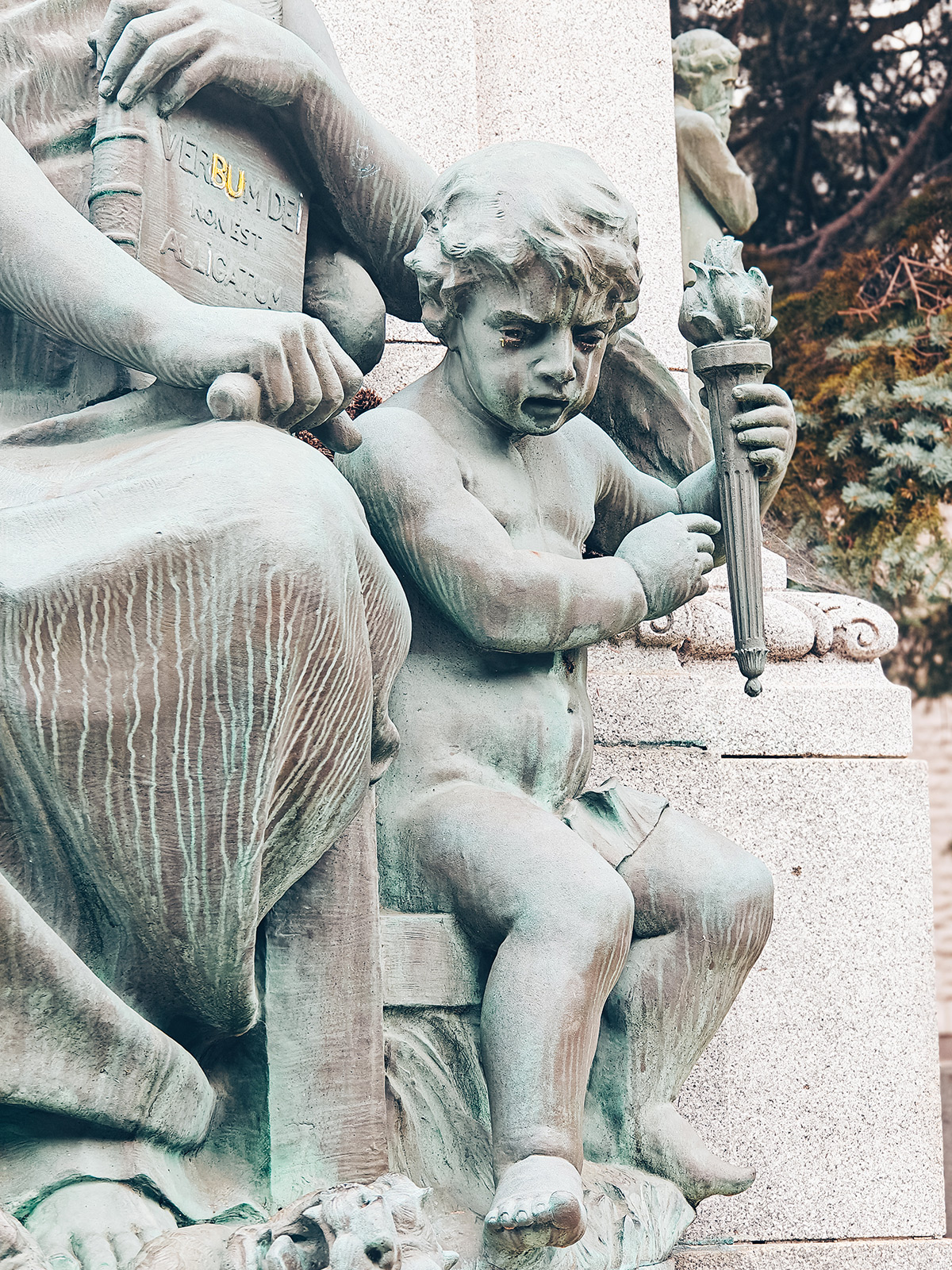
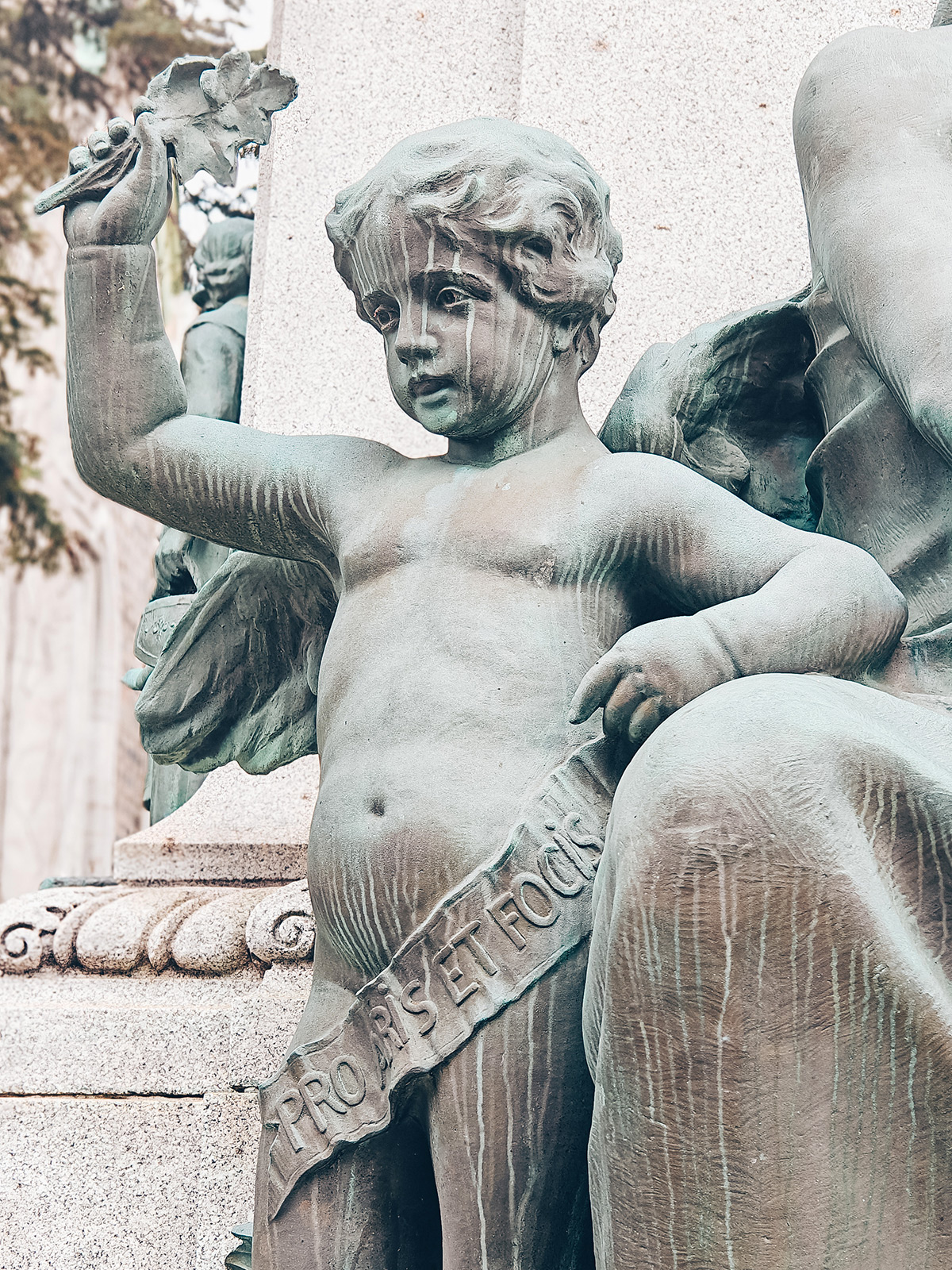
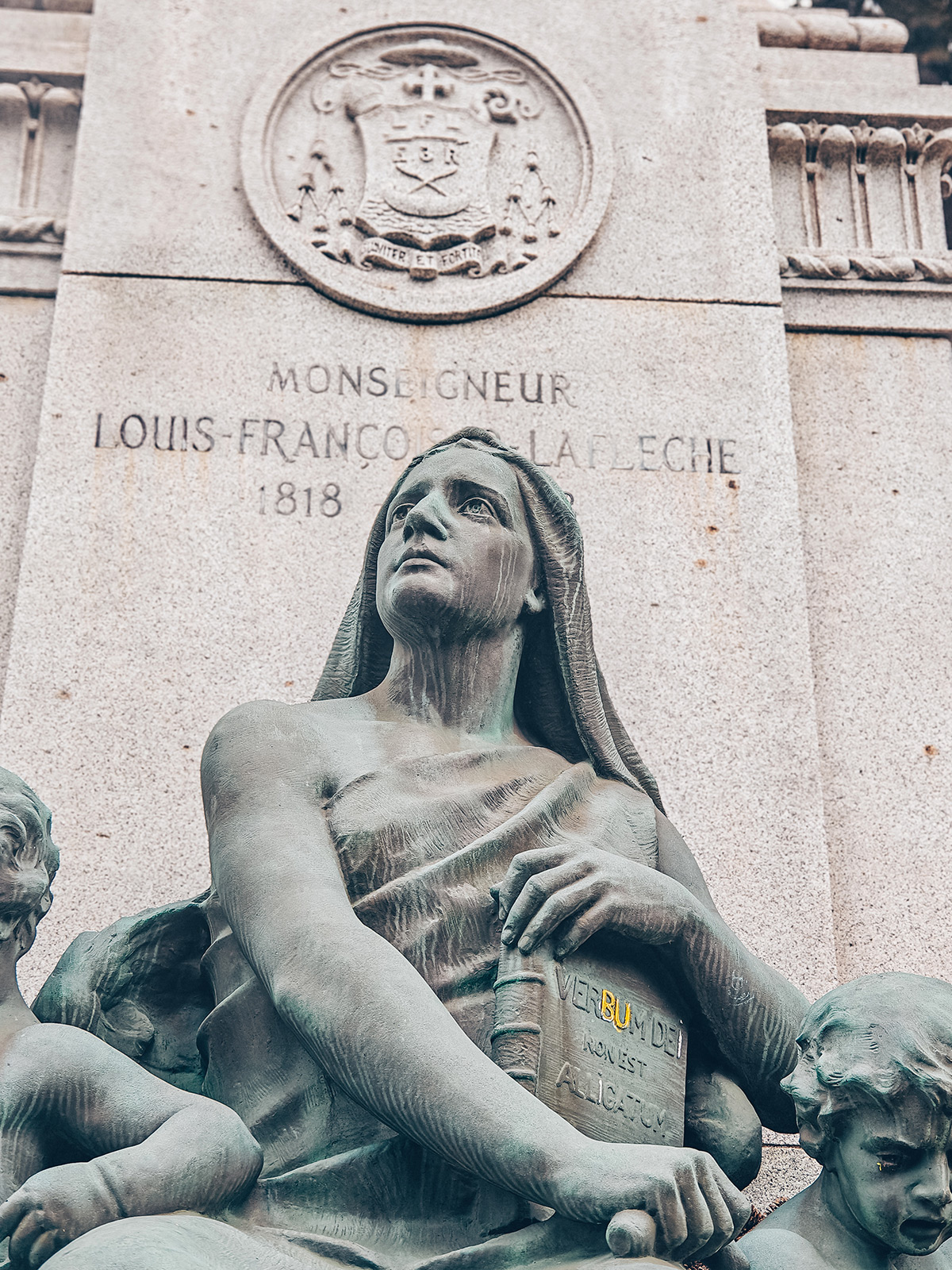
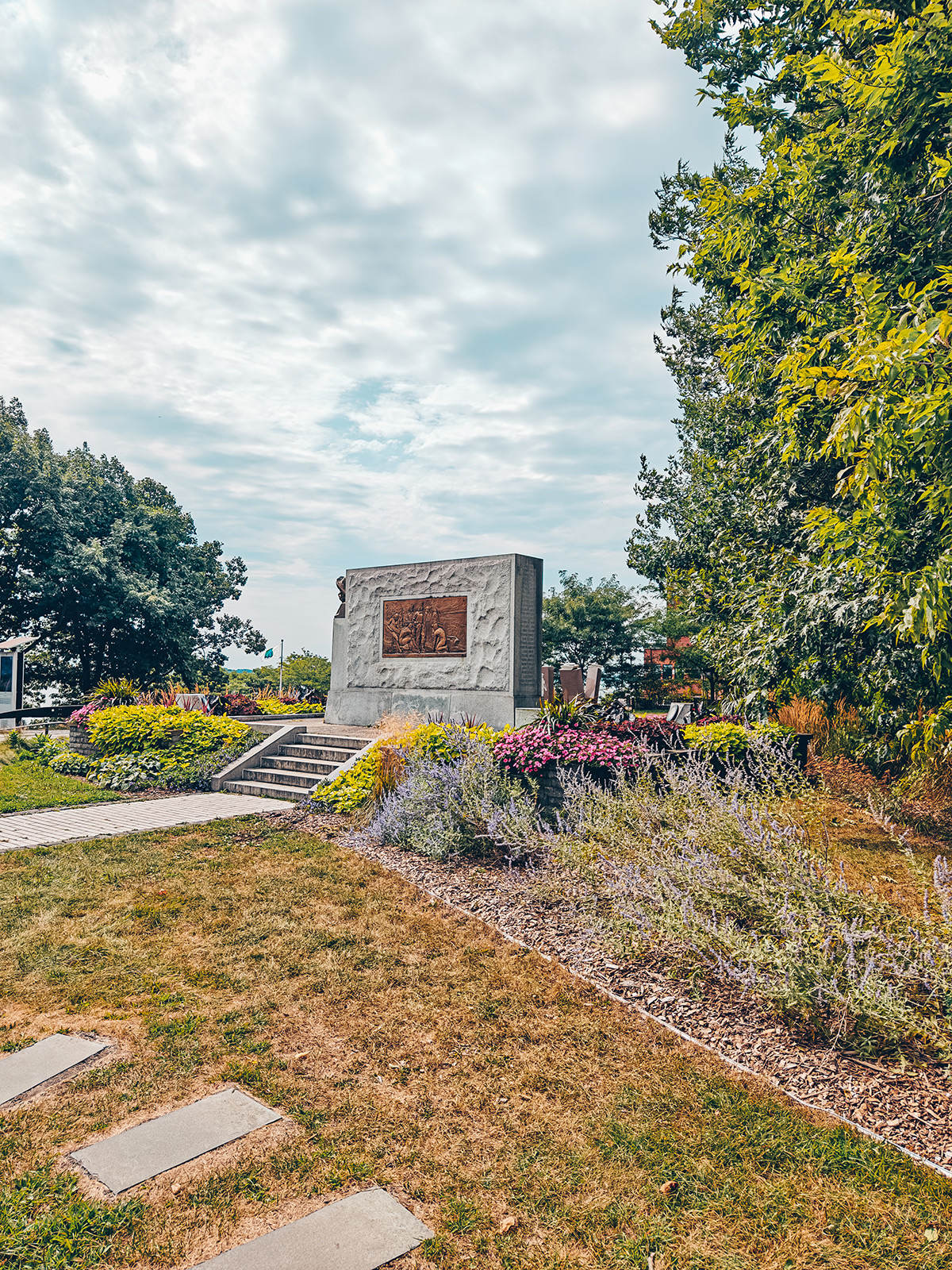
In front of it stands the monument to Bishop Louis-François Laflèche (1818-1898), second bishop of Trois-Rivières — a plinth peopled with bronze allegorical figures carrying the motto Pro aris et focis.
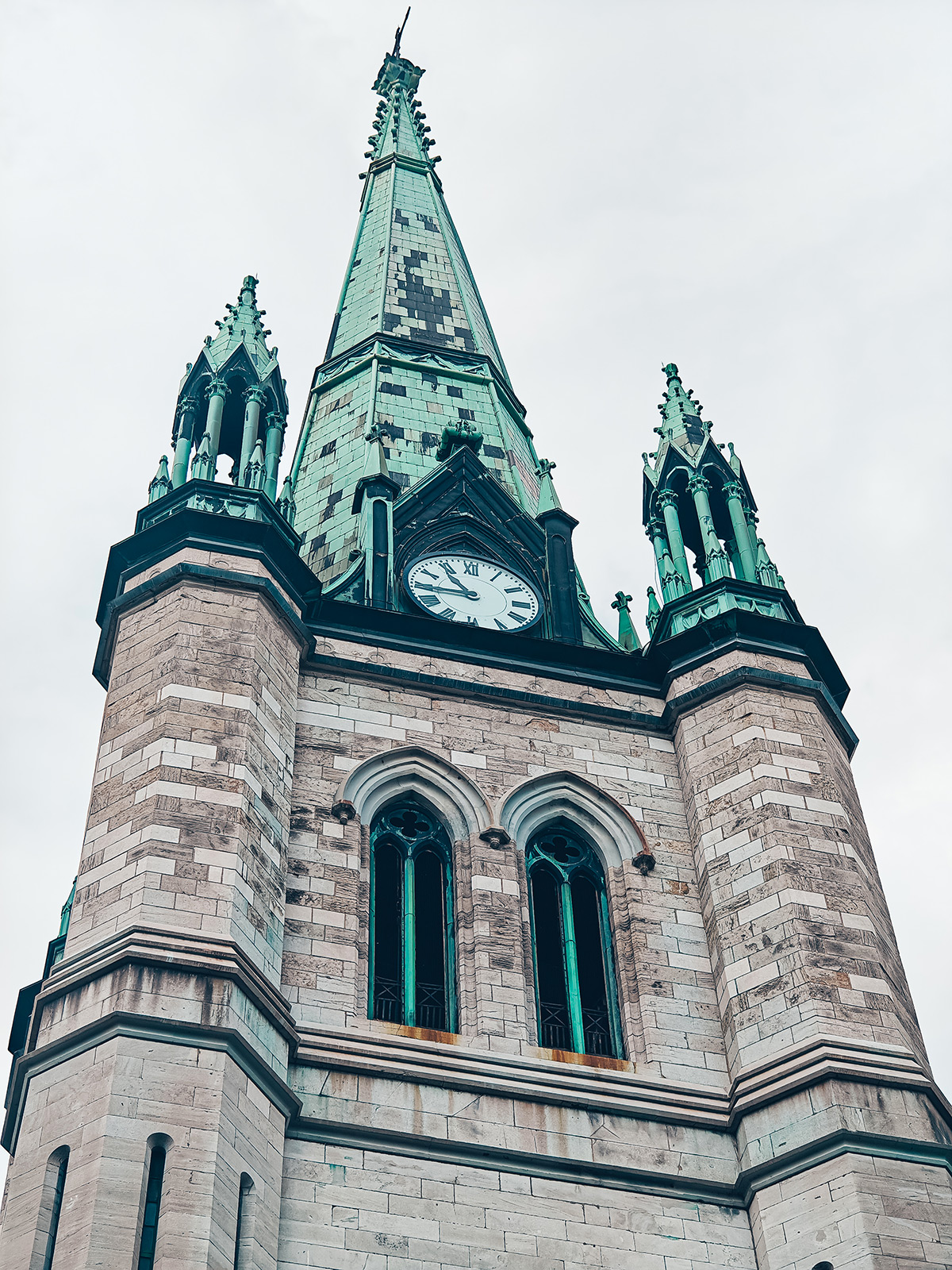
Victor Bourgeau
1854 – 1858
The architect gave the cathedral its English neo-Gothic lines: sixty-four metres long, twenty-six wide, on a Latin cross plan.
English neo-Gothic
The pointed vault and the buttresses come from English Gothic, not from the French kind.
125 windows
Guido Nincheri made the cathedral’s stained glass. It can only be seen from within.
Rosa Mystica
The stained-glass programme, begun in 1925, is devoted entirely to the Virgin.
Sixty-four metres
64 mThe nave runs sixty-four metres long by twenty-six wide, on a Latin cross plan.
Guido Nincheri
The Florentine-born master glassmaker signed here the largest single body of windows to leave his workshop.
Only from inside
From the street the cathedral is a mass of grey stone. The hundred and twenty-five windows only read from inside the nave, against the light.
The Cap shrine
Cap-de-la-Madeleine
At the other end of the city, the Notre-Dame-du-Cap shrine draws over five hundred thousand pilgrims and visitors a year.
In front of the cathedral
The monument stands on the forecourt: you cannot go in without passing it.
Parc Champlain
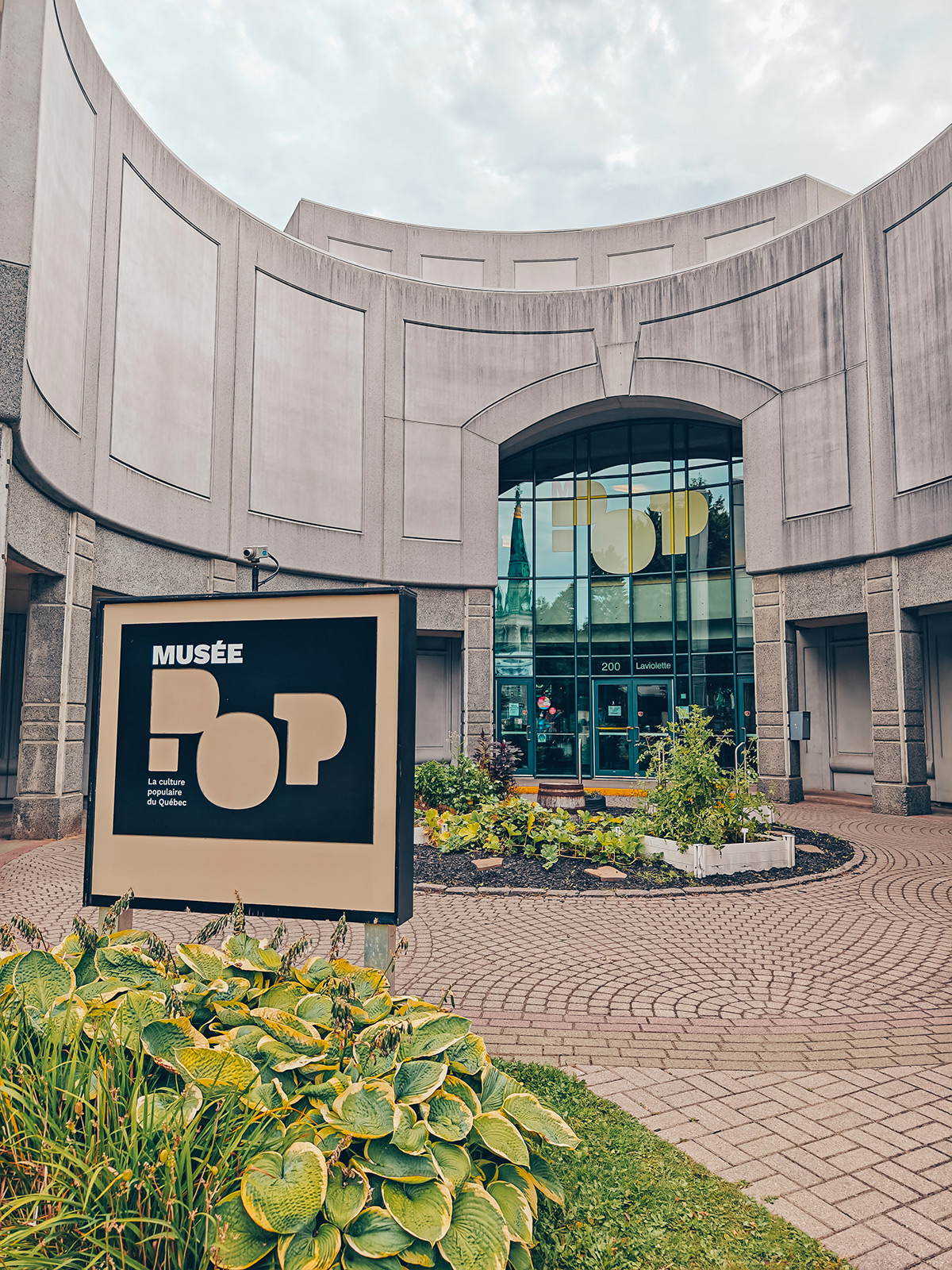
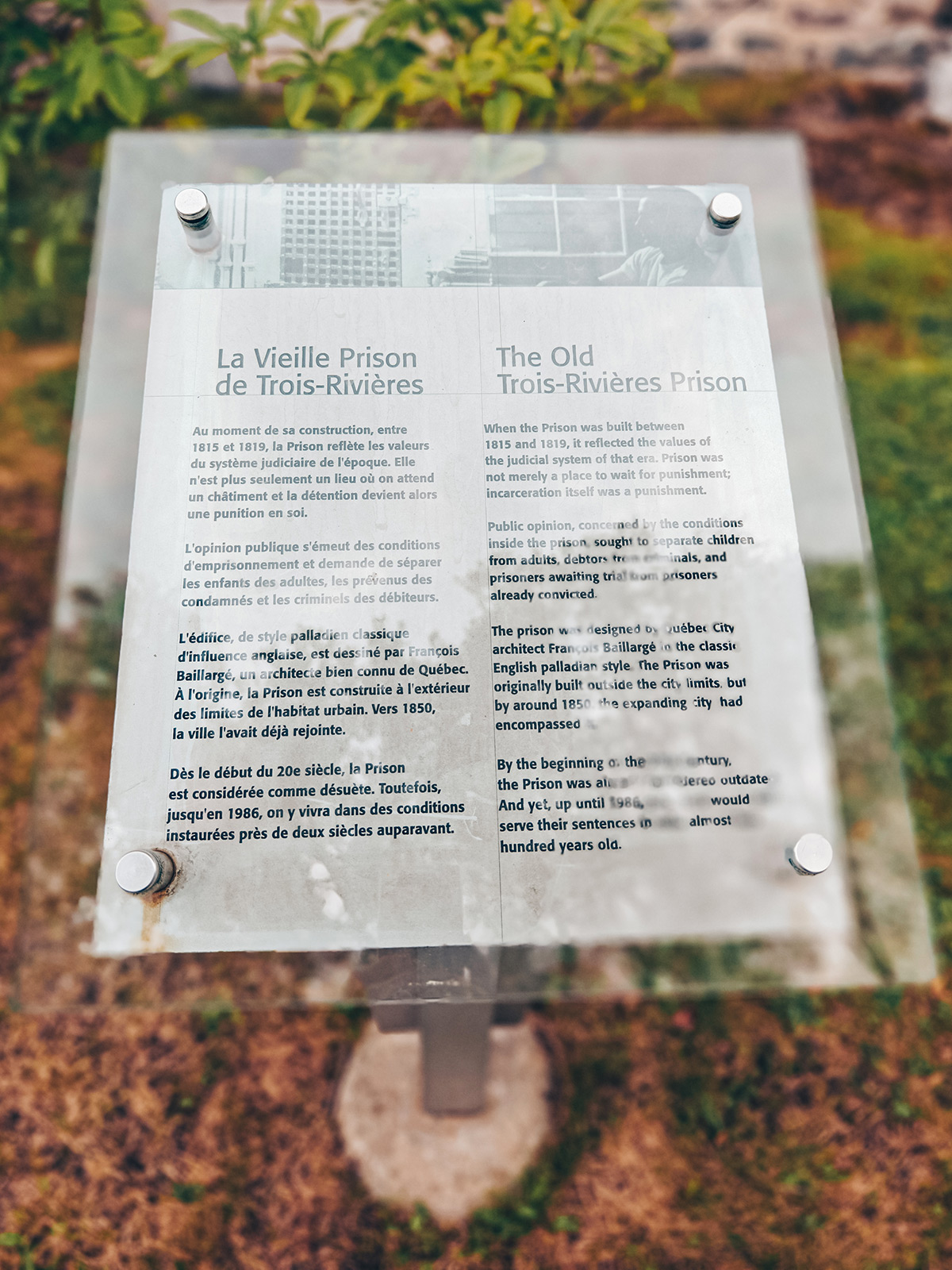
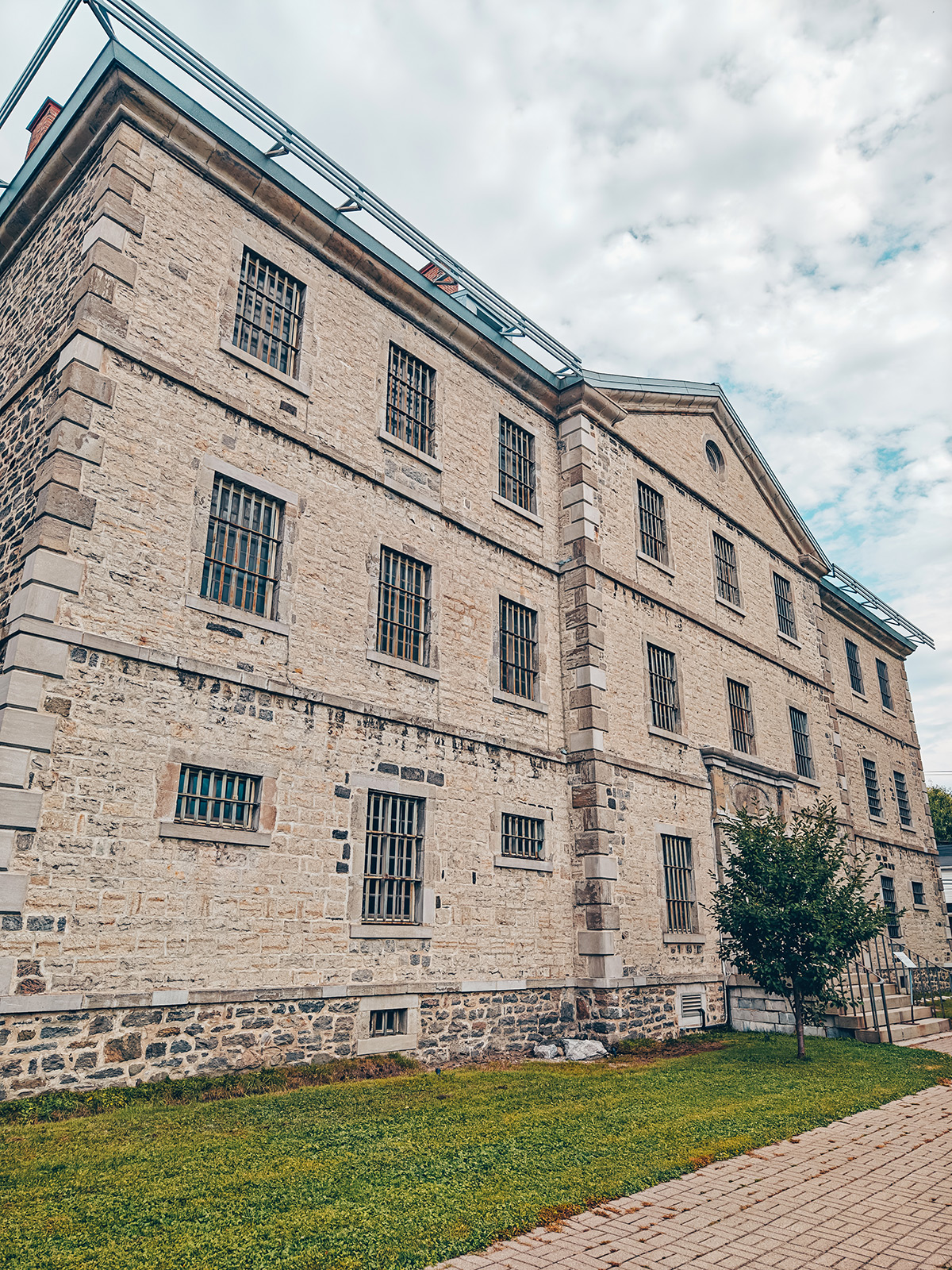
The middle of townA few steps away, the Musée POP — Quebec’s museum of popular culture. Its six simultaneous exhibitions and its store of 70,000 objects tell the story of everyday life rather than great men, which is rarer than it sounds. The museum also occupies the old prison, in service until 1986.
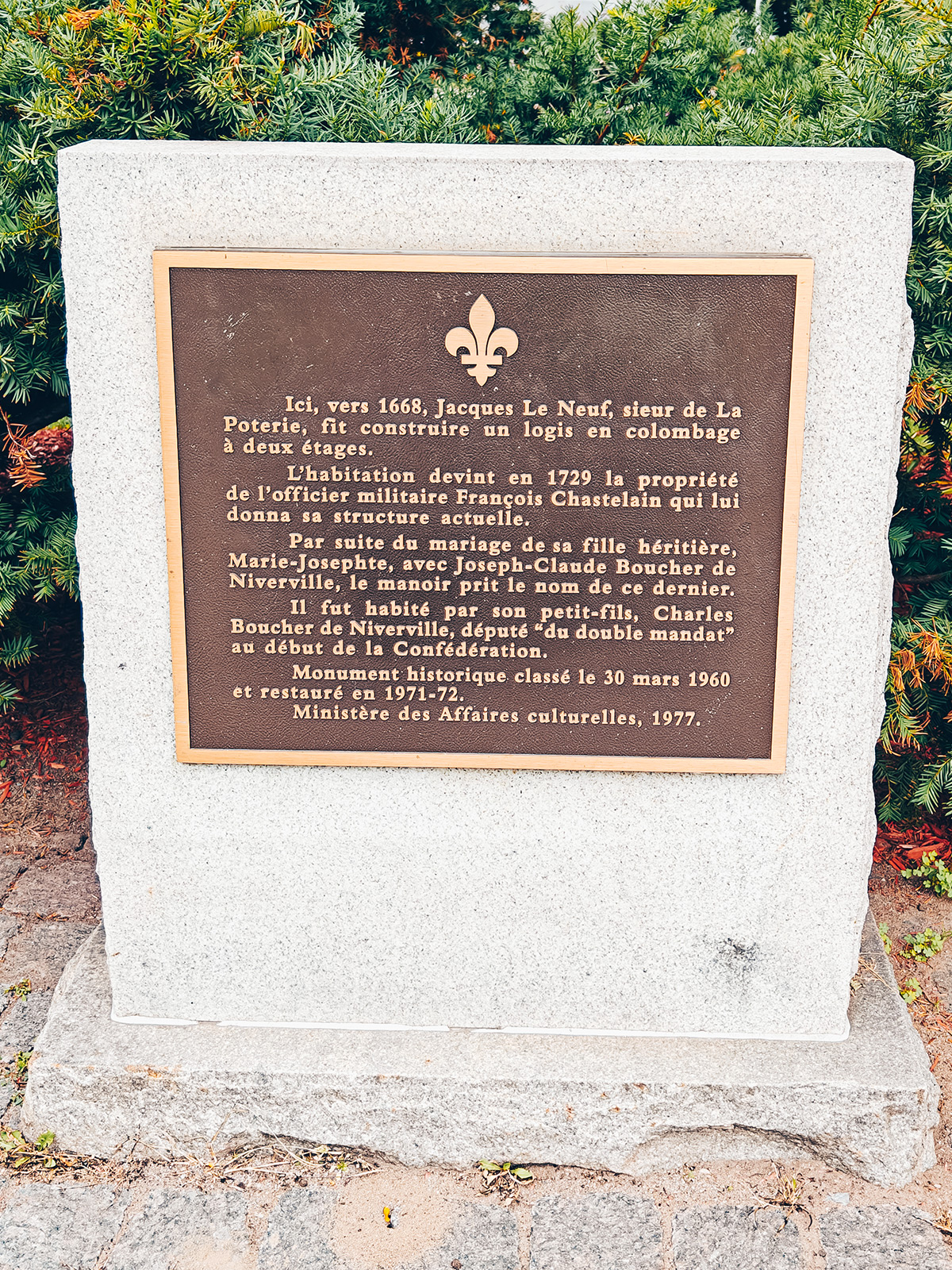
The green lung
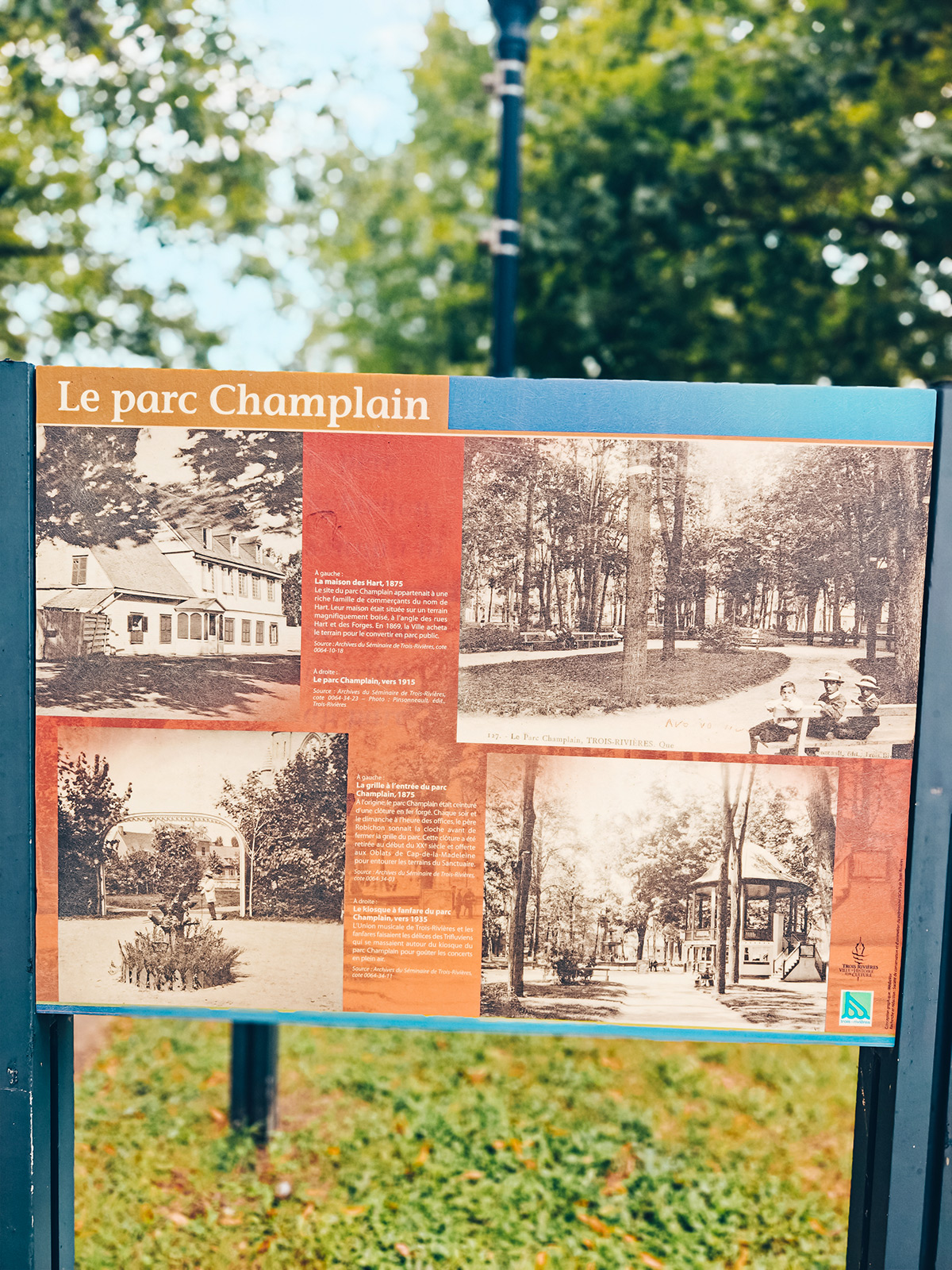
Parc Champlain fills a whole block in the middle of town, between the cathedral and the city hall.
Poems in the street
1985Since 1985 the International Poetry Festival has scattered poems across the whole city, every autumn.
FestiVoix
At the end of June, music takes over downtown for ten days.
Around the square
Cafés and terraces line the park; this is where the city arranges to meet.
The old jail
1822 – 1986
It held prisoners for a hundred and sixty-four years. It is now part of Musée POP, devoted to Quebec popular culture, and is visited with a guide.
Musée POP
A social history museum devoted to Quebec popular culture, housed in the same complex as the jail.
The guided tour
You enter the cells with a guide; former inmates have told the story of the place.
Evening in the park
The lamps come on early in autumn, and people keep crossing the square well into the evening.
The university
1969The Université du Québec à Trois-Rivières was founded in 1969; its campus is in town and gives the city its student population.
The Cogeco amphitheatre
at the confluence
Three thousand five hundred seats and five thousand five hundred on the grass, at the exact point where the Saint-Maurice meets the river.
A pause
You sit on a bench in the square while the shower passes, and the city carries on around you.
A city that remembers
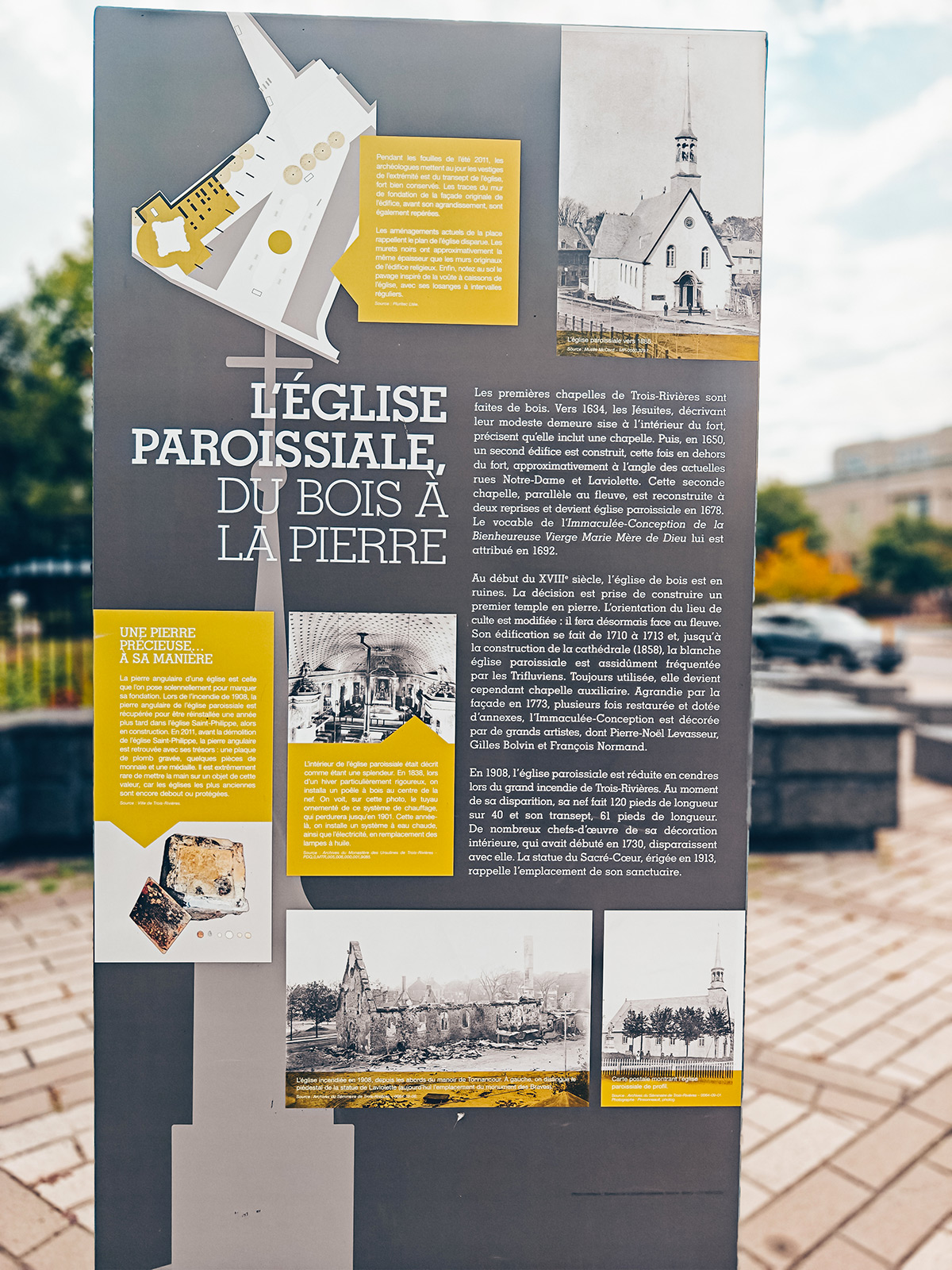
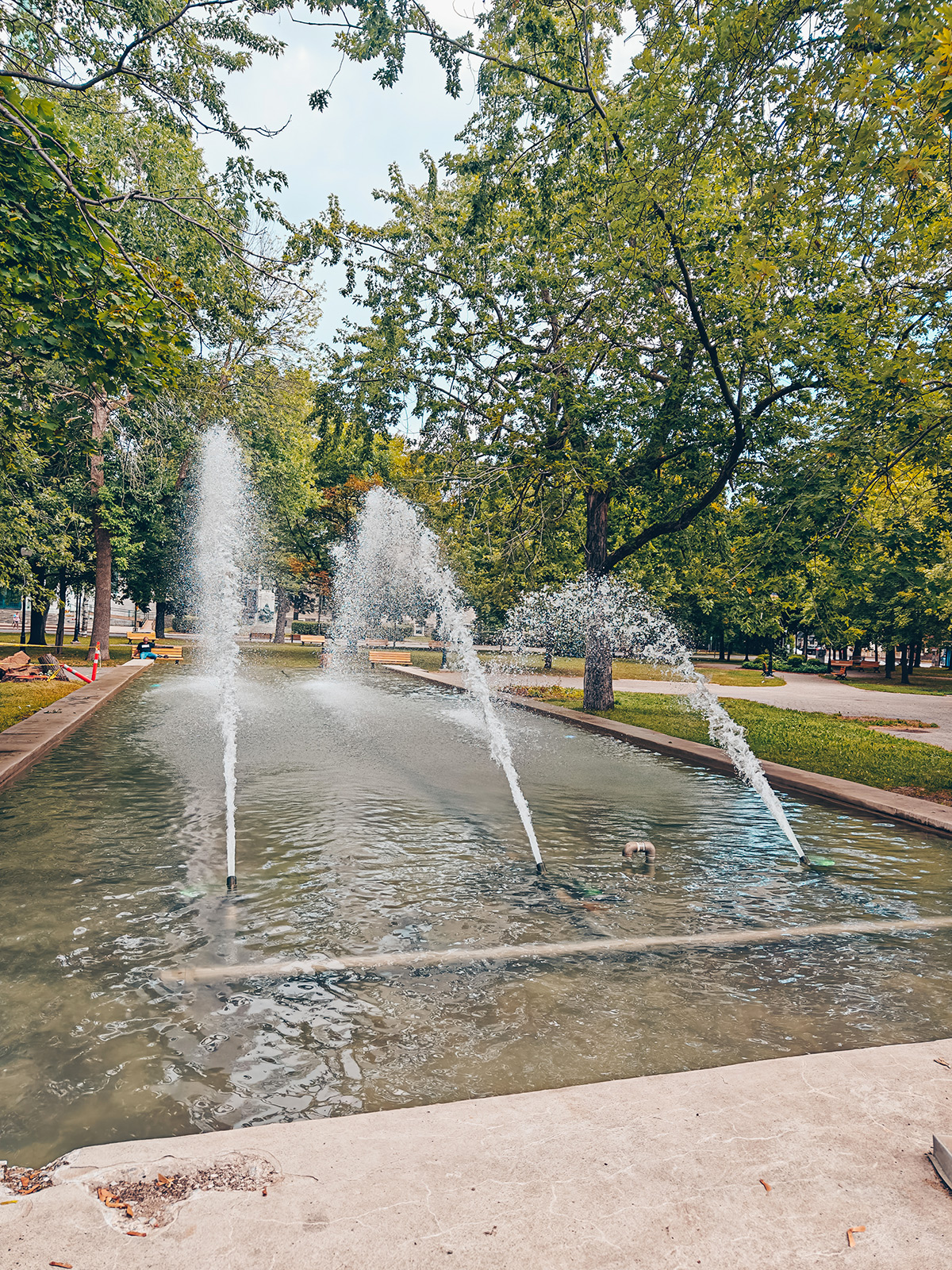
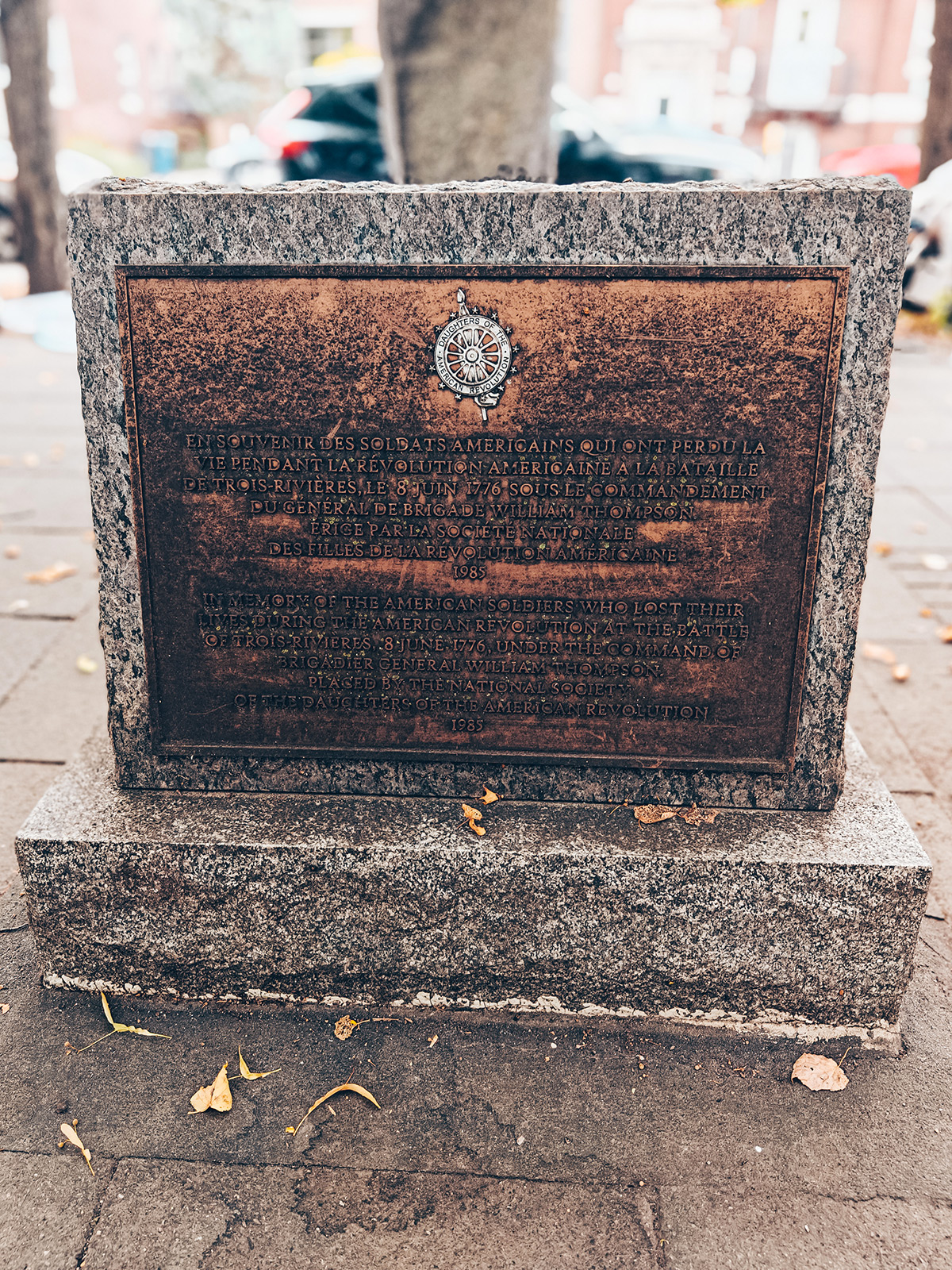
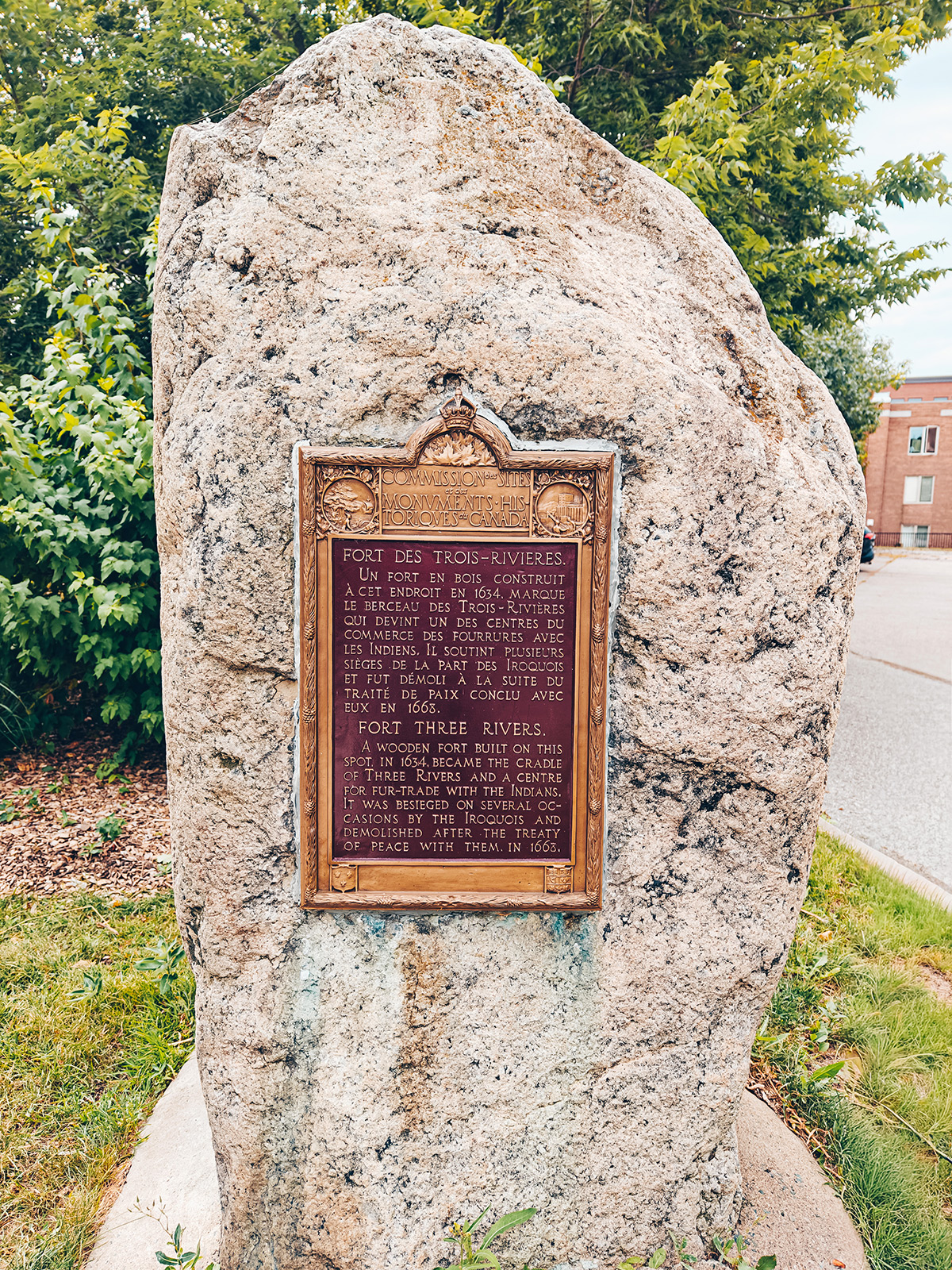
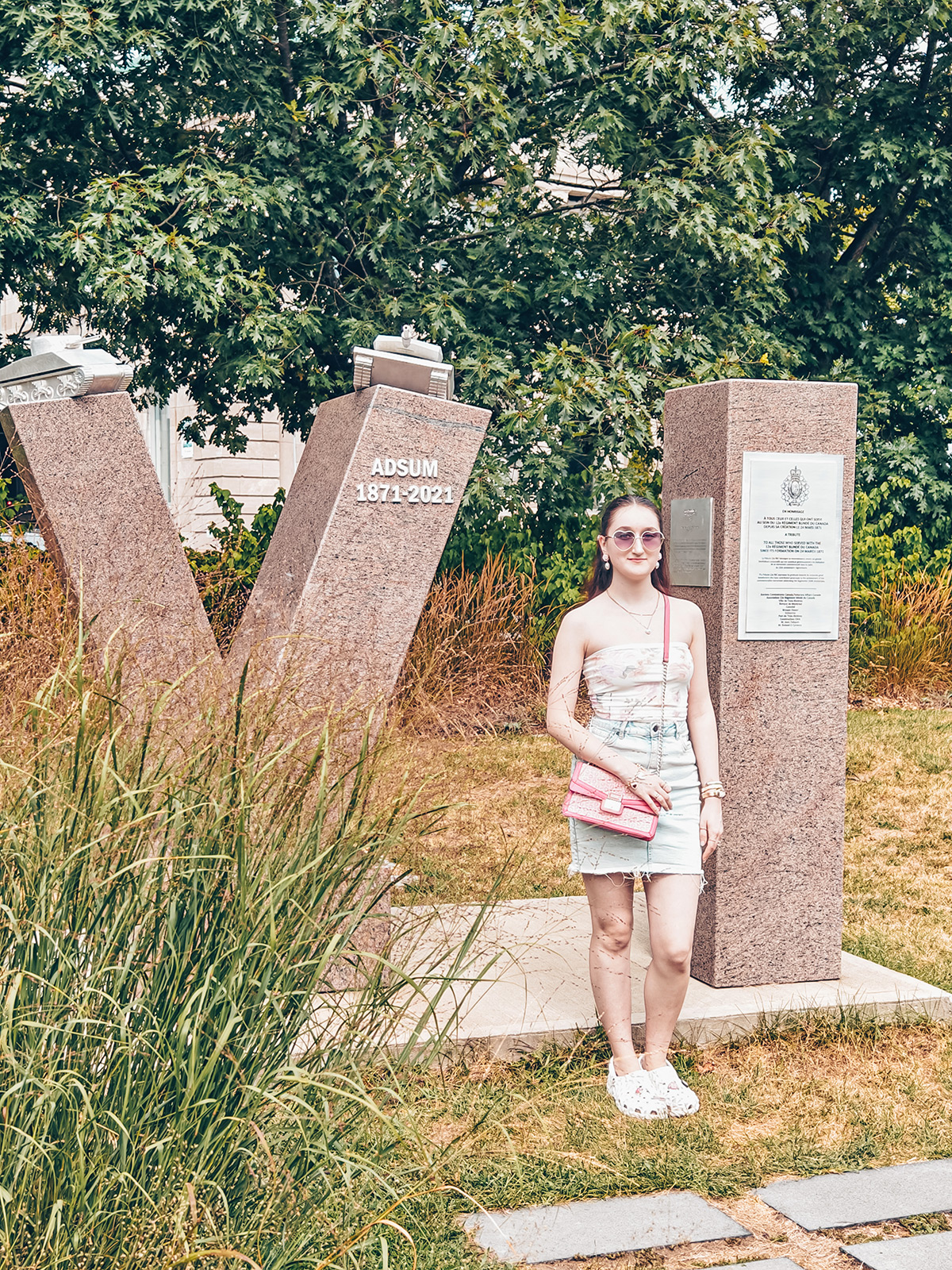
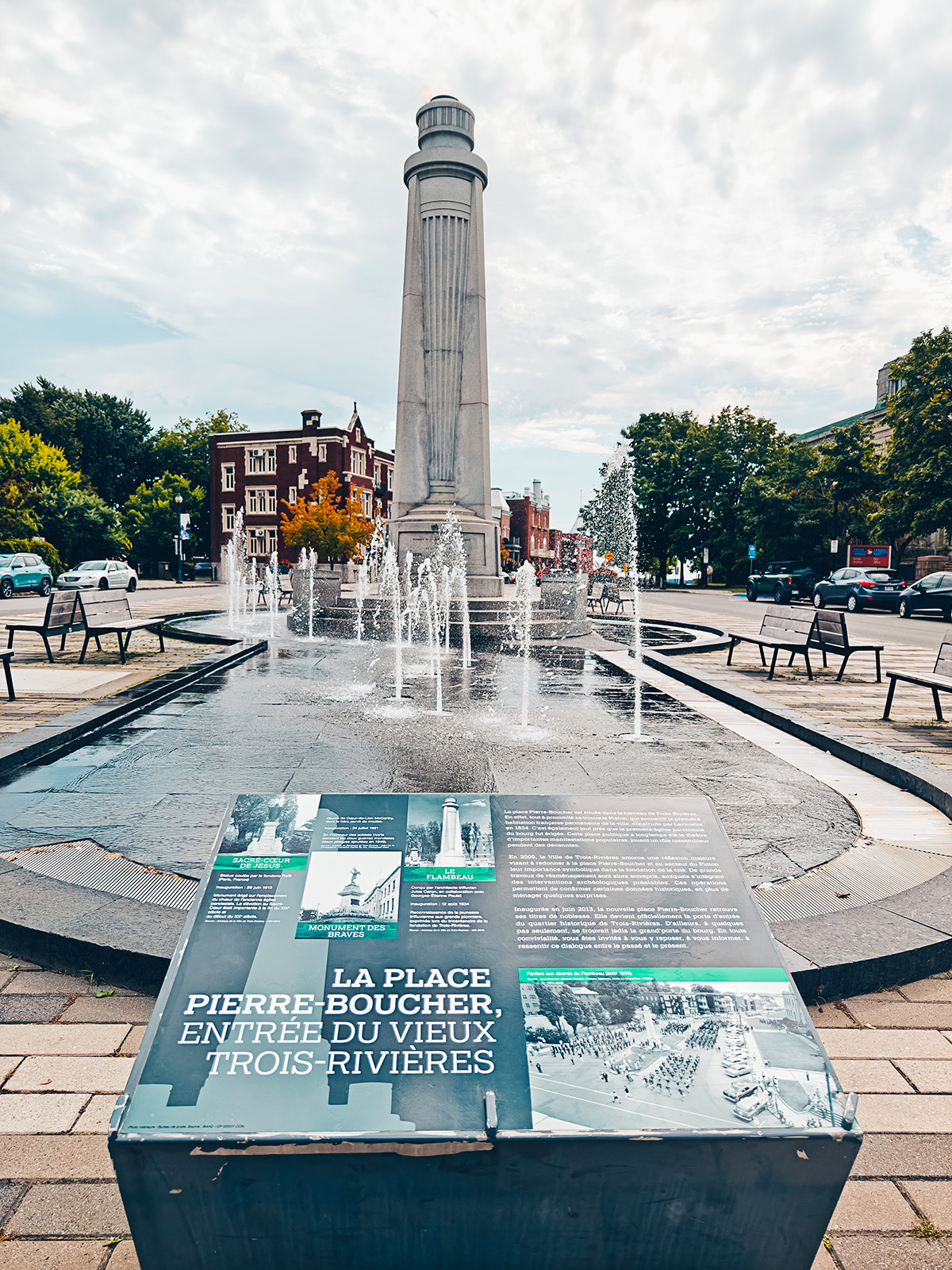
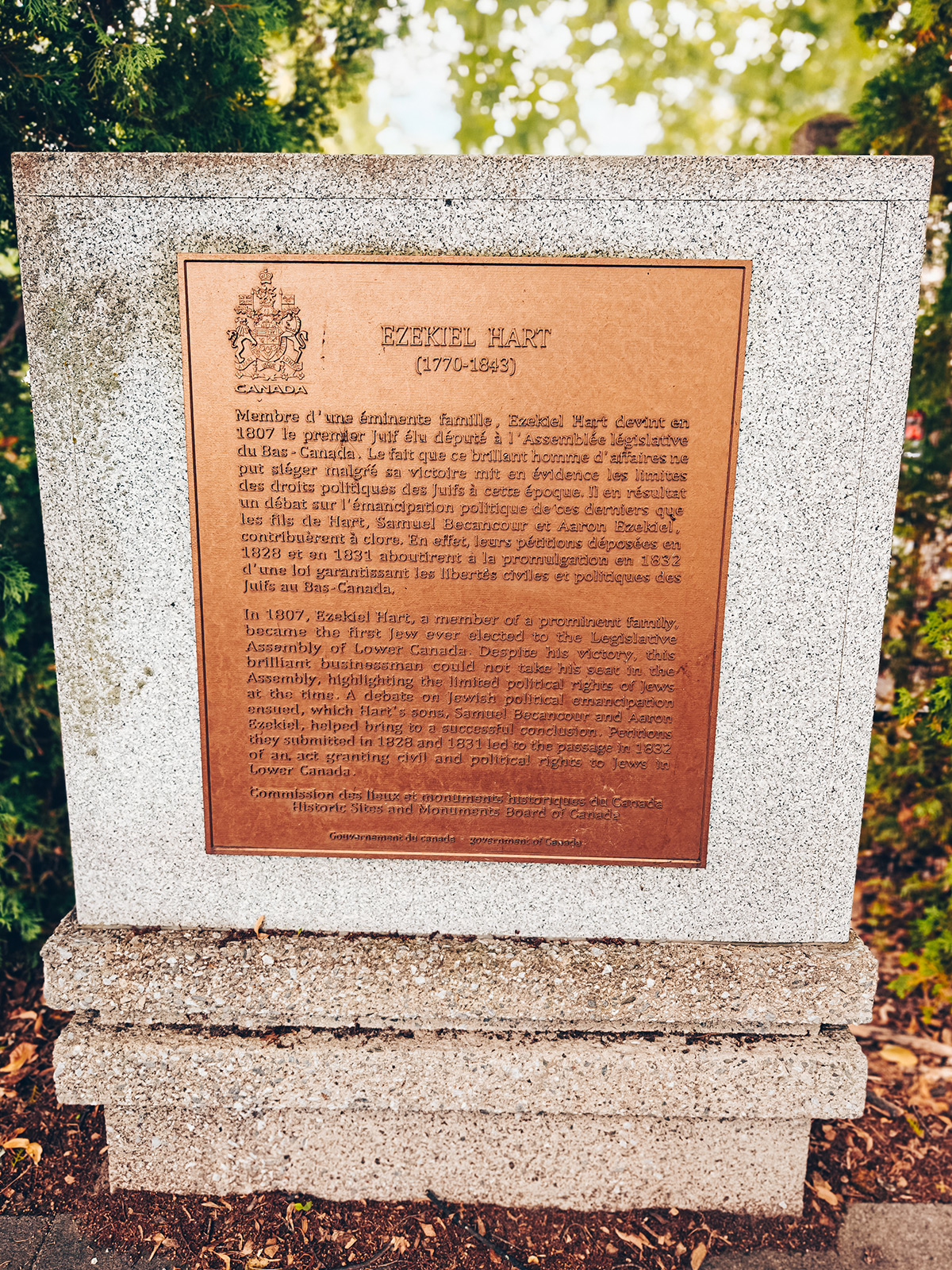
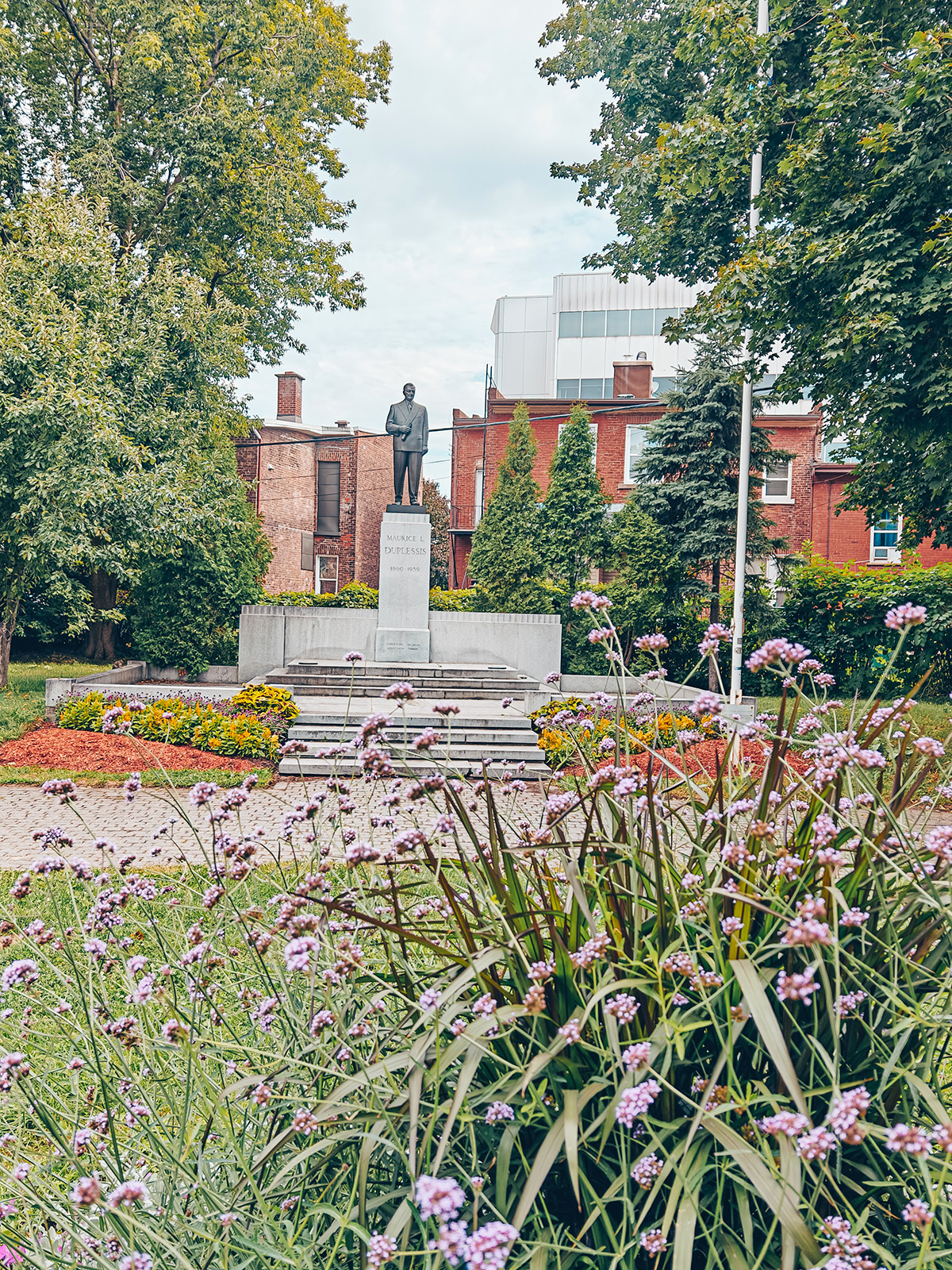
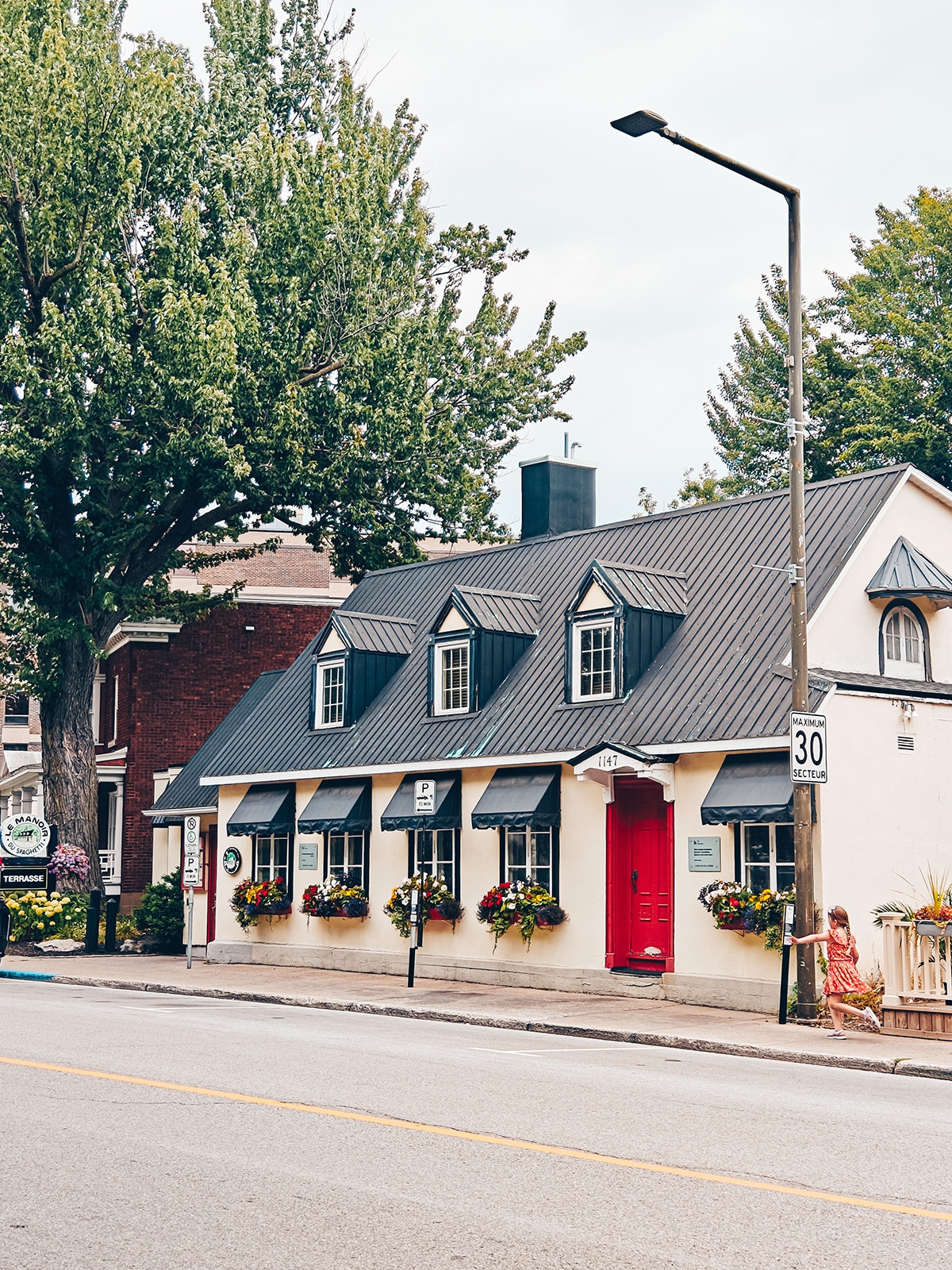
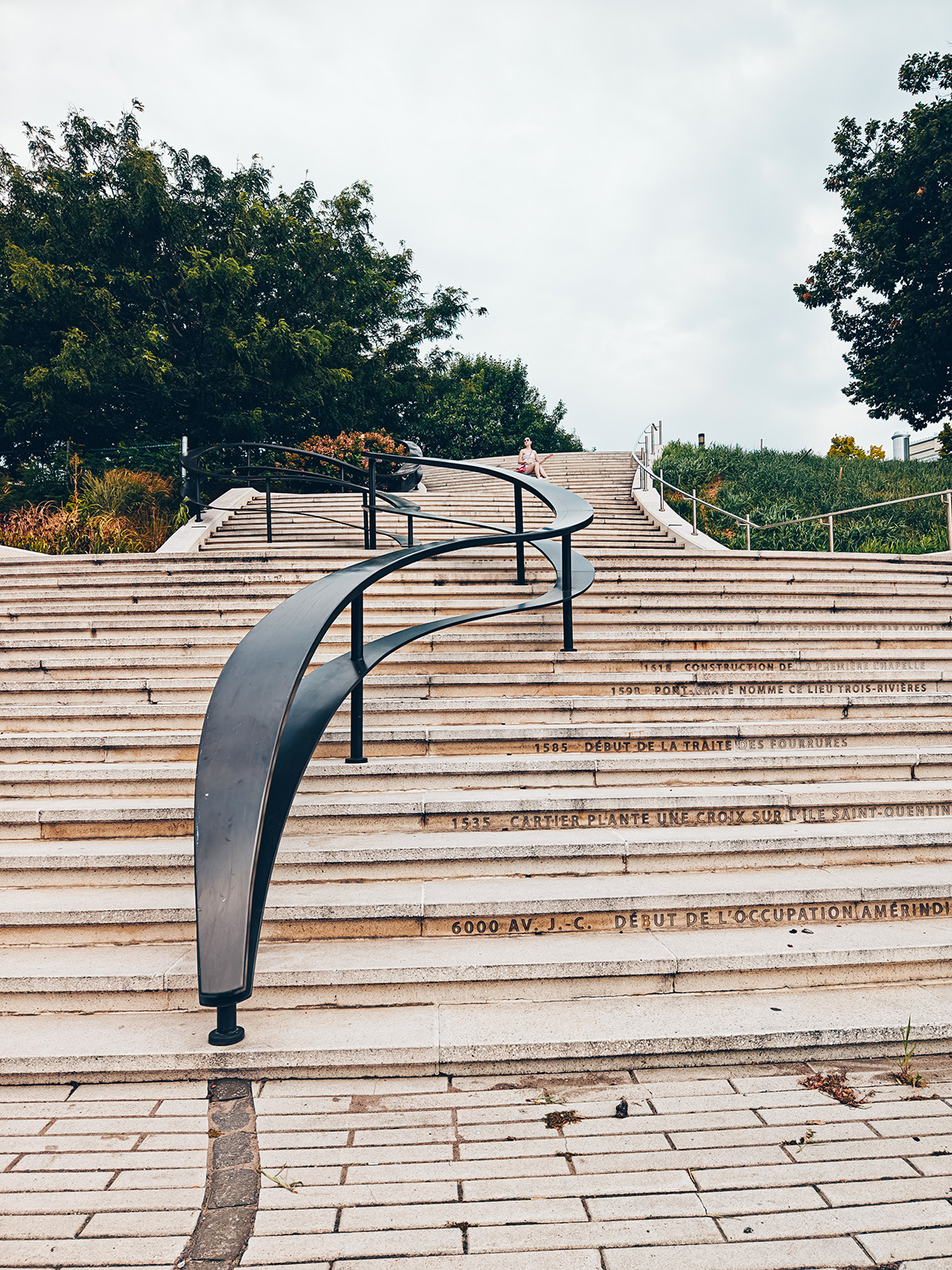
Plaques, monuments and panelsThe site was used long before: Indigenous peoples met here to trade, at the meeting of the Saint-Maurice and the river. Laviolette built his dwelling on the Platon, the raised plateau above the water.
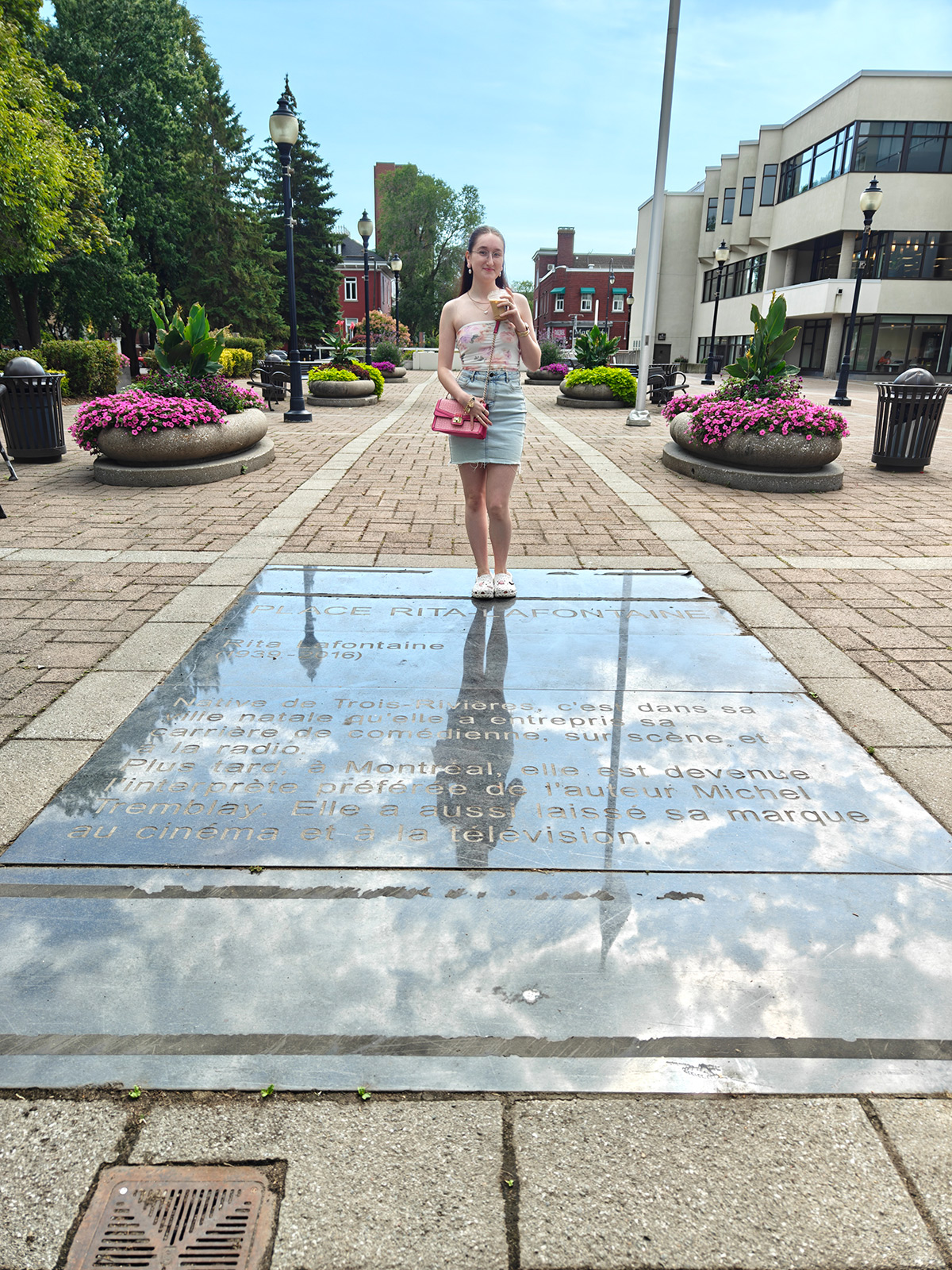
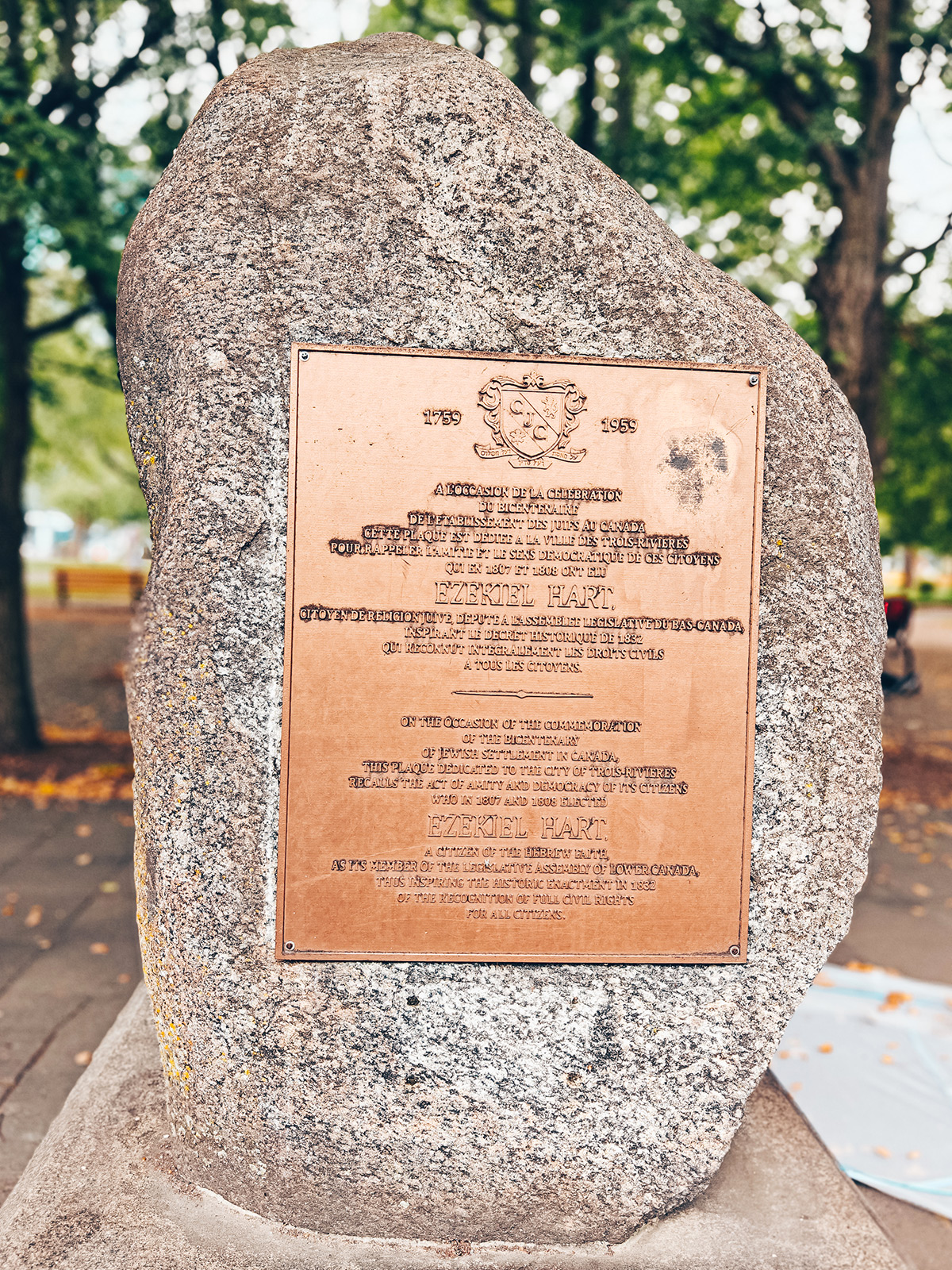
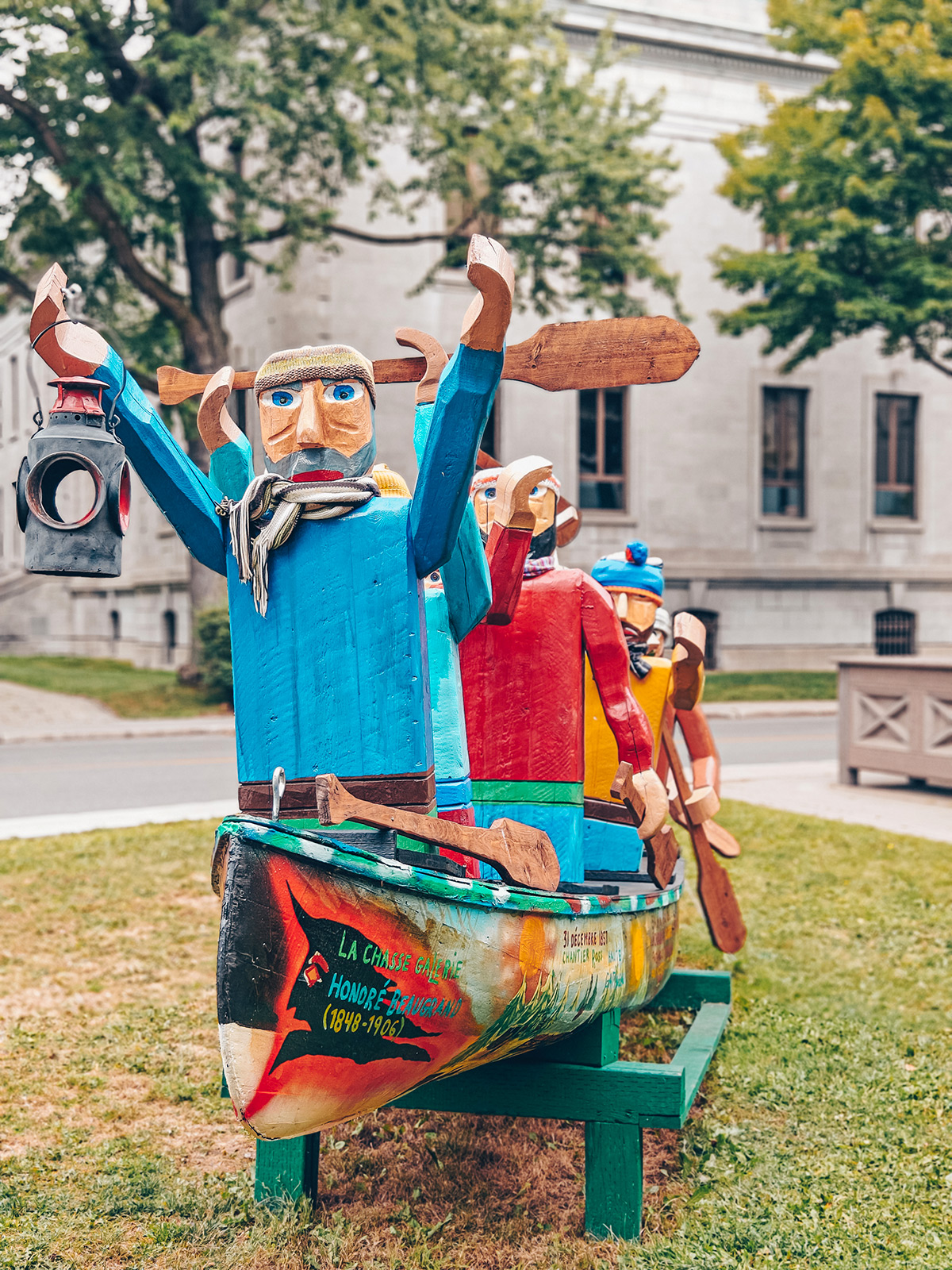
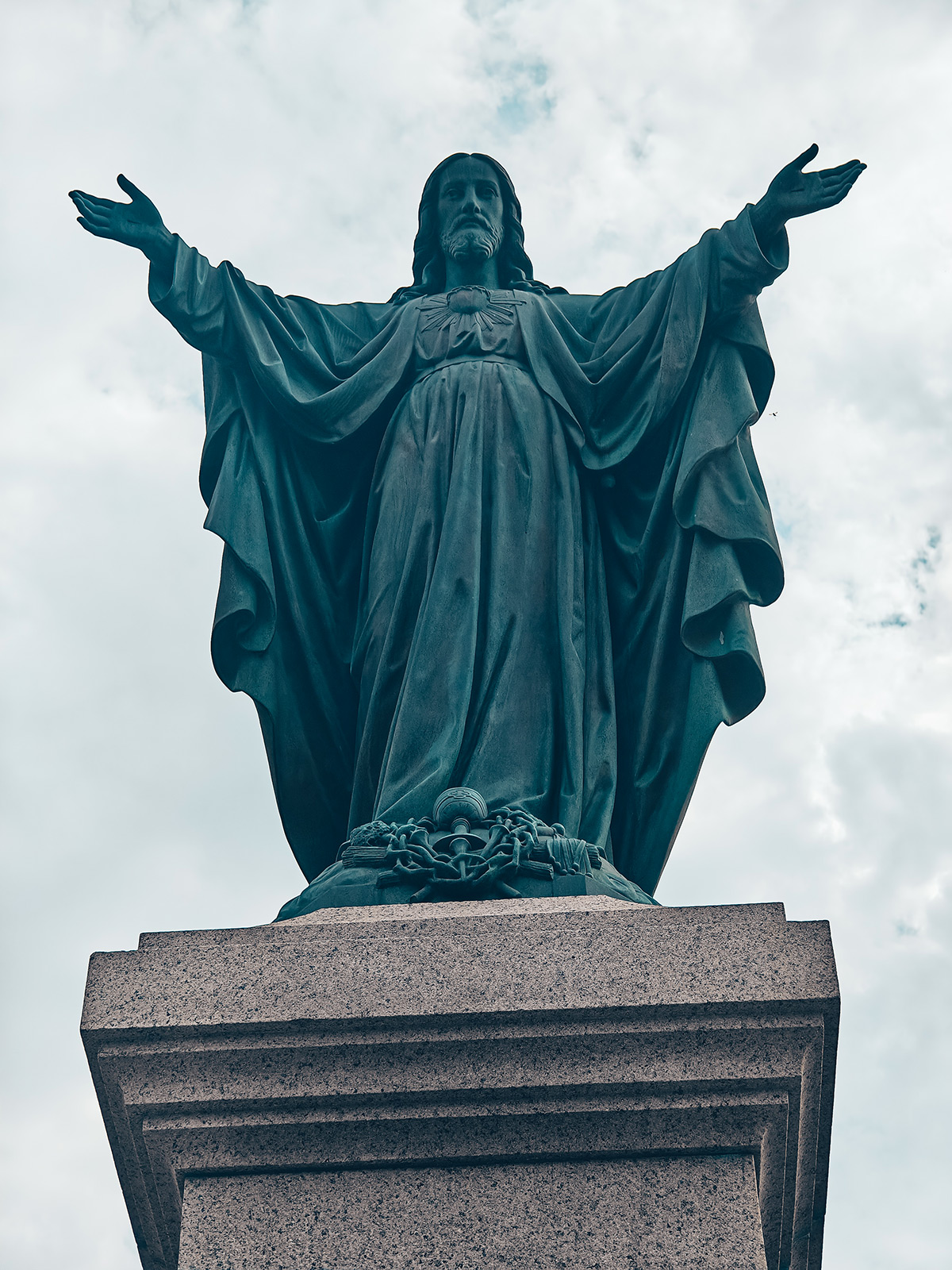
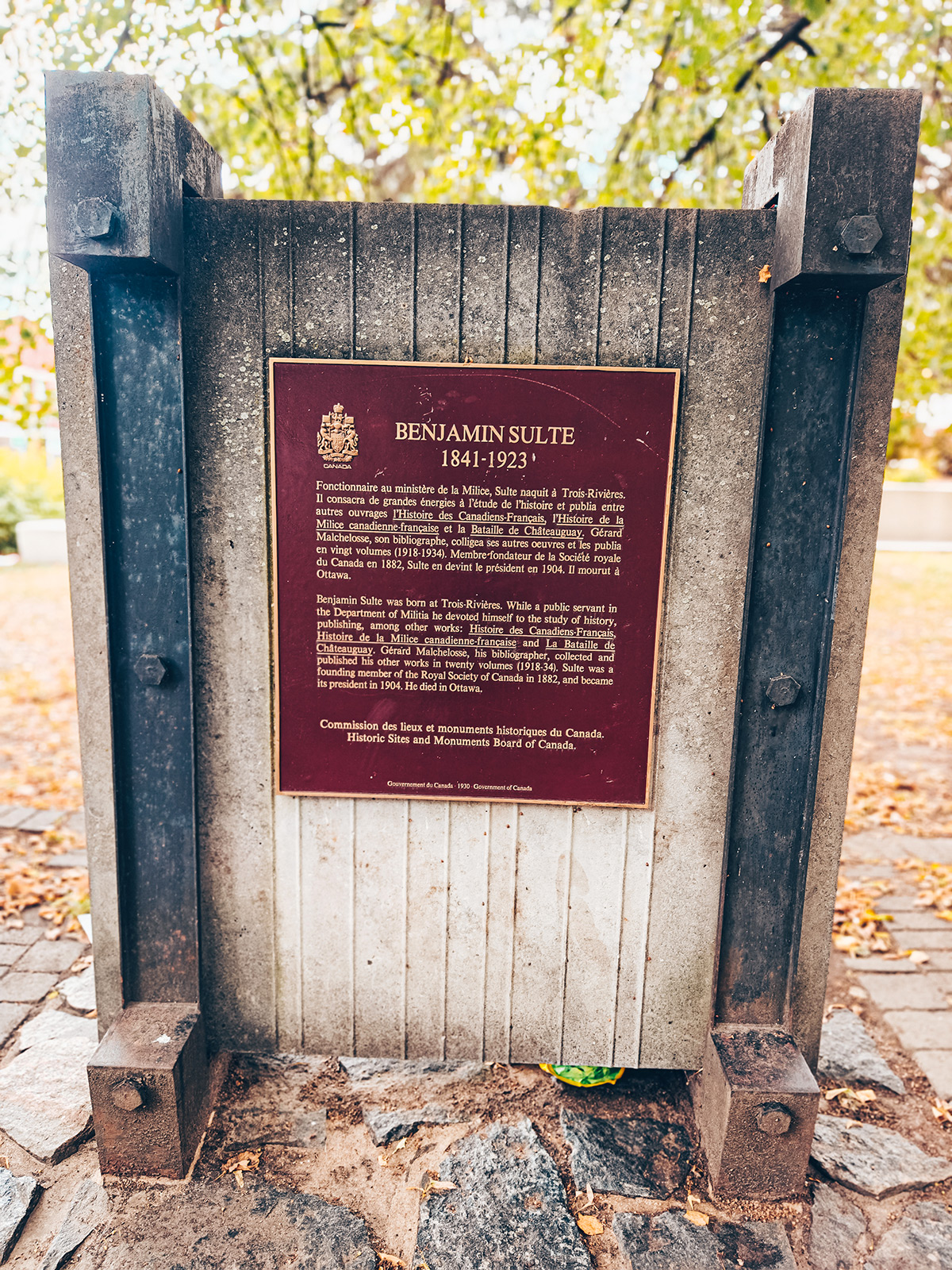
The plaques tell all of that, and the rest: Benjamin Sulte the historian, Maurice Duplessis the local son, the parish church from timber to stone, the first settlers. This is a town that writes its own history on its walls.
4 July 1634
founded by Laviolette
Trois-Rivières is the second-oldest city in Quebec, after Quebec City. Nearly four centuries in the same place, on the same headland.
Why “three rivers”
The Saint-Maurice splits into three channels before it meets the river. It is those, not three rivers, that gave the town its name.
Two islands, three channels
The Saint-Maurice splits into three arms before reaching the river: two long islands cleave the current. The French saw three rivers there, and the name stuck.
Four centuries
Founded in 1634, the city is closing on four hundred years. The plaques of the old quarter lay out that chronology in the open air.
The Ursulines
1697They arrived in 1697 to open the town’s first school, and have held the same monastery ever since: one of the oldest continuously occupied institutions in North America.
139,163 inhabitants
2021 census
The city as it stands was formed in 2002 by merging six municipalities: Trois-Rivières, Cap-de-la-Madeleine, Trois-Rivières-Ouest, Sainte-Marthe-du-Cap, Saint-Louis-de-France and Pointe-du-Lac.
Rue des Ursulines
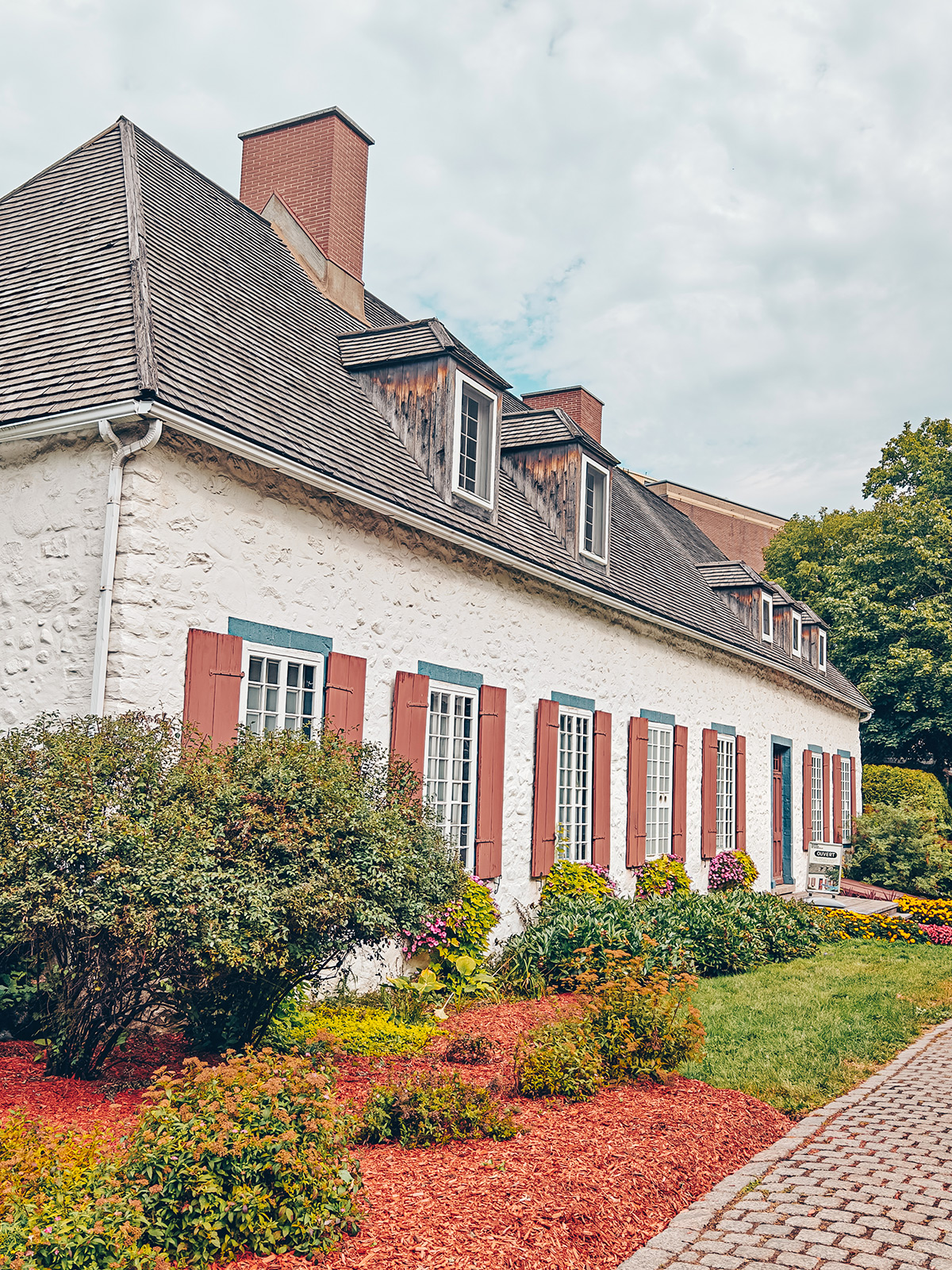
The oldest street in town, cobbled and lined with stone houses. It escaped the great fire.
The Grand Prix
1967Since 1967, racing cars have run every August on a circuit laid out through the downtown streets: one of the oldest street races in North America.
The Ursulines museum
The monastery holds its own museum: you visit the chapel and the rooms where they taught.
Before and after 1908
rue Notre-Dame
The stone houses along the street speak of the years before the fire; the rest of the centre was rebuilt after it.
Reading the walls
Almost every façade in the old quarter carries its plaque: ten metres on, and you have changed century.
The harbourfront park
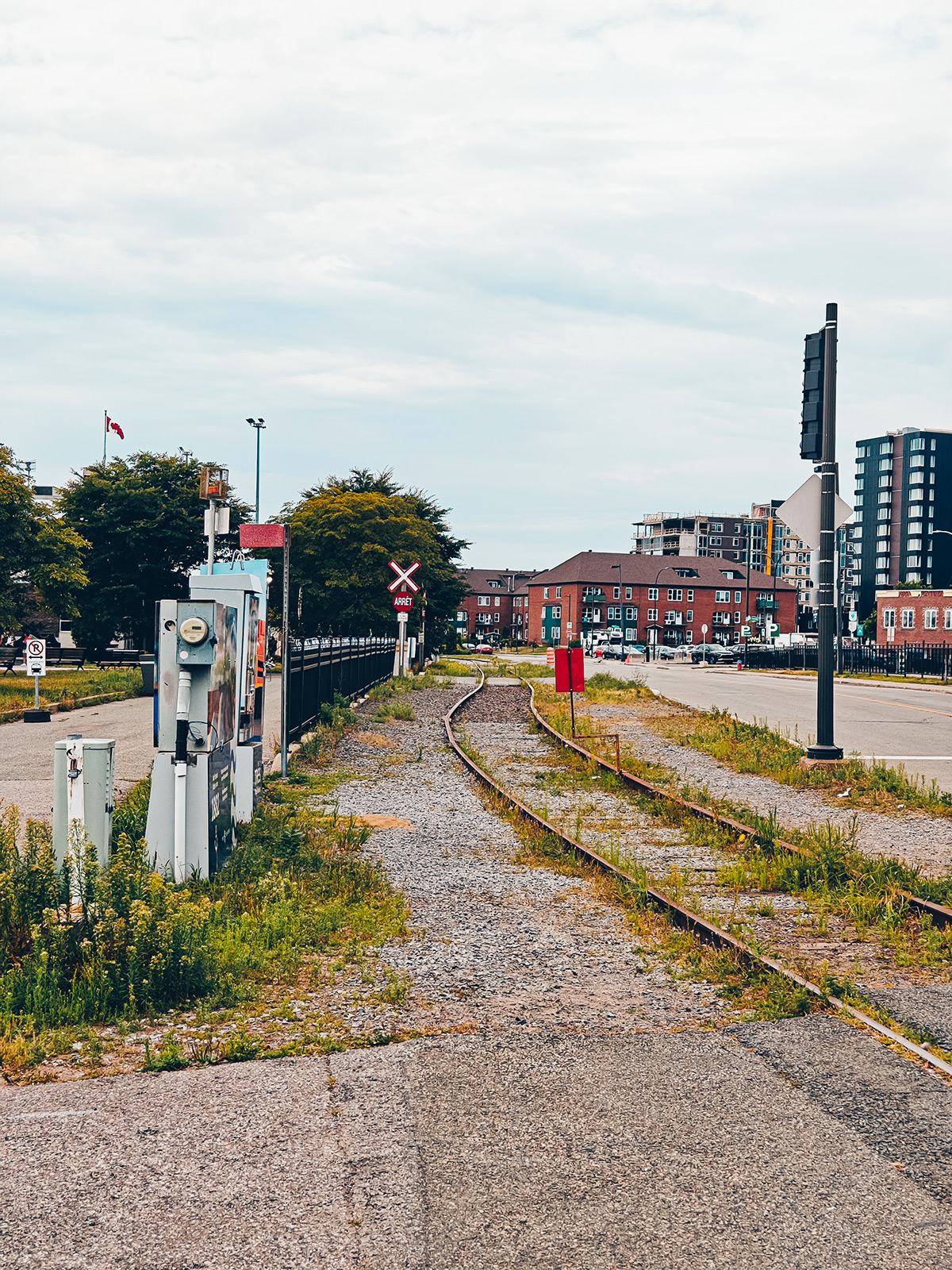
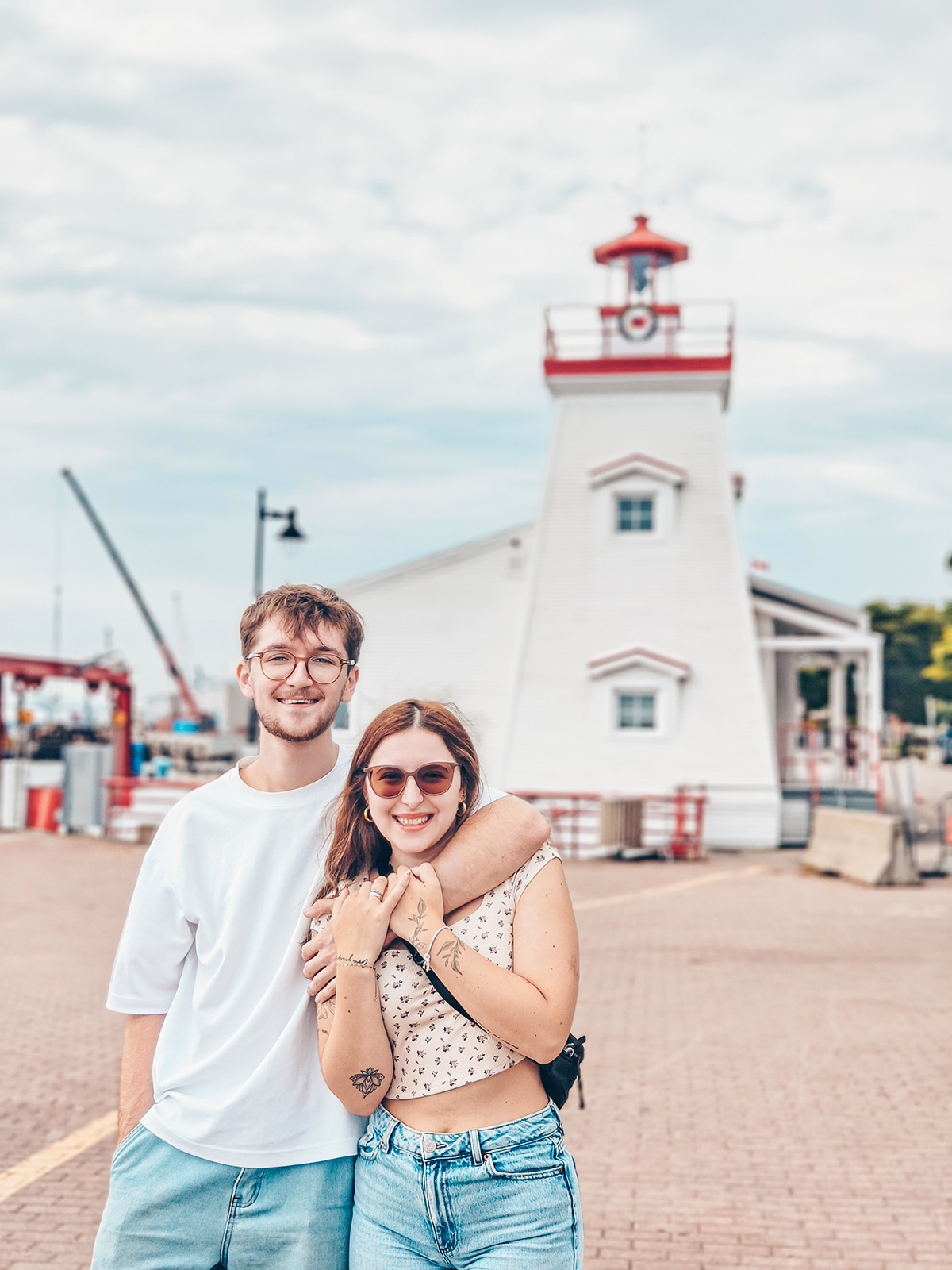
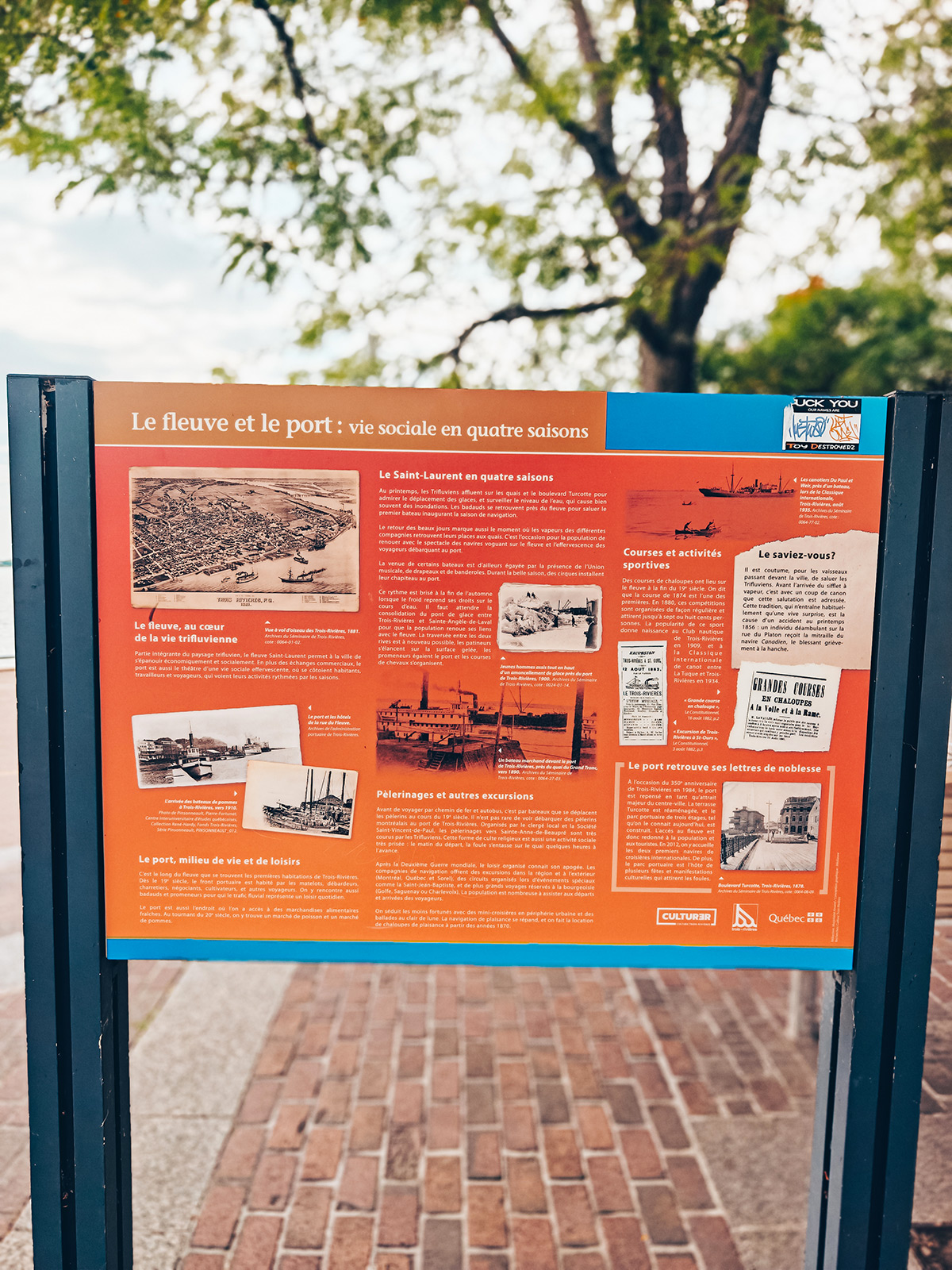
On the St. LawrenceThe panels on the quay tell what this harbour was: timber, paper, the ferries that linked the two shores before 1967. The bridge replaced them all — it is the same story everywhere along the river.
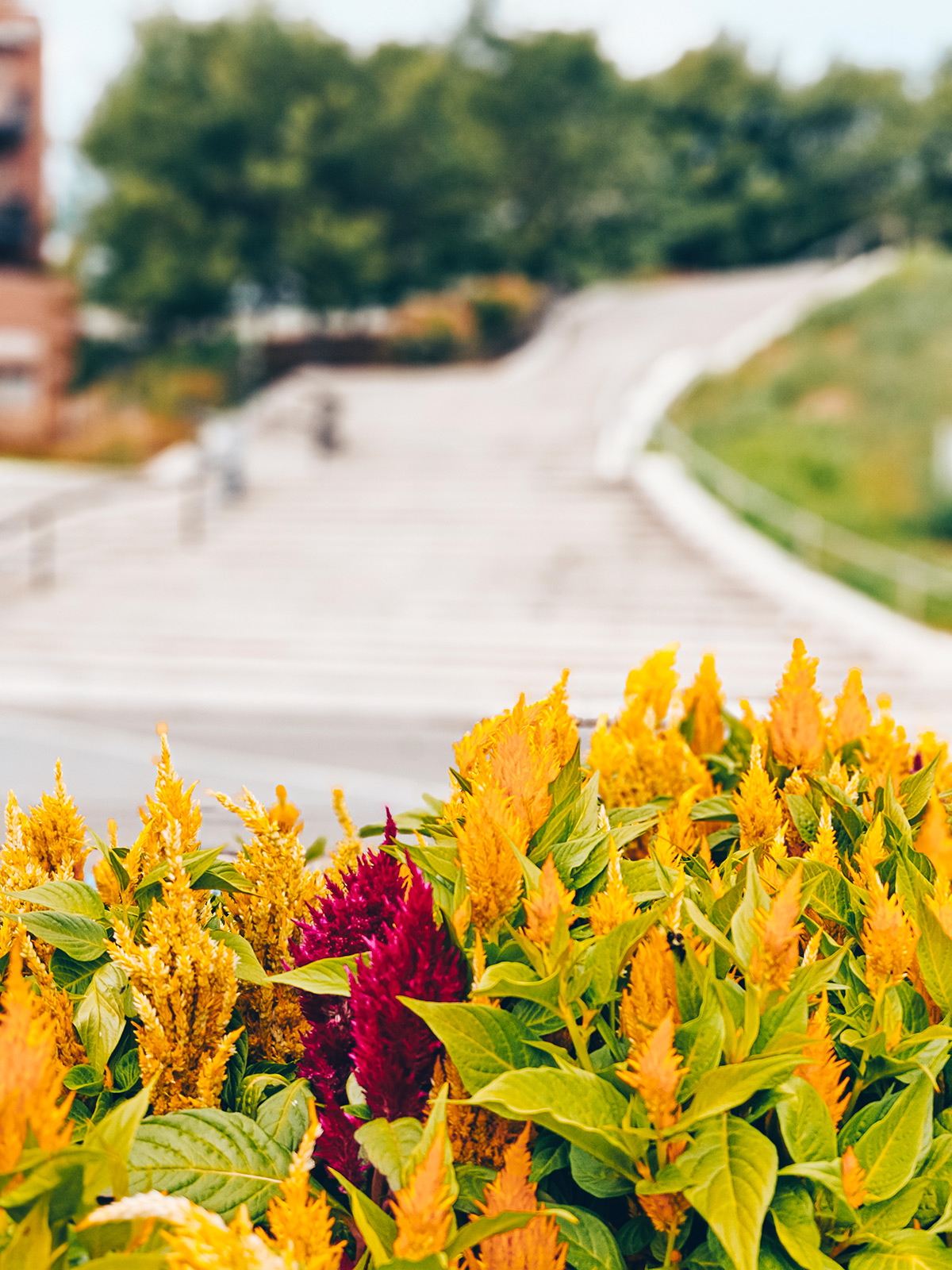
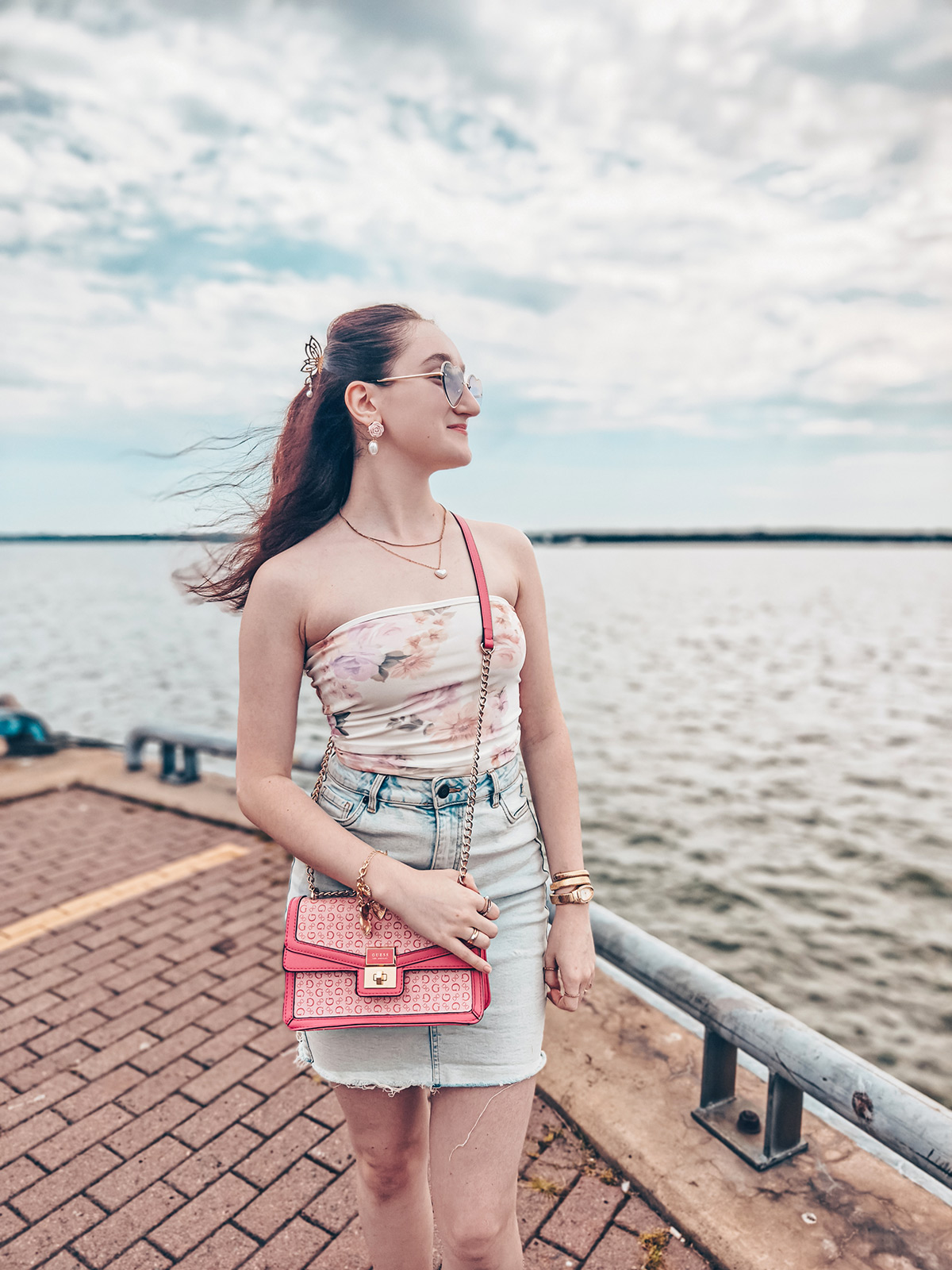
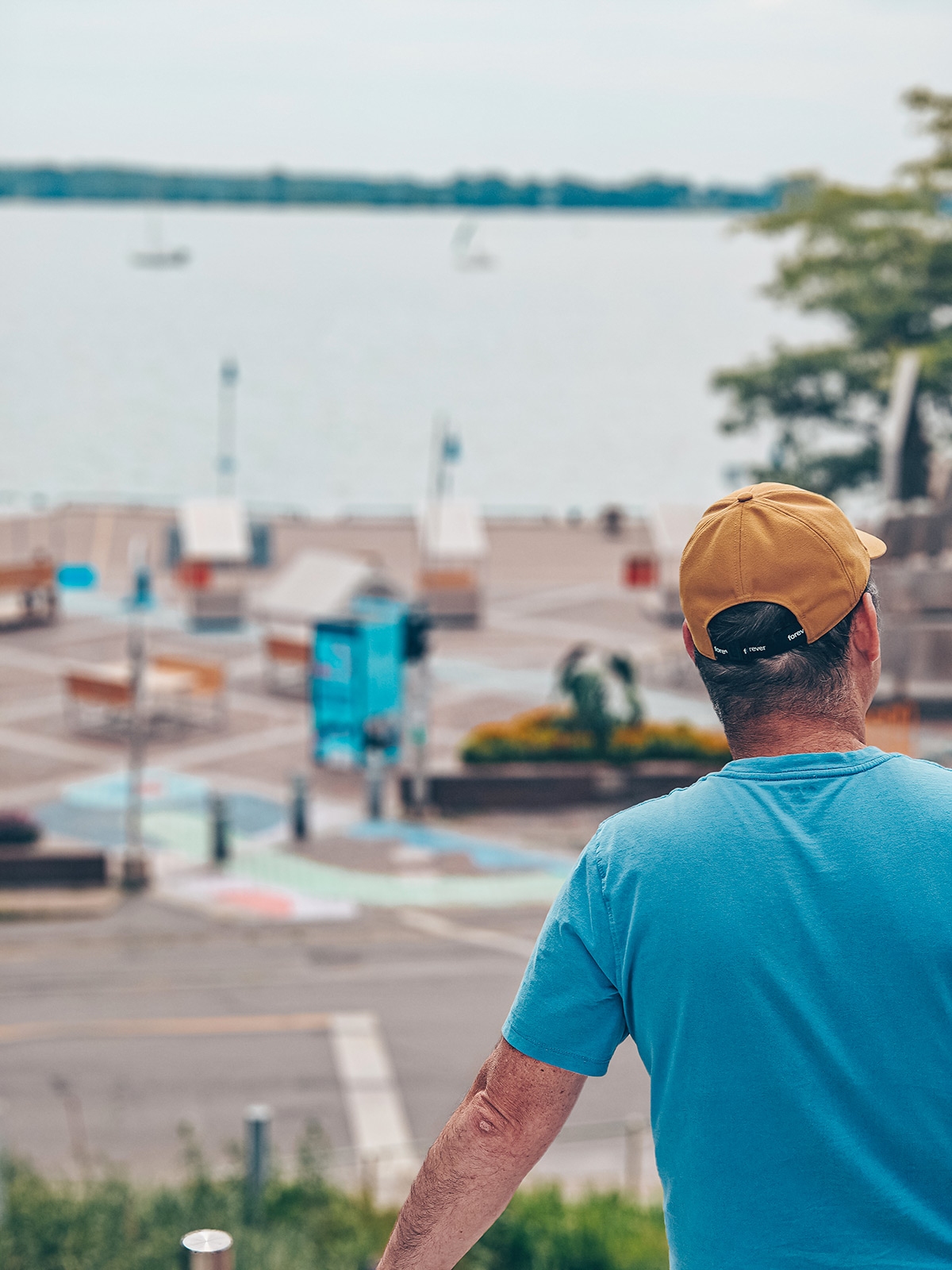
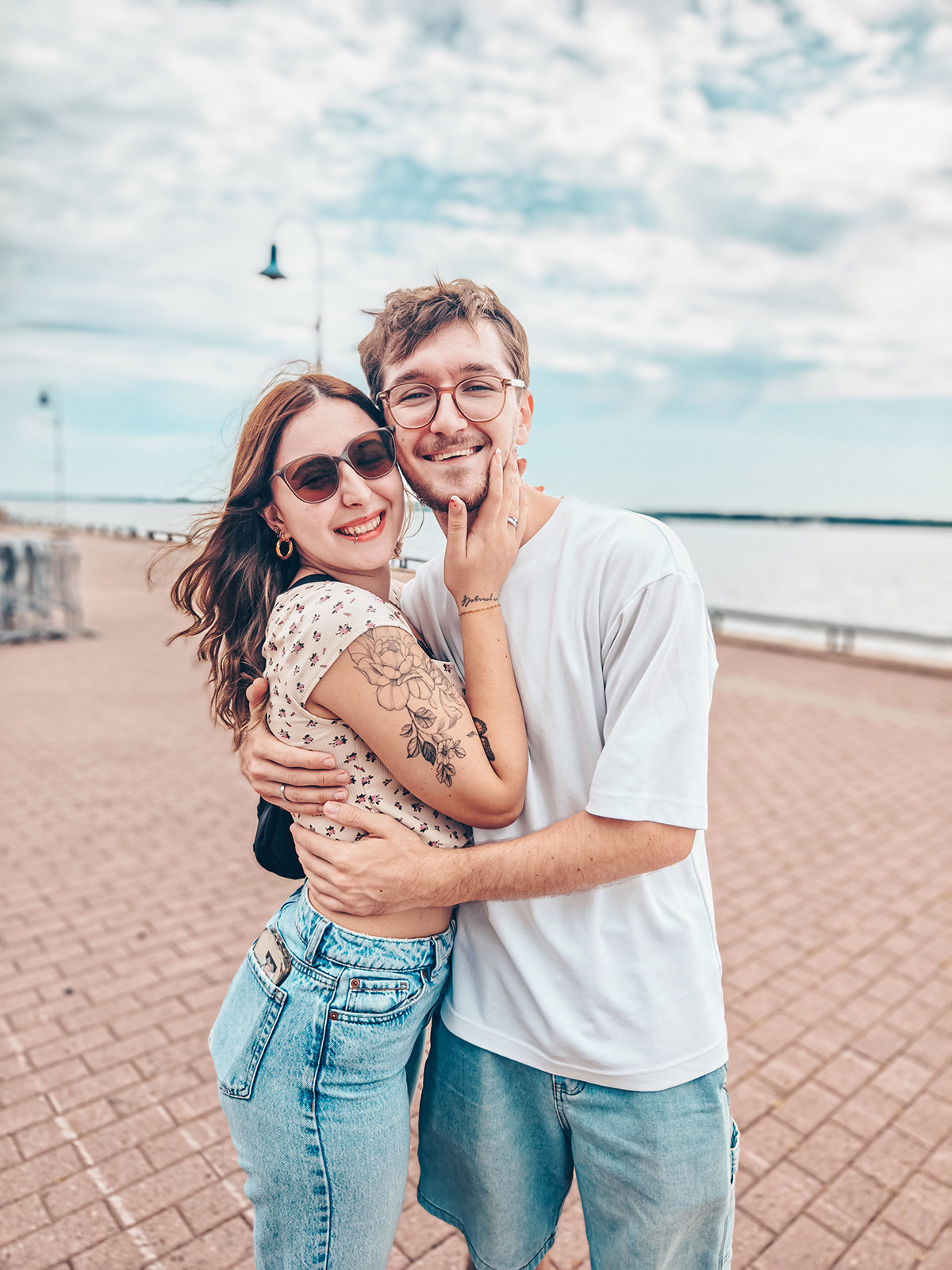
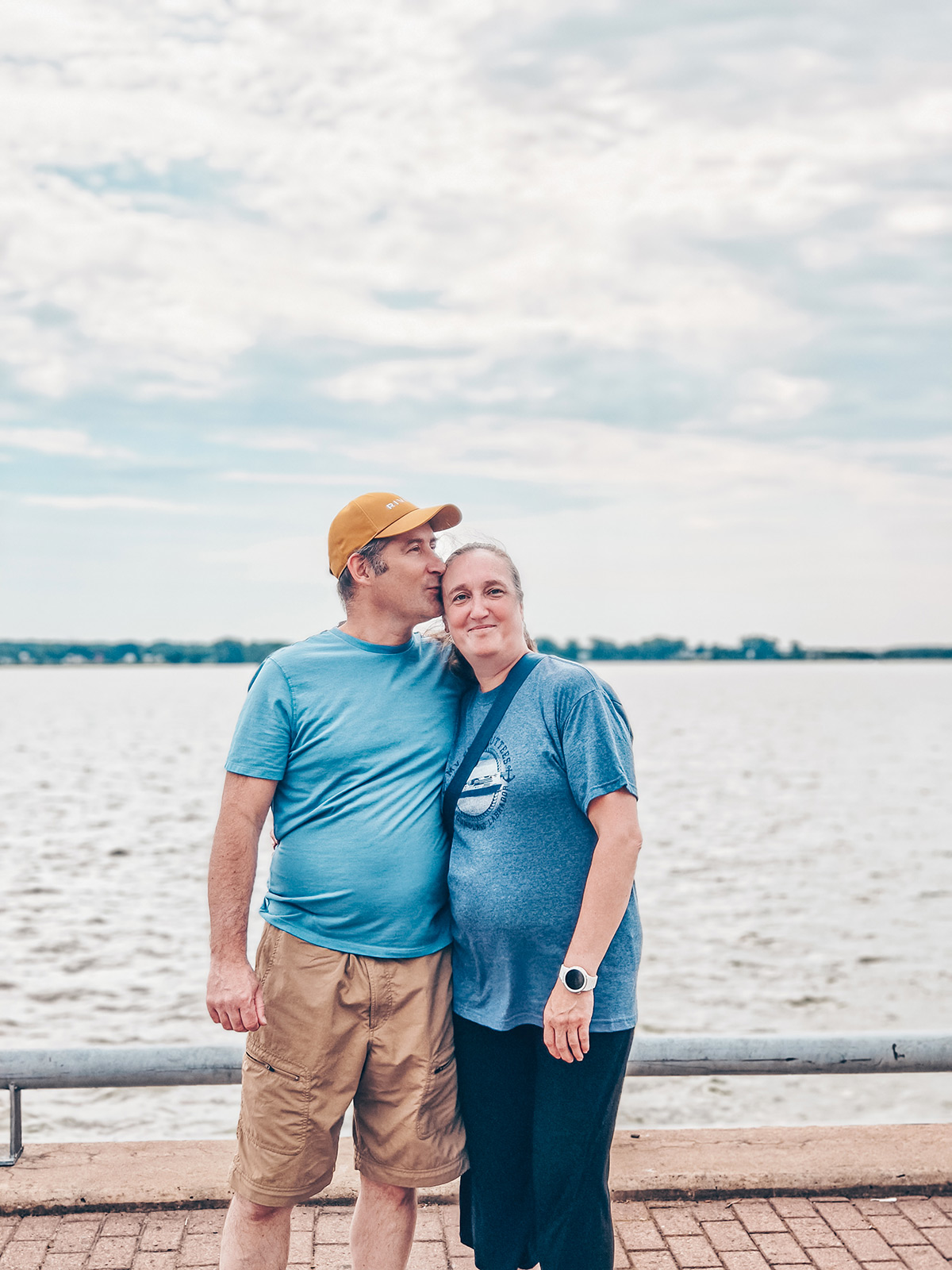
This is where we stay longest. There are benches, wind, and one of the few places in Quebec where you meet the St. Lawrence at eye level, with no cliff between you and it.
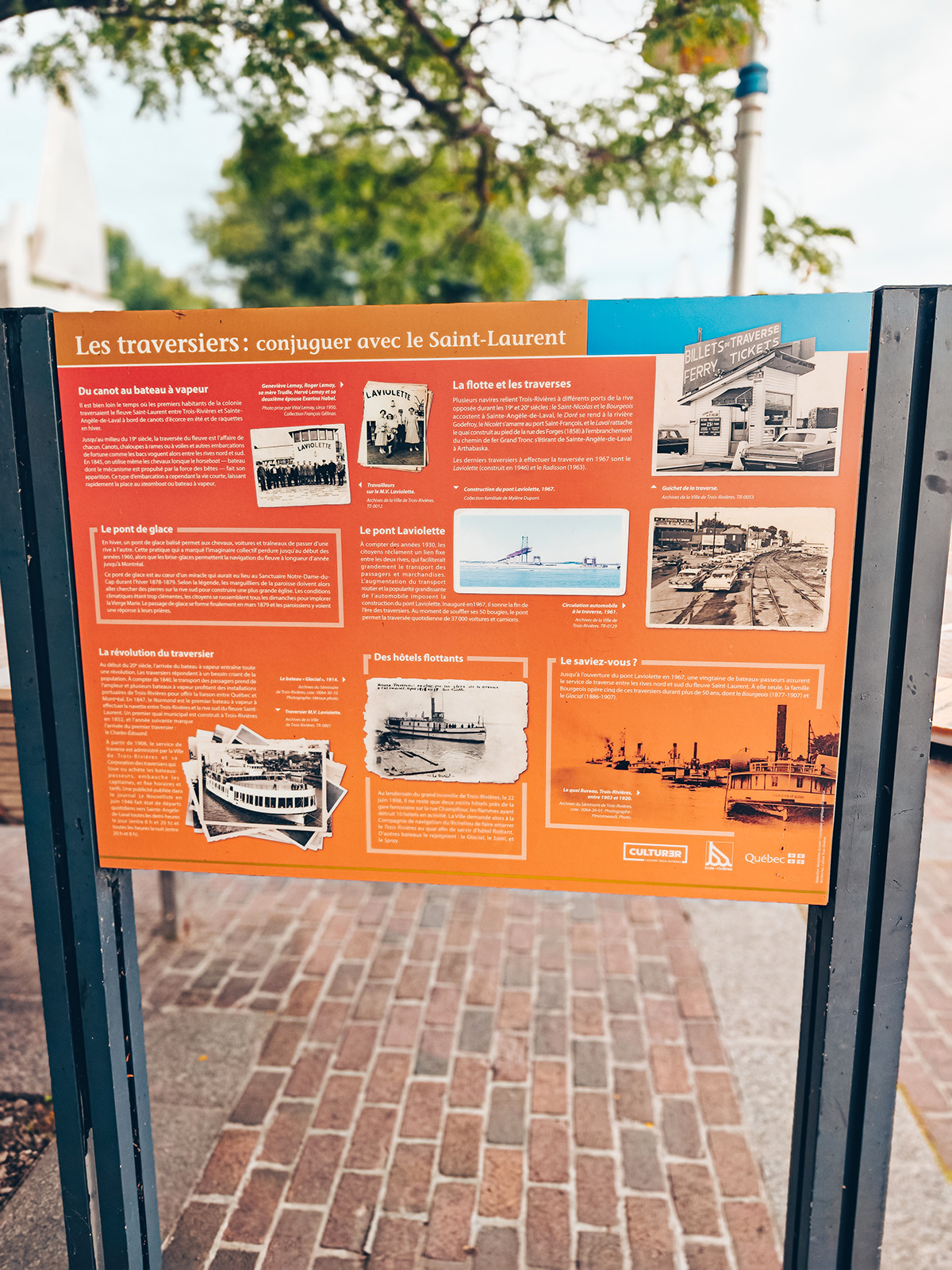
Before the bridge
Ferries linked the two shores until 1967. The panels on the quay still carry their story.
Boréalis
The mill’s former filtration plant is now the history centre of the paper industry. The visit goes down to the vaults in the basement.
The harbour park
A promenade follows the river along the whole front of the old town, from the wharf to the commercial port.
Lac Saint-Pierre
UNESCO biosphere reserve
Just upstream the river widens into a shallow lake, recognised by UNESCO in 2000. It holds the largest heronry in North America and one of the continent’s great migratory stopovers.
River birds
In spring and autumn, flocks of geese pass over the wharf in their thousands.
The working port
The port is still at work: cargo ships pass in front of the promenade.
The delta
at the mouth
This is where the Saint-Maurice ends its run, splitting around its islands before entering the great river.
Four million tonnes
Port of Trois-Rivières, 2023
Over four million tonnes of goods passed through the port in 2023, dry bulk for the most part.
Facing the river
The promenade follows the water along the whole front of the old town, and the benches face the south shore.
Late in the day
The sun drops behind the bridge, and the river takes the colour of the sky.
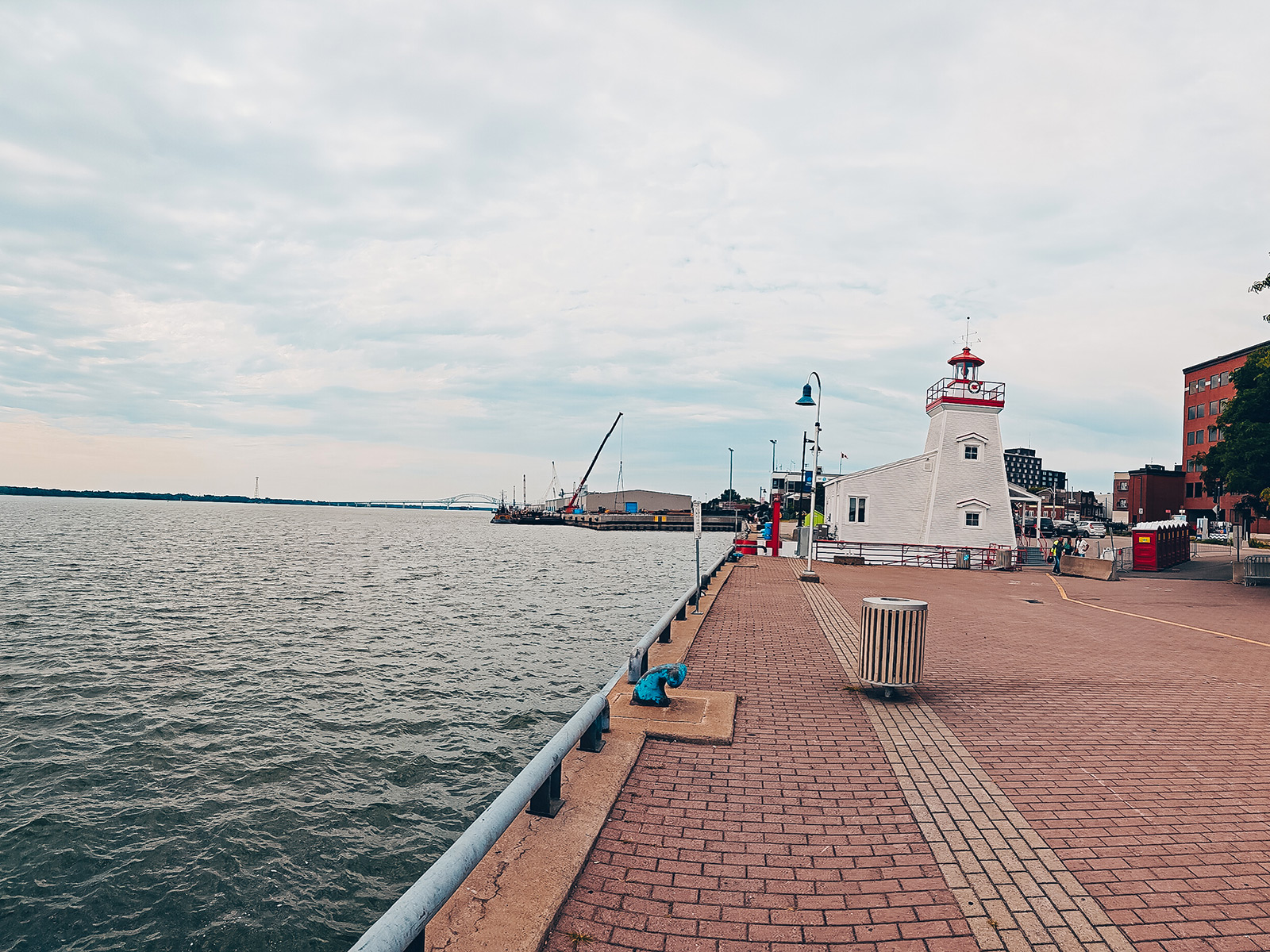
The way home
A charge, then the 55 southThen back over the bridge the other way, down the 55, and Granby comes round again an hour and a half later. A hundred and thirty-eight kilometres, a town founded in 1634, two museums, a cathedral, a river and a bridge two and a half kilometres long. For one day, that is a full one.
138 km
Granby → Trois-Rivières by the 20 then the 55. An hour and a half, with no stop you have to make.
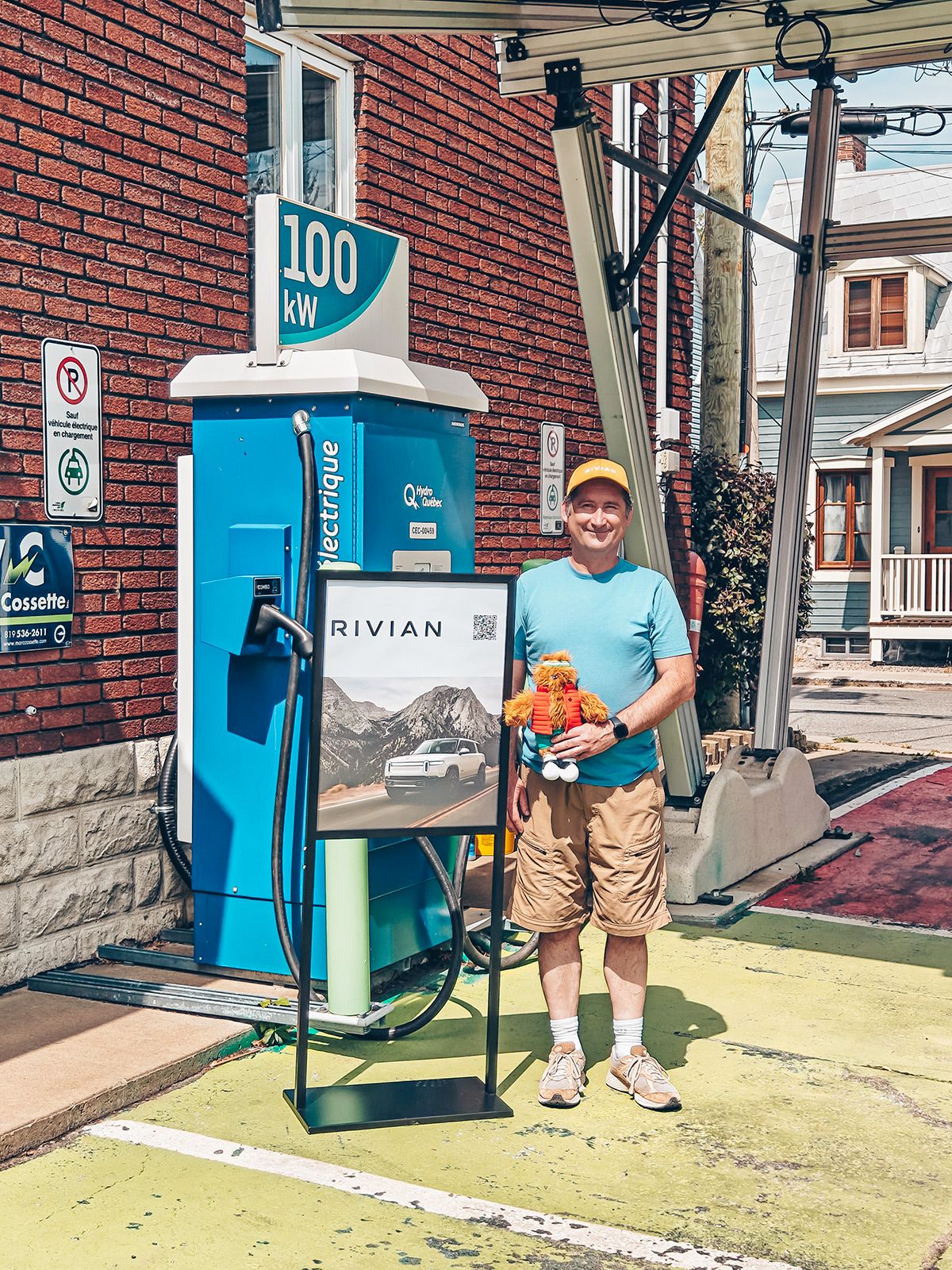
The charge
A plugged-in pause before picking up the 55 south again: enough to get home without thinking about it.
The way back
A-55 then A-20
The same run in reverse, the bridge in the mirror. The Eastern Townships hills come back as the light goes.
What we didn’t see
The Cap shrine, Boréalis, the Forges du Saint-Maurice: there is plenty left to come back for.
The way home
A-55 then A-20
The bridge, Bécancour, Drummondville, then the hills: the same run the other way.
Night comes down
We drive home by headlight, the road nearly empty ahead.